

A composite cutting board looks a little like wood, cleans like plastic, and survives the dishwasher like neither of them. That combination has made brands such as Epicurean and Richlite popular in both restaurants and American home kitchens. However, composite boards also have a trade-off that marketing rarely mentions: in independent testing, they were harder on knife edges than wood or plastic. So, in this guide, we explain what composite boards are made of, how they compare with other materials, how to care for them, and who should buy one.

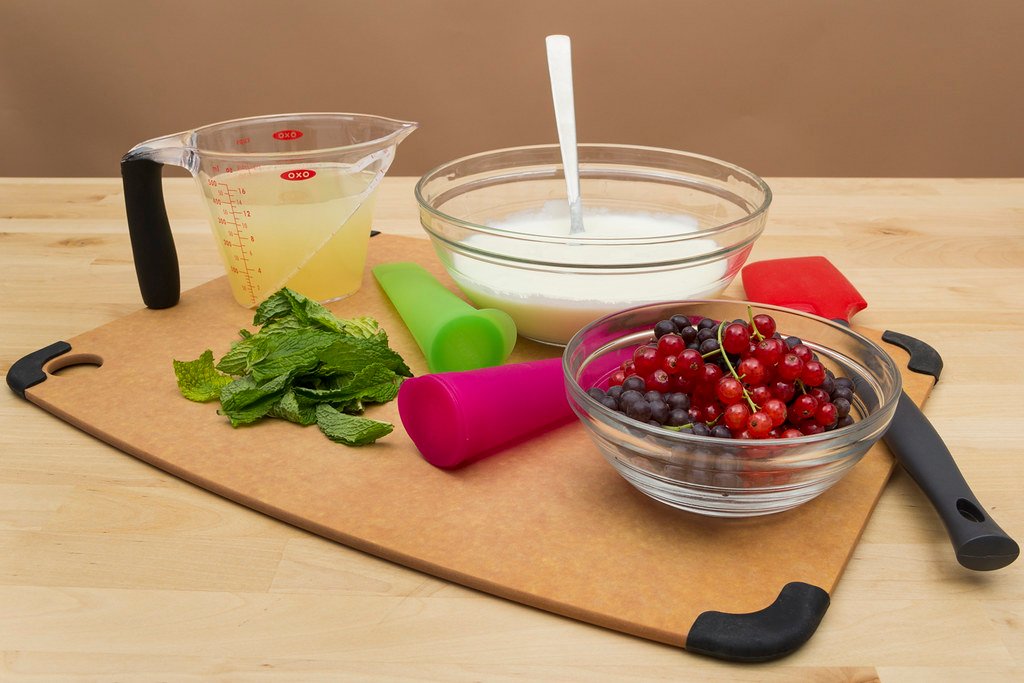
Photo: Didriks via Flickr (CC BY 2.0).
Key Takeaways
- In general, most composite boards are made from paper or wood fiber bonded with a food-safe resin under heat and pressure.
- According to Richlite, its material is about 65% paper fiber and is heat resistant up to 350°F.
- Composite boards are dishwasher safe, non-porous, and thin, so they are easy to store.
- However, in Prudent Reviews’ test, Richlite caused 117 points of edge loss, compared with 65 for plastic and 15 to 42 for wood.
- They are a smart choice for low-maintenance kitchens, but not the best pick for premium knives.
What Is a Composite Cutting Board?
A composite cutting board is made from layers of natural fiber, usually paper or wood pulp, that are soaked in resin and then pressed under high heat. Once cured, the material becomes a hard, dense sheet that does not absorb water. As a result, it behaves very differently from both natural wood and soft plastic.
According to Richlite, the Tacoma, Washington, company behind one of the best-known composites, its food-grade material is a thermoset blend of about 65% FSC-certified paper fiber and resin. The company says it has made the material since 1943. Today, many boards sold as a “paper cutting board” or a “wood fiber cutting board” use this same basic recipe.
Common Names You Will See
Because the category is broad, labels vary. In practice, these terms usually describe the same type of board:
- Composite cutting board: The general term for any fiber-and-resin board.
- Richlite cutting board: A board made from Richlite brand material, often by Epicurean or custom makers.
- Paper cutting board: Similarly, a board made mostly from compressed paper fiber.
- Wood fiber cutting board: Another name for paper or pulp composites, since paper comes from wood.
So, if a listing uses any of these names, check the material details to confirm the resin type and certifications.
How Composite Boards Compare: The Data
Of course, composite brands often describe their boards as knife-friendly. To test that claim, we looked at independent data. Prudent Reviews made 300 rocking cuts and 300 chops on ten materials, then measured each knife with a BESS edge tester. In this test, a higher point loss means a duller blade. Here is how the composite board ranked:
| Board Material | Sharpness Lost (BESS Points) |
|---|---|
| Rubber | 10 |
| Teak, maple, walnut | 15 to 42 |
| Bamboo | 55 |
| Plastic | 65 |
| Composite (Richlite) | 117 |
| Stainless steel | 184 |
In other words, the composite board dulled the test knife nearly twice as much as plastic and up to about eight times as much as wood. It still performed far better than stainless steel, though. Therefore, composite is a middle-ground surface: tougher on edges than traditional boards, but much kinder than metal or glass.
Pros of a Composite Cutting Board
- Dishwasher safe. Unlike wood or bamboo, most composite boards can go straight into the dishwasher.
- Heat resistant. Richlite lists heat resistance up to 350°F, so a composite board can double as a trivet for hot pans. By comparison, Richlite notes that HDPE plastic starts to soften around 230°F.
- Non-porous. The cured resin does not soak up juices, so the board resists stains and odors.
- No oiling. Also, there is no mineral oil or wax routine, which saves time compared with wood.
- Thin and light. Many composite boards are only about 1/4 inch thick, so they slide easily into a drawer or rack.
- Long-lasting. In fact, Richlite says its surfaces last three to five times longer than plastic boards.
Cons of a Composite Cutting Board
- Harder on knives. As the test data shows, composites dull edges faster than wood, plastic, or rubber.
- Louder. The hard surface produces more of a “clack” when you chop.
- Can slide. Thin, light boards may slip on smooth counters, so many models add rubber corner grips.
- Cannot be sanded like wood. As a result, deep scratches are harder to remove at home.
- Feels less natural. In addition, some cooks miss the softer feel and warmth of wood.

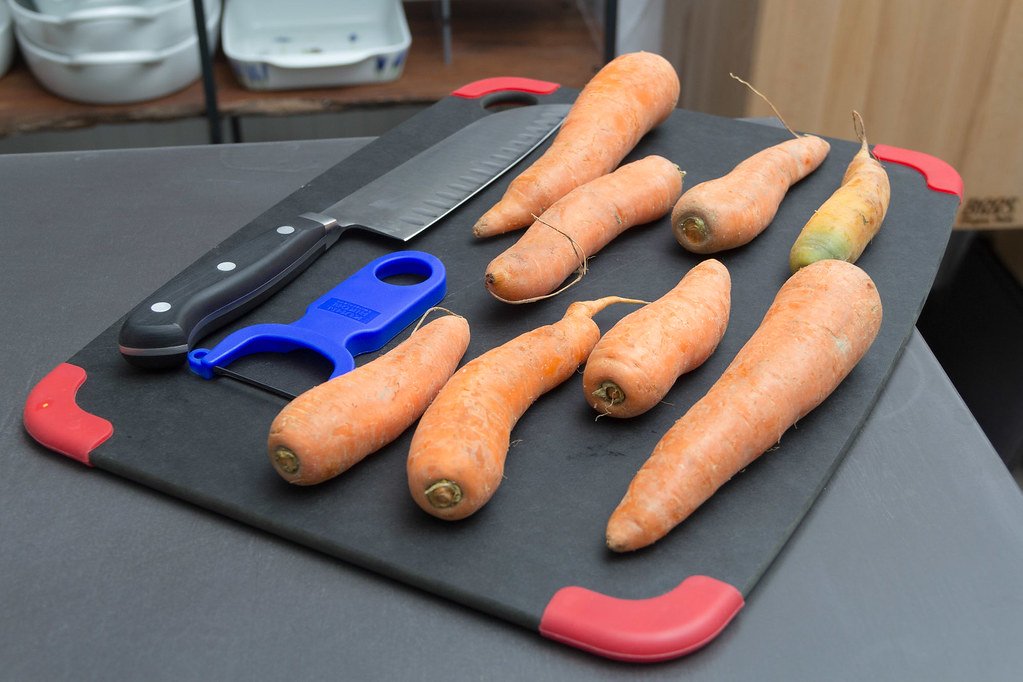
Photo: Didriks via Flickr (CC BY 2.0).
Composite vs. Wood vs. Plastic: Quick Comparison
Naturally, each material suits a different type of cook. Here is a side-by-side look at the most important factors:
| Feature | Composite | Wood | Plastic |
|---|---|---|---|
| Knife friendliness | Fair | Very good | Good |
| Dishwasher safe | Usually yes | No | Usually yes |
| Heat resistance | High (up to 350°F for Richlite) | Moderate | Low |
| Oiling needed | No | Yes, monthly | No |
| Typical thickness | About 1/4 to 3/8 inch | 0.75 to 2 inches | About 1/2 inch |
| Lifespan | Long | Long, with care | Short to medium |
Overall, a composite cutting board wins on convenience and heat resistance. Wood, by contrast, wins on knife care and feel. So, if knife care matters most to you, see our guide to the best wood for cutting boards. Meanwhile, if you want a thick, knife-friendly wood option, read our guide to end grain cutting boards.
Are Composite Cutting Boards Safe?
Yes, food-grade composite boards are generally considered safe. For instance, Richlite says its material is certified to NSF/ANSI Standard 51, the standard for food equipment materials. The company also states that its food-grade surfaces contain no intentionally added PFAS. In addition, Richlite cites independent testing by FILAB, a French lab, which it says found only natural cellulose fibers rather than microplastics.
Still, keep two things in mind. First, these claims come from the manufacturer, so look for NSF certification on any board you buy. Second, no board is self-cleaning. Instead, you should always wash and sanitize a composite board after cutting raw meat. For step-by-step methods, also see our guide on how to disinfect cutting boards.

Video: Richlite spotlights how Epicurean makes composite kitchenware.
Richlite vs. Epicurean: What Is the Difference?
At first, these two names often appear together, which can be confusing. In short, Richlite is a material, while Epicurean is a brand of kitchen products. Specifically, Richlite makes composite sheets for countertops, restaurant prep surfaces, and cutting boards. Epicurean, a Minnesota-based company, uses Richlite wood fiber material for many of its boards, according to restaurant suppliers such as WebstaurantStore. As a result, you may see “Epicurean Richlite wood fiber” in product listings.
Other makers also produce boards from Richlite or similar composites. So, when shopping, focus on the material, thickness, and certification rather than the brand alone.
How to Care for a Composite Cutting Board
Fortunately, composite boards are among the easiest boards to maintain. Even so, a few habits help them last longer:
- Wash after every use. First, use hot, soapy water, or place the board in the dishwasher if the maker allows it.
- Dry upright. Then stand the board on edge so air reaches both sides.
- Sanitize after raw meat. Next, use a dilute bleach solution or a hot dishwasher cycle.
- Use a damp towel underneath. Because thin boards can slide, a damp towel or a grippy mat keeps them steady.
- Restore the finish if needed. Some makers suggest an occasional coat of board butter or mineral oil to refresh the look, although it is not required.
Storage is simple, too. Also, thanks to their thin profile, composite boards fit easily in a cutting board organizer or a narrow cabinet slot.
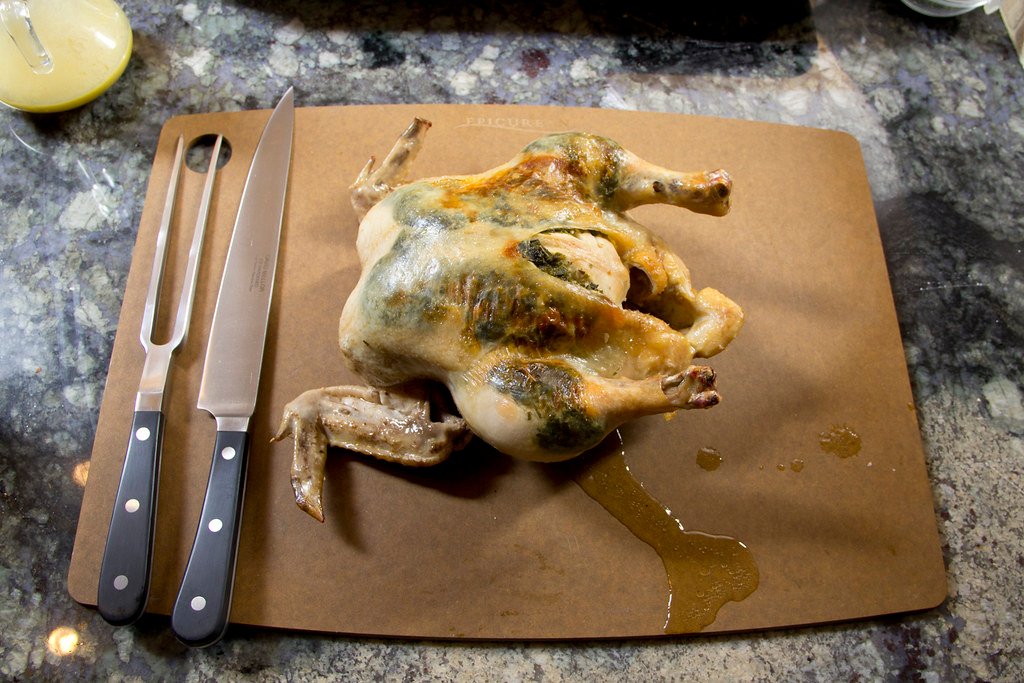
Photo: Didriks via Flickr (CC BY 2.0).
How to Protect Your Knives on a Composite Board
Since composite surfaces are harder than wood, a few small changes help your knives stay sharp longer:
- Slice rather than chop. Gentle pulling cuts are easier on the edge than hard, straight-down strikes.
- Do not scrape with the blade. Instead, flip the knife and use the spine, or use a bench scraper.
- Hone often. Even a few passes on a honing rod realign the edge between sharpenings.
- Sharpen on schedule. Plan to sharpen a little more often than you would with wood. For help, our whetstone grit guide walks you through it.
Who Should Buy a Composite Cutting Board?
A Good Fit If You…
- Want a dishwasher-safe board that is not plastic. In that case, composite is the natural middle ground.
- Need a board that handles heat. For example, it can serve as a landing spot for hot pans or pizza.
- Have little storage space. After all, thin composite boards take up very little room.
- Prefer low maintenance. Also, there is no oiling, and cleanup is quick.
Skip It If You…
- Own premium Japanese knives. Instead, a softer wood or rubber board protects thin edges better.
- Love the feel of wood. By contrast, composite feels harder and sounds louder under the knife.
- Chop large amounts every day. Over time, the extra edge wear adds up.
How to Choose a Composite Board
- Check certification. Look for NSF certification for food contact.
- Pick the right thickness. Generally, thicker boards (3/8 inch or more) feel more stable and resist flexing.
- Look for grips. Also, rubber corners or feet stop the board from sliding.
- Consider a juice groove. It helps when carving roasts or slicing juicy fruit.
- Choose the right size. A 17 x 13-inch board suits most daily prep, while smaller boards work for quick tasks. For our picks, also see small cutting boards for kitchen use.
Is a Composite Cutting Board Eco-Friendly?
Composite boards have a reasonable environmental story, although it is not perfect. On the plus side, Richlite says its material uses FSC-certified paper, and some products may include recycled paper. In addition, a long-lasting board means fewer replacements over time, which reduces waste. By comparison, plastic boards often need replacing once deep knife grooves form.
On the other hand, the resin binder is a manufactured material, so a composite board is not the same as a solid piece of natural wood. Therefore, if sustainability is your top priority, compare certifications and expected lifespan rather than relying on “eco” labels alone.
Using a Composite Board for Pizza, Baking, and Serving
Because composite material handles heat well, it works for more than chopping. For example, many restaurants use composite boards as pizza peels and serving boards. At home, you can slide a hot pizza onto one and slice it right away. Likewise, a composite board makes a sturdy surface for rolling dough or cooling cookies. Just remember that a hot pizza wheel or knife still wears the surface, so keep a separate board for heavy daily prep if you can.
Cost vs. Lifespan: Is It Worth It?
A composite cutting board usually costs more than a basic plastic board but less than a thick hardwood block. Over the long run, however, the price gap often narrows. If a composite board lasts three to five times longer than plastic, as Richlite claims, you may spend less overall by replacing it far less often. In short, a composite board is a solid value for cooks who want one durable, dishwasher-safe board for years of use.
Common Mistakes With Composite Boards
- Assuming “knife-friendly” means gentle. In fact, the data shows composites are harder on edges than wood or plastic.
- Using it on a slick counter. Otherwise, without grips or a towel, a thin board can slide.
- Skipping sanitizing after raw meat. Non-porous does not mean germ-free.
- Using abrasive pads. Steel wool can dull the surface finish.
- Making it your only board. Instead, keep a separate board for raw proteins, as explained in our guide on how to prevent cross contamination with cutting boards.
FAQ
What is a composite cutting board made of?
In most cases, they are made from paper or wood fiber combined with a food-safe resin. Richlite, for example, says its material is about 65% paper fiber.
Are composite cutting boards dishwasher safe?
Yes, most of them are. In fact, Richlite lists its material as dishwasher safe and heat resistant up to 350°F.
Do composite cutting boards dull knives?
More than wood or plastic. In Prudent Reviews’ testing, Richlite caused 117 points of edge loss, compared with 65 for plastic.
Is a Richlite cutting board the same as Epicurean?
Not exactly. Richlite is the material, while Epicurean is a brand that uses Richlite wood fiber in many of its boards.
How long does a composite cutting board last?
Usually many years. According to Richlite, its surfaces last three to five times longer than plastic boards.
Can I cut raw meat on a composite board?
Yes. Because it is non-porous and dishwasher safe, a composite board is easy to sanitize after raw meat.
Can a composite board be used as a trivet?
In most cases, yes. Richlite lists heat resistance up to 350°F, so a hot pan will not melt it the way it can melt plastic. Still, check your board’s care guide, because finishes and resins vary by brand.
Why does my composite board slide on the counter?
Composite boards are thin and light, so they have less grip than heavy wood. To fix this, place a damp towel or a silicone mat underneath, or choose a model with rubber corners.
Final Thoughts
A composite cutting board is a practical, low-maintenance option that handles heat and the dishwasher with ease. Moreover, it is thin, durable, and easy to store. On the other hand, the data shows it is harder on knives than wood, plastic, or rubber. So, choose composite if convenience matters most, and pair it with a softer board if you own premium knives. Finally, for a full comparison of materials, read our main guide to cutting boards that are the safest and healthiest.


Hey, My name is MAMON. I am a SEO content creator and affiliate marketer with over 8 years of experience. I create honest product reviews, in-depth buying guides, and practical how-to articles to help readers make informed decisions. My mission is to provide trustworthy, research-backed content that delivers real value.