Key Takeaways
- Boiling water, degreasing dish soap, and baking soda lift baked-on grease from a filter far better than scrubbing alone; skip mixing baking soda directly with vinegar, since the two neutralize each other and add little extra cleaning power.
- The National Fire Protection Association identifies cooking as the leading cause of home fires, and grease buildup on ventilation equipment is part of that risk, which makes fan cleaning a safety task, not just a cosmetic one.
- Clean removable filters every month with daily cooking, every one to three months with lighter use.
- Never spray liquid cleaner directly into the fan motor or its wiring; wipe the housing with a damp, well-wrung cloth instead.
A range hood fan pulls smoke, steam, airborne grease, and combustion byproducts out of your kitchen air, which keeps them from settling on your cabinets, walls, and eventually your food. Because it processes that much airborne grease, the fan and its filter get dirty faster than almost any other kitchen appliance, and a clogged one loses suction, runs louder, and works your motor harder than it should. Cleaning it isn’t difficult, but doing it the right way, with the right tools and in the right order, makes the difference between a fan that lasts for years and one that burns out early or becomes a fire hazard.
Why This Actually Matters
Beyond the obvious cosmetic reason, a greasy fan is a functional and safety problem. The EPA’s guidance on indoor particulate matter notes that using a range hood while cooking meaningfully reduces indoor particulate exposure, but that only holds true if the hood is actually still moving air efficiently. A grease-caked filter blocks airflow, which means your kitchen air quality suffers even while the fan is running, and the motor has to work harder to pull the same volume of air through a partially clogged screen, which shortens its working life over time. And since cooking-related grease is one of the most common fuels for home fires, keeping that grease from accumulating on your equipment is a genuine safety habit, not just tidiness.
Tools You’ll Need
- Dust brush or soft-bristle brush
- Degreasing dish soap (something formulated to cut grease, not just a mild hand soap)
- Baking soda
- A stock pot or your kitchen sink, large enough to submerge the filter
- Microfiber cloths, plus one you don’t mind getting greasy
- Rubber gloves
- A soft scrub brush or old toothbrush for stubborn spots
Skip mixing vinegar directly into the same batch as baking soda. The two react and mostly neutralize each other into salt water, so you lose most of the grease-cutting benefit of either one on its own. If you want to use vinegar, use it separately as a final wipe-down for shine, not blended into the main degreasing soak.
Step-by-Step Process
Step 1: Cut the Power
Unplug the range hood, or if it’s hardwired, switch off the breaker that controls it. Never clean around a fan motor or any electrical component while it’s still connected to power, even if the fan itself isn’t spinning at the moment.
Step 2: Remove the Filter (and the Fan, if Your Model Allows It)
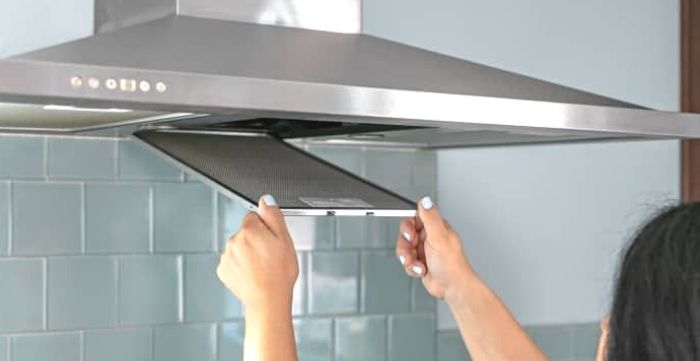
Most range hoods have a removable grease filter, usually held by a spring clip, latch, or simple push-release, that slides or pops out from underneath the hood. Some models also let you detach the fan blade assembly itself for a deeper clean, though many residential hoods keep the motor and blade sealed inside the housing for safety, in which case you’ll clean the fan in place rather than removing it. Check your owner’s manual for your specific model, since the release mechanism varies by brand.
Step 3: Dry-Brush Off Loose Debris
Before any liquid touches the filter or fan, use a dust brush or soft-bristle brush to knock off loose dust, food particles, and dry buildup. Doing this first keeps you from turning dry dust into a greasy paste once you introduce water, and it gets into corners and mesh gaps that a cloth alone would miss.
Step 4: Degrease the Filter
For a removable metal filter, the most effective method is a hot soak rather than scrubbing cold. Bring a pot of water to a near boil, or use the hottest tap water your sink produces, and pour it into a basin large enough to submerge the filter. Add a generous squirt of degreasing dish soap and about a quarter cup of baking soda, stirring until it dissolves. Submerge the filter and let it soak for 10 to 15 minutes; the heat and the soap do most of the actual work of breaking down baked-on grease, which is why this step matters more than any amount of scrubbing on a cold, dry filter. After soaking, use a soft brush or old toothbrush on any stubborn spots, working with the grain of the mesh or louvers rather than against it.
Step 5: Wipe the Fan Housing and Motor Area Carefully
If your fan and motor are accessible without disassembling anything electrical, wipe the visible blades and housing with a cloth dampened, not soaked, in warm soapy water, then dry it immediately. Never spray cleaner directly onto or into the motor housing, and don’t submerge any part of the fan that houses wiring or the motor itself; moisture in those areas can cause corrosion or an electrical fault. If the fan assembly looks heavily caked with grease beyond what a careful wipe-down can manage, that’s a sign it’s time to call a technician rather than push further with DIY cleaning.
Step 6: Rinse and Dry Completely
Rinse the filter under running water to remove any leftover soap residue, since dried soap film can attract dust just as easily as grease does. Shake off excess water, then let the filter air dry completely, propped up on a towel, before reinstalling it. Installing a still-damp filter traps moisture against the metal, which can encourage rust on lower-quality filters over time.
How Often Should You Clean Your Range Hood Fan?
How often you clean depends heavily on how often, and how, you cook. If you cook daily, especially with frying, sautéing, or anything that produces a lot of airborne grease, clean the filter monthly. Lighter or less frequent cooking can stretch that to once every two to three months. Baffle filters, the angled metal slat type common on higher-end hoods, tend to handle grease better and can often go slightly longer between cleanings than fine aluminum mesh filters, which clog faster because of their smaller openings.
A simple way to check without guessing: run your finger along the underside of the filter. If it feels sticky or leaves a visible film, it’s overdue.
Common Mistakes to Avoid
- Cleaning it while still plugged in. This is a real electrocution risk, not a theoretical one, especially with wet hands and metal components.
- Scrubbing a cold, dry filter instead of soaking it first. You’ll spend three times the effort for a worse result.
- Mixing vinegar and baking soda in the same batch, expecting a stronger cleaner. The fizzing reaction is mostly for show; it neutralizes both ingredients into salt water rather than compounding their cleaning power.
- Spraying liquid cleaners directly into the motor housing. Wipe, don’t spray, anywhere near electrical components.
- Reinstalling a wet filter. Let it fully air dry to avoid trapping moisture against the metal.
- Ignoring it until it’s visibly dripping with grease. By that point, cleaning takes far longer and the fan has likely already been running inefficiently for weeks.
Benefits of Keeping It Clean
- Clears smoke and steam from the kitchen efficiently instead of leaving a lingering haze
- Runs quieter, since a grease-clogged fan works harder and generates more noise doing it
- Improves indoor air quality during and after cooking
- Reduces electricity use by letting the motor run at its intended efficiency instead of straining
- Extends the fan’s operating lifespan
- Keeps grease from building into the kind of fire risk that shows up in national fire statistics
If you’re relying on your under cabinet range hood to keep your kitchen air clear, a five-minute monthly filter check pays for itself many times over compared to dealing with a seized motor or a hood that no longer pulls smoke effectively.
Frequently Asked Questions
Can I put my range hood filter in the dishwasher? Many metal mesh and baffle filters are dishwasher-safe, but check your manual first, since some finishes or filter types aren’t rated for it. If yours is safe for the dishwasher, run it on a hot cycle with the door propped slightly if you’re worried about warping, and skip the drying cycle heat in favor of air drying.
My fan still smells even after cleaning the filter. What’s going on? If odor persists after a clean filter is reinstalled, the smell is often coming from grease that’s made it past the filter and settled inside the ductwork or fan housing itself. A light wipe of the accessible interior surfaces, done carefully and with the power off, usually resolves it; a persistent smell after that points to buildup further down the duct that may need a professional cleaning.
Is it safe to use oven cleaner or a strong degreaser on the filter? Strong commercial oven cleaners can work, but they’re harsher than necessary for most range hood filters and can damage certain finishes or protective coatings. A hot water, dish soap, and baking soda soak handles the vast majority of buildup without the risk.
How do I know if my filter needs replacing instead of cleaning? Metal filters can usually be cleaned indefinitely as long as the mesh or baffles aren’t warped, bent, or corroded. If a filter has visible rust, holes, or a mesh that’s stretched out of shape, cleaning won’t restore its grease-capture efficiency and it’s time to replace it. Charcoal or carbon filters used in ductless hoods are a different case entirely, they’re not washable and need periodic replacement rather than cleaning, typically every three to six months depending on use.
Final Verdict
If you’ve just bought the best ductless range hood and want to keep it running the way it did on day one, regular fan and filter cleaning is the single habit that matters most. It isn’t difficult, it just requires the right order of steps: power off, dry-brush first, hot soak instead of cold scrubbing, and a full dry before reinstalling. Put that routine on a monthly or quarterly schedule depending on how much you cook, and your range hood will keep pulling smoke and grease out of the air the way it’s supposed to for years longer than one that’s left to fend for itself.

Hey, My name is MAMON. I am a SEO content creator and affiliate marketer with over 8 years of experience. I create honest product reviews, in-depth buying guides, and practical how-to articles to help readers make informed decisions. My mission is to provide trustworthy, research-backed content that delivers real value.
Leave a Reply