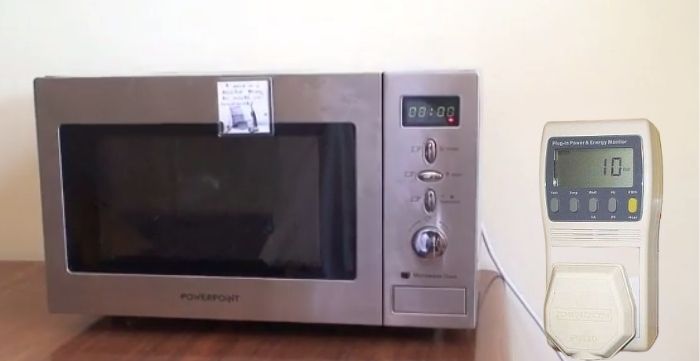
A microwave costs about 1-2 cents to run for a typical five-minute reheat. So, how much electricity does a microwave use over a month, or a year? The short answer: far less than most kitchen appliances. Most households land somewhere between $1 and $3 a month for average use. Here’s the actual math, not just a vague “it’s efficient” answer.
Key Takeaways
- A 1,000-watt microwave run for 5 minutes costs about 1.5 cents at the current U.S. average electricity rate of 18.44 cents per kWh.
- Typical daily use, about 15 minutes total, adds up to roughly $1.40 a month, or about $17 a year.
- The label on your microwave usually shows cooking (output) wattage. That’s not the power actually drawn from the wall, which runs 25-40% higher.
- According to the Department of Energy, a typical microwave only cooks for about 70 hours a year, but draws small amounts of standby power for the other 8,690 hours just to run the clock and display.
How Much Electricity Does a Microwave Use?
Electricity use comes down to a simple formula. Watts multiplied by hours of use, divided by 1,000, gives you kilowatt-hours (kWh). Multiply that by your electricity rate, and you have the actual cost. At the current U.S. average residential rate of 18.44 cents per kWh, here’s what that looks like in practice.
| Microwave Wattage | Run Time | Energy Used | Approximate Cost |
|---|---|---|---|
| 700 watts | 5 minutes | 0.058 kWh | ~1.1 cents |
| 1,000 watts | 3 minutes | 0.05 kWh | ~0.9 cents |
| 1,000 watts | 5 minutes | 0.083 kWh | ~1.5 cents |
| 1,200 watts | 5 minutes | 0.1 kWh | ~1.8 cents |
| 1,000 watts | 10 minutes | 0.167 kWh | ~3.1 cents |
Add it up over a month of typical use. That’s roughly 15 minutes of total run time a day for reheating and quick cooking. A 1,000-watt microwave costs around $1.38 a month at that pace, or about $17 a year. That’s less than most households spend on a single streaming subscription.
How to Calculate Your Own Microwave’s Cost
The averages above answer how much electricity does a microwave use in general, but your own number might differ based on your rate and habits. You don’t need to guess, though; the math takes about a minute once you have two numbers. First, find your microwave’s wattage, usually printed inside the door or on a sticker on the back. Second, estimate how many minutes a day you actually use it, including every reheat, defrost, and quick-cook session combined.
Multiply the wattage by your daily minutes, then divide by 60 to get watt-hours, then divide by 1,000 to get kWh. That number times your local electricity rate, which you can find on a recent utility bill, gives you the daily cost. Scale that up by 30 for a rough monthly estimate. A 900-watt microwave used for 12 minutes a day, for example, works out to about 0.18 kWh daily, or roughly $1 a month at the national average rate.
Keep in mind that rate varies a lot by state. Parts of the Pacific Northwest pay under 12 cents per kWh, while states like Hawaii and California often run well above 30 cents. Your actual monthly cost could land noticeably above or below the national-average figures used throughout this guide, so it’s worth checking your own rate for an accurate number.
Why the Wattage on the Label Isn’t the Whole Story
Most microwaves list their cooking (output) wattage on the door or in the manual. That’s the power actually delivered to heat your food. The power drawn from the wall outlet is higher, since microwaves aren’t 100% efficient at converting electricity into microwave energy. A microwave rated for 1,000 watts of cooking power typically pulls closer to 1,300-1,500 watts from the outlet. That gap is the conversion loss.
For most households, this difference doesn’t change the bottom line much. Even at the higher draw figure, a five-minute reheat still costs under 2.5 cents. It matters more if you’re sizing a generator, a solar setup, or a home battery system. In those cases, the actual wall-draw number is what you need to plan around, not the cooking-power number on the sticker.

What Determines How Much Electricity a Microwave Uses?
- Wattage and size. Larger microwaves generally have higher wattage. That means more power drawn per minute of use, even if total cooking time is often shorter.
- How long you run it. This is the biggest variable in practice. Reheating a cup of coffee for 90 seconds uses a fraction of what a 15-minute defrost cycle does.
- Power level setting. Cooking at 50% power doesn’t use half the wattage the whole time. It cycles the magnetron on and off, so total energy use drops but not in a perfectly linear way.
- Standby power. Every microwave with a digital clock or display draws a small trickle of power around the clock. That happens even when it’s not cooking anything.
The Hidden Cost of Standby Power
Here’s a number that surprises most people. According to the U.S. Department of Energy, a typical microwave only actively cooks for about 70 hours a year. It sits in standby mode, powering its clock and display, for the remaining 8,690 hours. That standby draw is small on its own. Multiplied across nearly a full year, though, it can add up to a meaningful share of a microwave’s total annual electricity use.
Federal efficiency standards took effect for microwaves manufactured after June 2016. They cut standby power draw significantly. Countertop models saw a 75% reduction, and over-the-range convection models saw 51%, according to the same DOE analysis. If your microwave predates 2016, it’s likely burning noticeably more standby electricity than a newer model with the same cooking wattage.
Microwave vs. Oven vs. Stovetop: Which Uses More Electricity?
A microwave is almost always the cheapest way to heat food, and it’s not close. A conventional electric oven typically draws 2,000-5,000 watts and needs both a preheat period and a longer cook time. Heating the same leftovers that take 5 minutes in a microwave might take 20-30 minutes in an oven. That’s at three to five times the wattage. Do the math, and an oven can easily cost 10-20 times more per use than a microwave for the same reheating task.
A stovetop burner lands somewhere in between. It uses less power than an oven but still needs longer cook times. Microwave radiation heats food directly, rather than heating the air or a pan first. If you’re trying to shave dollars off a monthly power bill, switching reheating tasks from the oven to the microwave is one of the easier wins available.
Tips to Reduce Microwave Electricity Use
- Cover food before microwaving. Trapped steam cooks food faster, which shortens run time and cuts the energy used per session.
- Cut food into smaller, even pieces. Smaller portions heat through faster than one large dense item, reducing total minutes on the timer.
- Avoid over-timing “just to be safe.” Start with less time than you think you need. You can always add 30 seconds, but you can’t get that electricity back.
- Unplug or use a smart power strip for rarely used appliances. If you have a second microwave you barely use, its standby draw adds up for no benefit.
- Replace a pre-2016 unit if it’s failing anyway. Newer models meet stricter standby-power standards, so a replacement isn’t just about cooking performance.
Watch: Microwave vs. Electric Oven Energy Use
This comparison, from utility provider Con Edison, breaks down the real difference between microwave and oven energy use. If you’re shopping for a new unit and want to compare features beyond energy use, our guide to compact microwave ovens is a good next stop.
How a Microwave Compares to Other Common Appliances
| Appliance | Typical Wattage | Typical Cost Per Use |
|---|---|---|
| Microwave (5-minute reheat) | 1,000W | ~1.5 cents |
| Electric kettle (3-minute boil) | 1,500W | ~1.4 cents |
| Toaster (2-minute cycle) | 1,200W | ~0.7 cents |
| Electric oven (30-minute reheat) | 3,000W | ~27.7 cents |
| Dishwasher (1 full cycle) | 1,800W | ~20-40 cents |
The pattern holds across nearly every comparison. Appliances that finish quickly, even at high wattage, tend to cost less than appliances that run for a long time at moderate wattage. A microwave wins on both counts. It’s neither the highest-wattage device in the kitchen nor one that runs for long stretches.
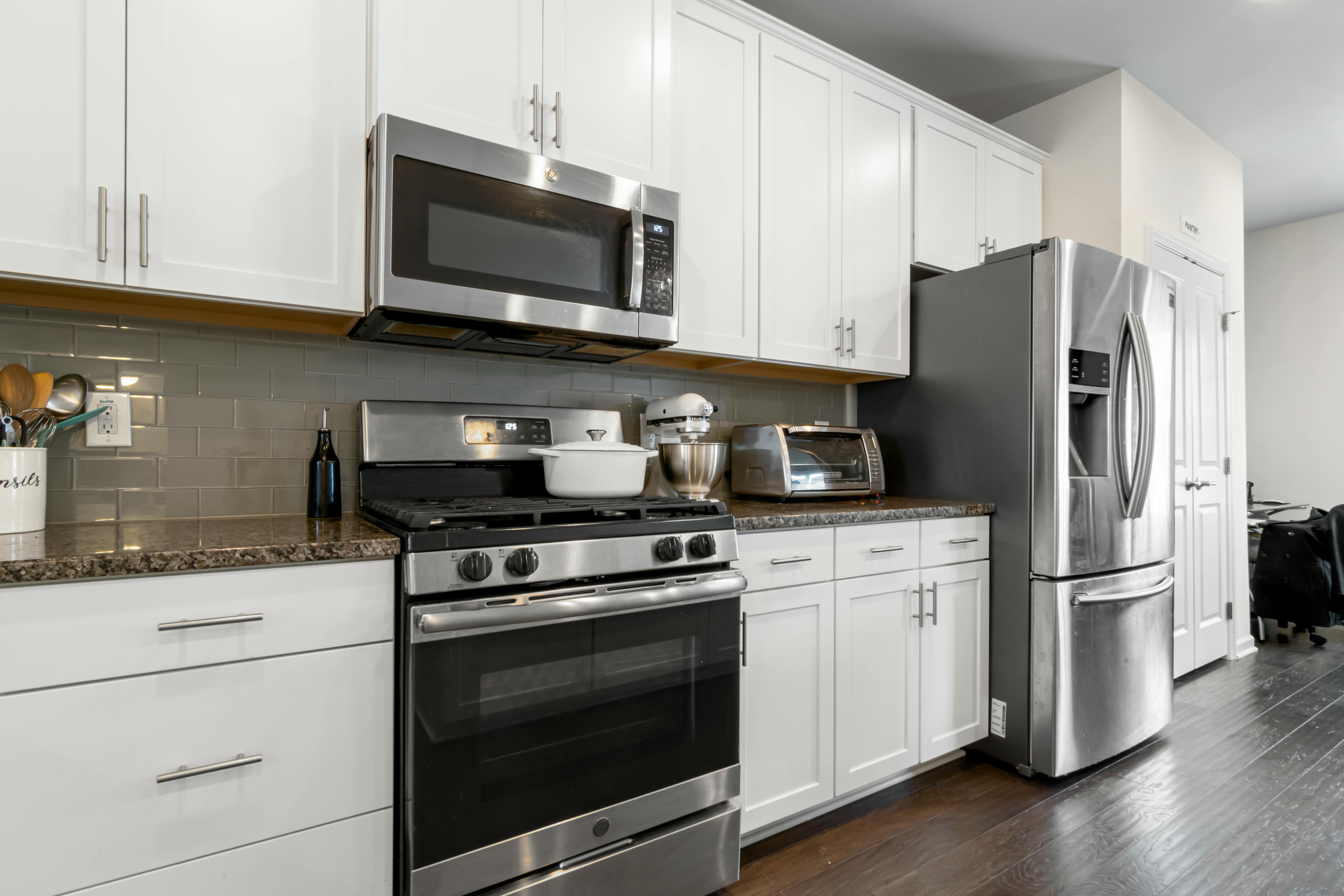 Newer microwaves meet stricter standby-power efficiency standards than models made before 2016.
Frequently Asked Questions
How much electricity does a microwave use per hour?
A 1,000-watt microwave uses 1 kWh per hour of continuous run time, which costs about 18 cents at the national average rate. In practice, almost nobody runs a microwave for a full hour straight. Most sessions last only a few minutes.
Does a microwave use electricity when not in use?
Yes, a small amount. Any microwave with a digital clock or display draws standby power around the clock. Federal efficiency standards have cut this substantially in units made since 2016.
Is it cheaper to microwave or use the oven?
Microwaving is almost always cheaper for reheating and smaller portions. It uses less wattage and finishes in a fraction of the time. Ovens make more sense for large batches or dishes that genuinely need dry, even heat.
How can I find my microwave’s exact wattage?
Check the inside of the door, the back of the unit, or the original manual. If you can’t find it, the manufacturer’s website usually lists it under the specific model number.
Does microwave power level affect electricity cost?
Yes, though not in a perfectly linear way. Lower power settings cycle the microwave’s magnetron on and off rather than running continuously at reduced wattage. Total energy use drops, but cooking time often increases to compensate.
Will a bigger microwave always cost more to run?
Not necessarily. A larger microwave often has higher wattage. It may also cook food faster, though, so total energy per session can end up similar to a smaller unit. Run time matters more than size alone.
Does running a microwave trip my breaker or spike my bill?
Not under normal use. A microwave draws a lot of power for its size, which is why it’s usually on its own dedicated circuit, but the short run times keep total energy use low. A tripped breaker is more often a sign of a wiring issue or too many appliances sharing one circuit than the microwave itself using excessive electricity.
Conclusion
So, how much electricity does a microwave use in the real world? For nearly every household, the answer is: not much. A few cents per session and a dollar or two a month puts it near the bottom of the list of appliances worth worrying about on your power bill. The bigger opportunity is usually swapping oven reheats for microwave ones, not fretting over the microwave itself. Between its low wattage, short run times, and modern standby-power standards, a microwave is one of the most efficient tools in your kitchen, not one of the most expensive.

Hey, My name is MAMON. I am a SEO content creator and affiliate marketer with over 8 years of experience. I create honest product reviews, in-depth buying guides, and practical how-to articles to help readers make informed decisions. My mission is to provide trustworthy, research-backed content that delivers real value.
Leave a Reply