Few things are more frustrating than pressing the switch for your morning tea and getting nothing. If your electric kettle stopped working, the cause is often simple: a tripped outlet, a kettle that is not seated on its base, or a safety cut-off that needs to reset. In other cases, scale, a worn switch, or a blown thermal fuse is to blame. In this guide, you will learn how to diagnose the problem step by step, which fixes are safe to try at home, and when it is time to replace the kettle instead.
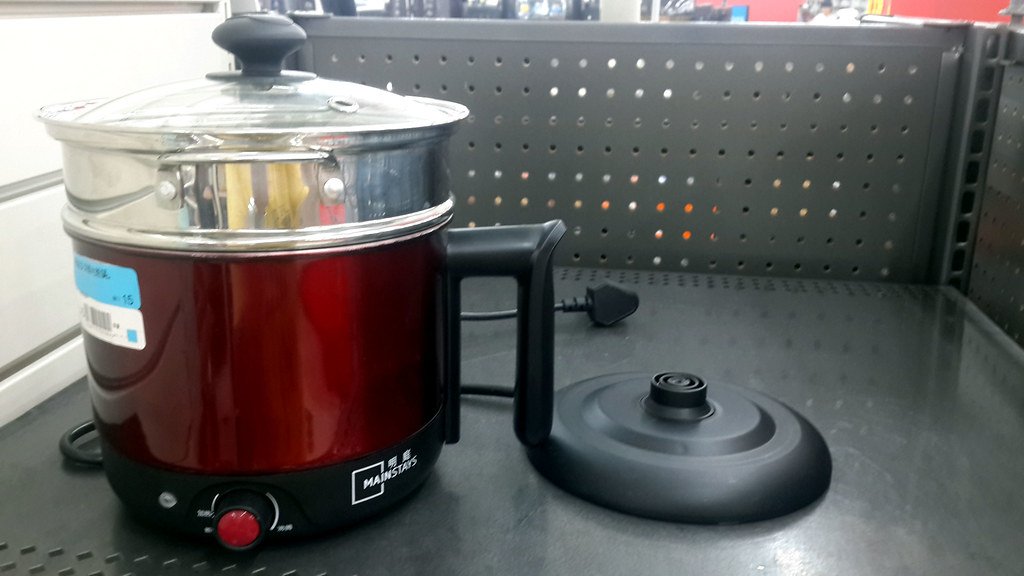
Photo: dcmaster via Flickr (CC BY-SA 2.0).
Key Takeaways
- Start with the outlet. Kitchen countertop outlets are usually protected by a GFCI, which can trip and cut power without warning.
- If it clicks off right away, the usual causes are boil-dry protection, an open lid, or scale on the sensor.
- Meanwhile, a kettle that will not shut off usually has a blocked steam path or a failing switch, which is a safety issue.
- A 1,500-watt kettle draws about 12.5 amps at 120 volts, so sharing a 15-amp circuit can trip the breaker.
- Above all, never open the base or body while it is plugged in, and check CPSC recalls before you repair anything.
Electric Kettle Stopped Working? Start Here
If your electric kettle stopped working, do not assume it is broken yet. Instead, run through these quick checks. Together, they solve a large share of “dead kettle” problems in a couple of minutes.
- Unplug and replug. First, unplug the base, wait 30 seconds, and plug it back in firmly.
- Test the outlet. Then plug in a lamp or phone charger to confirm the outlet has power.
- Reset the GFCI. Next, press the reset button on the outlet, or on a nearby outlet that shares the circuit.
- Check the breaker. After that, look for a tripped breaker in your electrical panel.
- Reseat the kettle. Lift the kettle and set it back on the base so it sits flat and centered.
- Add water. Finally, fill above the minimum line, since many kettles will not start when empty.
If the kettle still does nothing, move on to the troubleshooting table below.
Troubleshooting Table: Symptoms and Likely Causes
When an electric kettle stopped working, the symptom usually points to the cause. Use this table to narrow it down.
| Symptom | Likely Cause | What to Try |
|---|---|---|
| No light, no heat | No power, tripped GFCI or breaker, loose plug | Test outlet, reset GFCI, check breaker |
| Light on, no heat | Failed heating element or thermal fuse | Stop using; contact maker or replace |
| Clicks off immediately | Boil-dry cut-off, empty kettle, open lid, scale | Add water, close lid, let cool, descale |
| Will not shut off | Lid open, blocked steam vent, worn switch | Unplug now; close lid; descale; replace if it repeats |
| Shuts off before boiling | Scale on sensor, steam leaking near switch | Descale, check lid seal |
| Trips the breaker | Overloaded circuit or internal fault | Move to another circuit; stop if it repeats |
| Leaks onto base | Cracked body, failed seal, overfilling | Unplug and stop using |
| Buttons or display dead | Electronic control fault | Unplug for 10 minutes; contact maker |
This table reflects common failure patterns in household kettles, so always follow your own manual where it differs.
Problem 1: No Power at All
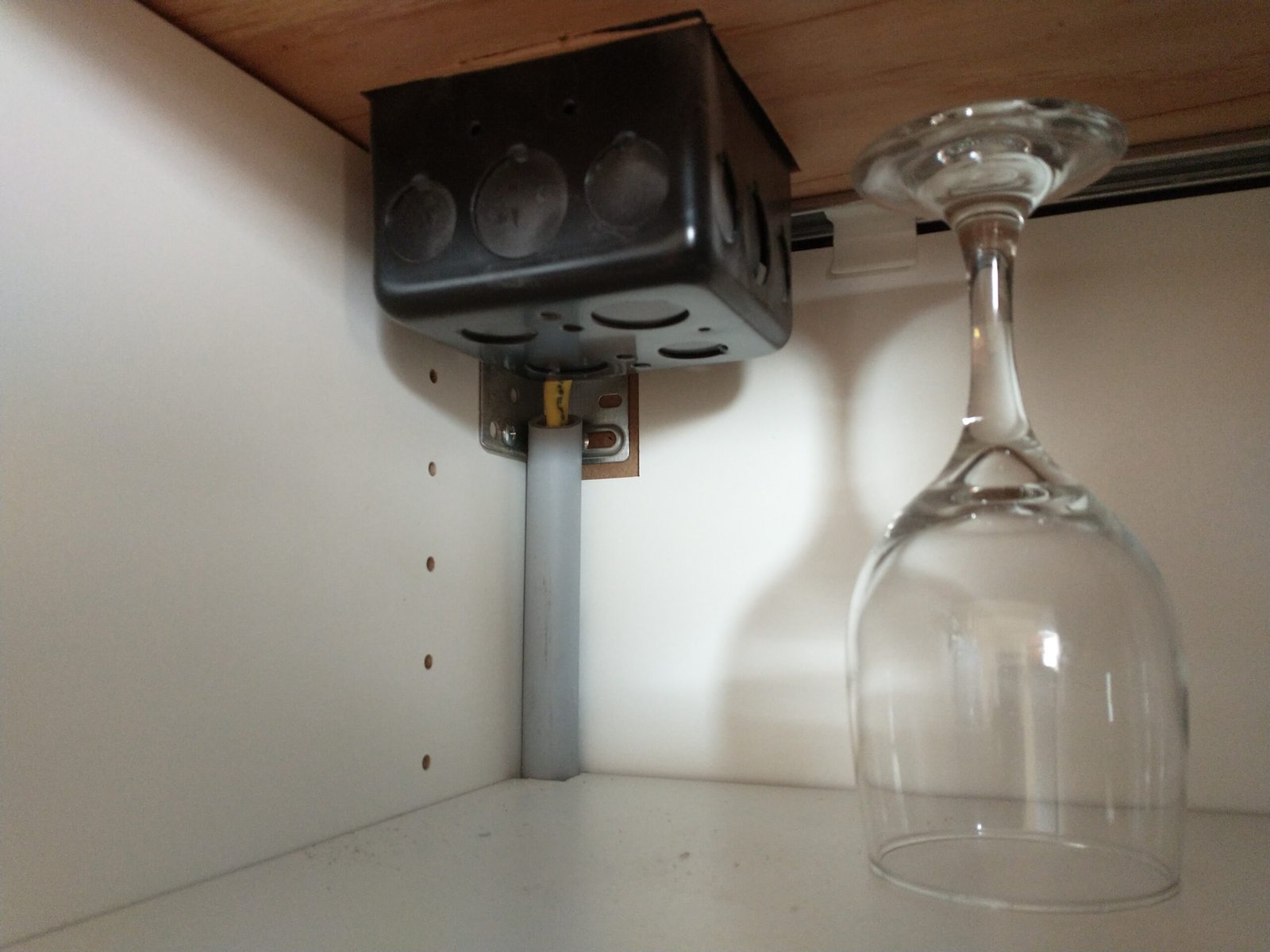
Photo: Stilfehler via Wikimedia Commons (CC BY-SA 4.0).
When an electric kettle stopped working with no light and no heat, the problem is usually power, not the kettle. Kitchen countertop outlets are commonly protected by ground-fault circuit interrupters, or GFCIs. A GFCI can trip from moisture or a brief fault, and it may cut power to several outlets at once. Therefore, look for a reset button on every nearby outlet, not just the one you are using.
Next, check the breaker panel. Kettles use a lot of current, so an overloaded circuit is common. We calculated the draw for typical kettle sizes:
| Kettle Wattage | Current at 120 V | Plus a 1,100 W Toaster |
|---|---|---|
| 1,000 W | About 8.3 A | About 17.5 A, over a 15 A breaker |
| 1,200 W | 10 A | About 19.2 A |
| 1,500 W | 12.5 A | About 21.7 A |
As a result, running a kettle and a toaster on one 15-amp circuit will often trip the breaker. Our guide on how many watts a toaster uses shows why. If the outlet works and the breaker is fine, inspect the plug and cord for damage, and try a different outlet.
Problem 2: The Light Comes On, but It Will Not Heat
However, if the indicator light turns on but the water stays cold, the heating element or an internal thermal fuse may have failed. Many kettles include a one-time thermal fuse that blows if the kettle overheats, often after boiling dry. Once it blows, the kettle will not heat again until the fuse is replaced.
Unfortunately, replacing internal parts requires opening the kettle, which can void the warranty and create a shock risk if done incorrectly. For most people, the safer choices are contacting the manufacturer under warranty or replacing the kettle. In addition, a failed element can sometimes be a sign of heavy scale, so descaling your next kettle regularly helps prevent a repeat.
Problem 3: It Clicks Off Right Away
Sometimes the electric kettle stopped working only seconds after you switch it on. In that case, it is usually protecting itself. Common causes include:
- Empty or nearly empty kettle: First, boil-dry protection stops it from running without water.
- Still hot from the last boil: Also, some kettles will not restart until they cool for a few minutes.
- Open or loose lid: In addition, many kettles need the lid closed to work properly.
- Heavy scale: Finally, scale near the sensor can confuse the temperature control.
Try adding water, closing the lid, and waiting 10 minutes. If that does not help, descale the kettle. Our guide to water descaler vs. water softener explains how to reduce scale at the source.
Problem 4: It Will Not Turn Off
In contrast, this is the most important problem to take seriously. Normally, most kettles shut off when steam reaches a small bimetallic disc near the handle. If the lid is open, the steam tube is blocked by scale, or the switch is worn, steam never triggers the shut-off. As a result, the kettle can keep boiling.
If your kettle does not turn off at a boil, unplug it immediately. Then make sure the lid is fully closed, and descale the kettle, paying attention to the area near the spout and handle. If it still fails to shut off, stop using it. A kettle without working auto shut-off is a scald and fire risk.
Video: ecologicaltime walks through fault tracing on a cordless kettle. Only attempt internal repairs if you are qualified and the kettle is unplugged.
Problem 5: It Shuts Off Before Boiling
Similarly, when the kettle stops before the water reaches a full boil, steam is often reaching the switch too early, or scale is affecting the sensor. For example, a worn lid seal can let steam escape toward the switch. Similarly, heavy scale on the heating plate can create hot spots that trigger the thermostat.
To fix it, descale thoroughly and check that the lid closes tightly. Also, note that at high altitude, water boils below 212°F, so a temperature-control kettle set to 212°F may behave differently in Denver than in Miami.
Problem 6: Leaks or Water on the Base
Above all, any leak is a reason to stop using the kettle right away. After all, water near electrical contacts is a shock risk. First, unplug the base and let everything dry. Then check whether you simply overfilled the kettle, since water above the max line can spill when it boils. If the kettle leaks from a seam, a crack, or the bottom, replace it.
Safe DIY Fixes vs. Repairs to Avoid
Not every fix is a DIY job. Some fixes are safe for anyone, while others belong to the manufacturer or a qualified technician.
| Safe to Try at Home | Leave to a Pro or Replace |
|---|---|
| Reset GFCI or breaker | Replacing a thermal fuse |
| Reseat the kettle on the base | Rewiring the switch or base |
| Descale with vinegar or citric acid | Opening a sealed heating element |
| Clean the base contacts with a dry cloth (unplugged) | Repairing a cracked body |
| Replace a removable filter | Fixing a leak near electrical parts |
If your kettle is under warranty, contact the maker before you open anything. Many brands offer free replacement for internal failures within the warranty period.
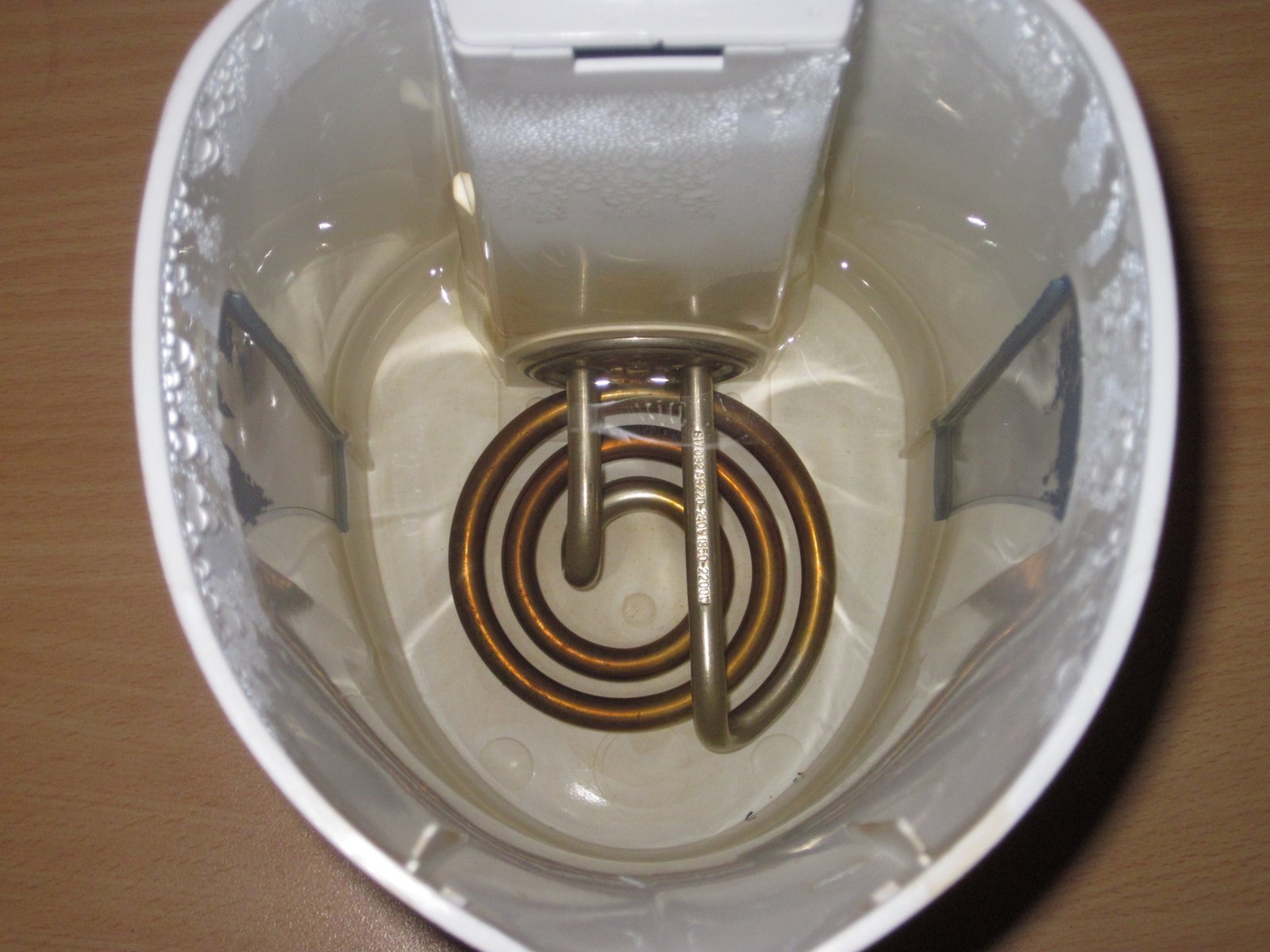
Photo: Meganbeckett27 via Wikimedia Commons (CC BY-SA 3.0).
Troubleshooting Digital and Temperature-Control Kettles
If a digital electric kettle stopped working, the cause may be electronic rather than mechanical. These kettles use sensors, control boards, and touch panels, so a few extra checks apply.
- Unresponsive touch buttons: First, dry the panel completely, since wet fingers or condensation can block touch controls.
- Error codes: Next, look up the code in your manual. Many codes mean the kettle is empty, overheated, or not seated correctly.
- Wrong temperature: In addition, heavy scale on the sensor can make readings drift, so descale and test again.
- Keep-warm not working: Also, some kettles cancel keep-warm if you lift them off the base.
- Frozen display: Finally, unplug the base for 10 minutes to reset the control board.
If the electronics still fail after a reset and descale, contact the manufacturer. Control boards are rarely user-replaceable.
How to Use Your Warranty
Before you throw a kettle away, check the warranty. Many brands cover kettles for one to three years, depending on the model. To make a claim easier:
- First, find your receipt or order history.
- Then note the model number from the bottom of the kettle or base.
- Next, take a short video showing the problem.
- After that, contact the brand through its official support page.
- Finally, do not open the kettle, since that can void coverage.
In many cases, the maker will send a replacement without asking you to return the old unit. As a result, a quick warranty claim is often the fastest fix.
Check for a Recall First
Before you repair or replace a kettle, check whether it has been recalled. Find the model number on the bottom of the kettle or base, then search the CPSC recalls database. In 2026, for example, the CPSC announced a recall of about 113,440 ZWILLING ENFINIGY 1.5 L kettles because the handle could loosen and separate. If your model is recalled, stop using it and follow the remedy, which often includes a refund.
How to Prevent Future Problems
- Descale regularly. In fact, scale is behind many shut-off and heating problems.
- Never run it empty. Also, boiling dry can blow the thermal fuse.
- Keep the base dry. In addition, fill the kettle away from the base.
- Use a dedicated outlet. Similarly, avoid sharing a circuit with a toaster or microwave.
- Handle the cord gently. Finally, do not wrap it tightly or pull it by the cable.
For other appliances on the same circuit, our guide on how much electricity a microwave uses helps you plan outlet use.
When to Replace Your Kettle
Sometimes, when an electric kettle stopped working for good, repair is not worth it. Consider replacing your kettle if:
- The auto shut-off has failed more than once.
- The heating element or thermal fuse has failed and the kettle is out of warranty.
- It leaks, sparks, smells burnt, or trips the breaker repeatedly.
- The handle is loose, or the body is cracked.
- Heavy scale returns quickly even after descaling.
If you decide to replace it, our guide to the best electric kettle compares reliable models with boil-dry protection and strong buyer ratings.
FAQ
Why did my electric kettle suddenly stop working?
The most common causes are a tripped GFCI outlet or breaker, a kettle not seated on its base, or a safety cut-off after boiling dry. Check the power first, then add water and let the kettle cool.
What should I do first if my electric kettle stopped working?
First, check the outlet with another device and reset any GFCI. Then reseat the kettle on its base, add water above the minimum line, and wait a few minutes in case a safety cut-off needs to cool down.
Can I reset an electric kettle?
Many kettles reset by unplugging the base for a few minutes and letting the kettle cool. However, a blown thermal fuse does not reset and usually needs repair or replacement.
Why does my kettle keep clicking off?
Usually, it is empty, still hot, has an open lid, or has scale near the sensor. Add water, close the lid, cool it down, and descale.
Is it safe to fix an electric kettle myself?
Simple fixes like resetting outlets and descaling are safe. Opening the kettle or base is not recommended unless you are qualified, since it can cause shock and void the warranty.
How long should an electric kettle last?
Many kettles last several years with regular descaling. Heavy scale and boiling dry shorten their life.
Final Thoughts
In short, if your electric kettle stopped working, start with the simplest checks: power, GFCI, breaker, base, and water level. In many cases, that is all it takes. Next, look at the symptom, since clicking off, not heating, and not shutting off each point to different causes. Descaling fixes many shut-off problems, while a failed element or fuse usually means replacement. Above all, unplug the kettle before any inspection, and stop using it if it leaks, sparks, or will not turn off.

Hey, My name is MAMON. I am a SEO content creator and affiliate marketer with over 8 years of experience. I create honest product reviews, in-depth buying guides, and practical how-to articles to help readers make informed decisions. My mission is to provide trustworthy, research-backed content that delivers real value.
Leave a Reply