

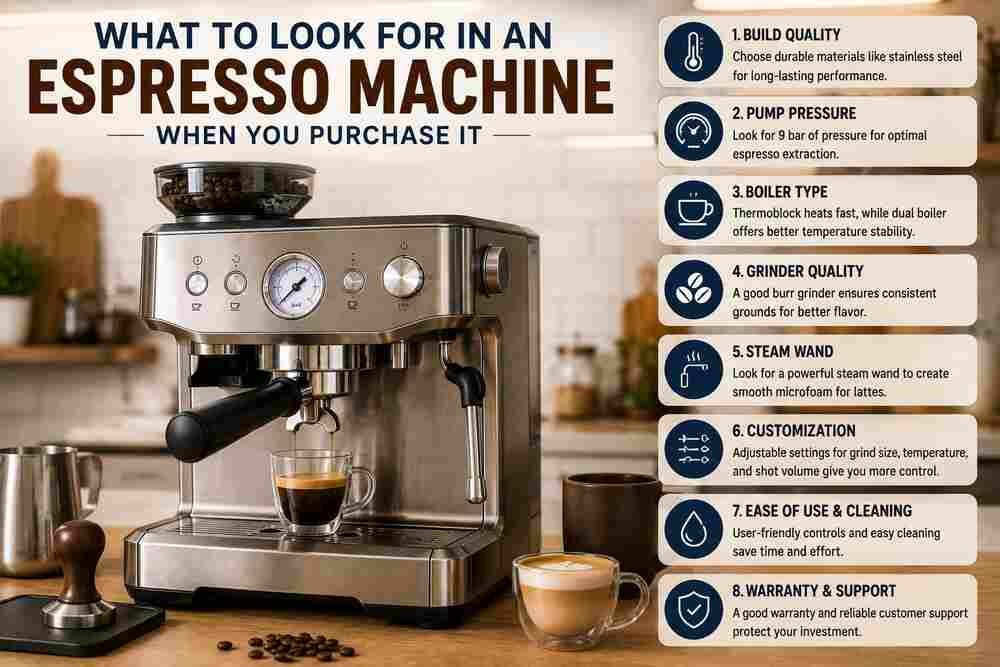

Buying an espresso machine, whether for yourself or as a gift, comes with more decisions than the price tag alone. Knowing what to look for in an espresso machine means looking past the marketing photos and understanding the specs that actually affect the coffee in your cup. Boiler type, portafilter size, steam power, and build quality are a few of the details that separate a machine you’ll love from one you’ll regret.
This guide walks through each of those factors in plain terms. That way you can compare machines the way an experienced buyer would, instead of guessing from star ratings alone.
Key Takeaways
- Boiler type and PID temperature control affect shot consistency more than almost any other spec on the machine.
- Portafilter size matters for future accessories: 58mm is the commercial standard, while many home machines under $1,000 use 54mm.
- Warranty length is a useful shortcut for build quality. Expect 90 days to a year on entry-level machines and up to two years or more on premium ones.
- A machine’s footprint and reservoir size matter just as much day to day as its specs on paper.
What to Look for in an Espresso Machine: The Quick Checklist
Before diving into details, here’s the short version. Prioritize boiler type and temperature stability first, since that affects every single shot. After that, weigh portafilter size, steam wand power, build materials, reservoir capacity, noise level, warranty, and footprint against your budget and kitchen space.
| Feature | Entry-Level | Prosumer | High-End |
|---|---|---|---|
| Boiler type | Single boiler | Heat exchanger | Dual boiler |
| Temperature control | Basic thermostat | Often PID | PID standard |
| Portafilter | 54mm or proprietary | 54mm or 58mm | 58mm |
| Typical warranty | 90 days-1 year | 1-2 years | 2+ years |
Boiler Type and Temperature Control
The boiler is the single biggest factor in shot consistency. Single-boiler machines are the most affordable but can’t brew and steam milk at the same time. Heat exchanger machines use one larger boiler for both. Dual-boiler machines use separate boilers for each function, giving the most precise control at the highest price.
Look closely at whether the machine includes PID temperature control. A PID system continuously adjusts boiler heat using proportional, integral, and derivative calculations to hold brew temperature steady. That beats the wider swings you get from a basic on/off thermostat, according to Meraki’s guide to PID control. That stability is what makes repeatable, well-extracted shots possible.
Portafilter Size and Basket Compatibility
Portafilter size might sound like a minor detail, but it affects both your shot and your future accessory purchases. The commercial standard is 58mm, used across most professional cafés. Many home and prosumer machines under $1,000, including popular Breville models, use a smaller 54mm portafilter instead. That’s according to a size comparison from espresso machine manufacturer Dalla Corte. Neither size is objectively better. That said, 58mm baskets and accessories are far more widely available if you plan to upgrade tampers, baskets, or bottomless portafilters down the road.
Steam Wand Power and Type
If cappuccinos or lattes are part of your routine, steam wand quality deserves real attention. Look for a wand with enough power to fully texture milk quickly. A weak wand takes longer and makes it harder to build smooth microfoam before the milk overheats. Swivel wands with multiple steam holes generally outperform single-hole wands for building a proper whirlpool.
Also check whether the wand pulls from the same boiler used for brewing or a dedicated one, since that ties directly back to the boiler type question above. A machine that can’t steam milk while also holding brew temperature steady will force you to choose between a quick espresso and a properly textured cappuccino.
Build Materials and Construction Quality
Materials used for the internal parts, frame, and outer casing affect both durability and price. Machines built with stainless steel internals resist corrosion and hold up to years of daily use better than those relying heavily on plastic components. Check what the boiler and group head are made from specifically, since these parts see the most heat and pressure cycling over the machine’s life.
Water Reservoir Size and Refill Convenience
Reservoir capacity affects how often you’re stuck refilling mid-morning. A larger reservoir means fewer interruptions, but it also adds to the machine’s footprint. Removable reservoirs that lift out for easy refilling under the tap are generally more convenient than fixed ones that require pouring water in from above.
Noise Level
Vibration pumps, common on many entry-level and mid-range machines, tend to run louder than rotary pumps found on higher-end models. If your kitchen is open to a living space, or you brew early in the morning before the rest of the house is awake, noise level is worth checking. It’s rarely listed clearly in product specs, so reviews are your best bet.


Warranty Coverage
Warranty length is a useful shortcut for gauging expected build quality. Entry-level machines under $500 commonly carry 90 days to a one-year warranty. Mid-range machines typically offer one to two years, and premium machines frequently extend to two years or more. Read the fine print. Most warranties exclude wear items like gaskets and group head seals, and many void coverage entirely if the machine sees heavy commercial-level use.
Size and Footprint
Measure your counter space before you shop, not after the machine arrives. Dual-boiler and larger prosumer machines can be considerably deeper and taller than compact entry-level models. Cabinet clearance above the machine matters too, if you’ll be lifting the reservoir out from the top.
Pre-Infusion and Shot Programming
Pre-infusion gently wets the coffee puck at low pressure for a few seconds before ramping up to full brewing pressure. That soak lets grounds swell evenly, reducing the channeling that causes sour, uneven shots. It’s a feature more common on prosumer and high-end machines. Still, it’s worth checking even on mid-range models, since not every manufacturer advertises it clearly.
Programmable shot volumes are another convenience worth checking. Machines that let you save a preferred shot length automatically stop the pump at the same point every time. That removes some of the guesswork for anyone still learning to judge extraction by eye.
Common Mistakes When Shopping for an Espresso Machine
The most common mistake is buying on price alone without checking boiler type. That’s easy to overlook, since it’s rarely the headline spec in a product listing. A close second is ignoring the grinder question entirely. A great machine paired with stale, pre-ground coffee or an inconsistent cheap grinder will underperform a modest machine paired with fresh, properly ground beans. Underestimating counter space and cabinet clearance is another frequent regret. This especially trips up buyers of taller dual-boiler machines that need room above for lifting out the reservoir.
Ease of Cleaning and Maintenance
A machine that’s a hassle to clean gets used less over time, no matter how good the coffee is. Look for removable drip trays, accessible group heads for backflushing, and steam wands that wipe down easily. Machines with self-cleaning or auto-purge cycles reduce daily maintenance but usually cost more upfront.
Once you’ve narrowed down what features matter most, comparing total cost makes the decision easier. Our guide on how much an espresso machine costs breaks down pricing by tier. Our breakdown of how to choose a home espresso machine covers matching a machine type to your skill level.
Brand Reputation and Parts Availability
A well-known brand isn’t automatically better, but it usually means easier access to replacement parts, gaskets, and repair technicians down the road. Lesser-known or off-brand machines can still be excellent value, especially when reviews are strong. It’s still worth checking whether spare parts and service are actually available in the U.S. before committing. This is one more piece of what to look for in an espresso machine that’s easy to overlook until something needs fixing years down the line.
Watch: What to Look for When Buying Your First Espresso Machine

This walkthrough covers the same priorities above in more visual detail. It helps if you’re comparing a few specific models side by side. Want to skip straight to fully automatic options? Our automatic espresso machine reviews cover several machines that check most of these boxes out of the box.
Frequently Asked Questions About What to Look for in an Espresso Machine
What’s the most important feature to look for in an espresso machine?
Boiler type and temperature stability matter more than almost anything else, since they directly affect shot consistency. PID temperature control is a strong signal the manufacturer prioritized this.
Does portafilter size actually matter for home use?
It matters more for future accessories than for the coffee itself. A 58mm portafilter gives you access to a wider range of aftermarket baskets and tampers. 54mm machines have a smaller, but still usable, accessory market.
Is a longer warranty always a sign of a better machine?
Generally, yes, since manufacturers price in expected repair costs based on component quality. It’s not an absolute guarantee, but a two-year-plus warranty is a reasonable proxy for better build quality.
Should I prioritize a built-in grinder when buying an espresso machine?
Only if convenience matters more to you than grind quality. Built-in grinders save counter space and a separate purchase. Dedicated standalone grinders, though, generally offer more consistent, adjustable grinding for serious espresso use.
How much steam power do I need for milk drinks?
Enough to fully texture a standard-size pitcher of milk within roughly 30-45 seconds. If a wand takes noticeably longer, the milk risks overheating before you’ve built proper foam.
Does a heavier espresso machine mean better quality?
Often, yes, since more metal internals and a larger boiler add real weight. It’s not a perfect rule, but an unusually light machine at a premium price is worth extra scrutiny.
What should I check before buying a espresso machine online versus in person?
Pay close attention to listed dimensions, reservoir capacity, and portafilter size, since these are hardest to judge from photos alone. Reading recent buyer reviews for common complaints about noise or durability helps fill in what spec sheets leave out.
Does pre-infusion really make a noticeable difference?
For many shots, yes. Pre-infusion reduces channeling by letting the coffee puck absorb water evenly before full pressure hits. That tends to produce a more balanced, less sour shot, especially with lighter roasts.
Conclusion
Knowing what to look for in an espresso machine comes down to matching real specs, not just marketing photos, against how you’ll actually use the machine every day. Boiler type, portafilter size, steam power, build quality, warranty, and footprint all factor in. The most expensive option on the shelf isn’t automatically the right one. The machine that fits your kitchen, your drink preferences, and your maintenance tolerance is the one worth buying.


Hey, My name is MAMON. I am a SEO content creator and affiliate marketer with over 8 years of experience. I create honest product reviews, in-depth buying guides, and practical how-to articles to help readers make informed decisions. My mission is to provide trustworthy, research-backed content that delivers real value.