

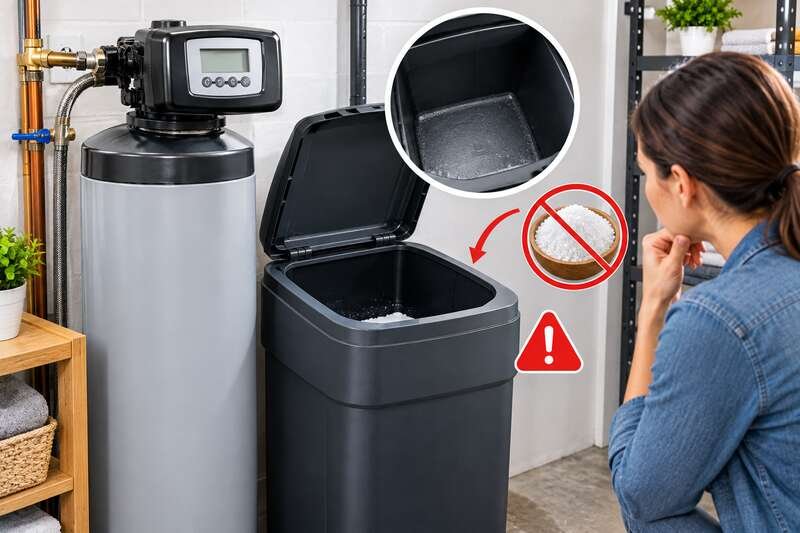
Water softeners are key appliances for managing your home’s water hardness. They rely on salt to remove calcium and magnesium minerals from your water. So what happens if my water softener runs out of salt? In short, your water quality and your home’s plumbing can start to suffer, sometimes faster than you’d expect.

Key Takeaways
- Most households refill their brine tank every 4-8 weeks, depending on usage and water hardness. Check salt levels about once a month.
- Understanding what happens if my water softener runs out of salt helps you catch problems before they turn into costly repairs.
- Without salt, the softener keeps running but stops removing hardness minerals, letting hard water pass straight through.
- Hard water left unchecked can damage pipes, appliances, and fixtures, leading to costly repairs over time.
- Poor soap lather, white spots on glassware, and stained fixtures are early signs salt levels are low.
- Consistent salt management, using the right salt type, keeps a water softener working the way it’s designed to.
Understanding How Water Softeners Work
Water softeners keep your home’s plumbing and appliances running well by removing hard water minerals like calcium and magnesium. This happens through a process called ion exchange.
The Role of Resin Beads in Water Softening
At the center of a water softener are resin beads that attract hard water minerals. As water flows through the tank, the resin traps calcium and magnesium, leaving the water soft. That’s what keeps scale and limescale from clogging pipes and damaging appliances.
The Ion Exchange Process
Ion exchange works by swapping hard water minerals for sodium ions held on the resin. Once the resin fills up with minerals, the softener regenerates. It flushes the collected minerals out through the drain line and recharges the resin with fresh sodium. That cycle is what keeps the system able to remove hardness minerals, cycle after cycle.
Why Salt Is Essential to the Process
Salt is what makes regeneration possible. During that cycle, a brine solution made from salt and water washes over the resin and restores its sodium coating. Without salt, there’s no brine, and without brine, the softener has no way to recharge the resin.
Hard water is common across large parts of the country, particularly the east-central and western United States, according to U.S. Geological Survey mapping. Hardness is commonly classified as soft up to about 3.5 grains per gallon (GPG), moderately hard from 3.5 to 7 GPG, hard from 7 to 10.5 GPG, and very hard above 10.5 GPG. The harder your water, the faster a salt shortage turns into a real problem. That’s especially true for households on well water, where hardness often runs higher than the municipal average.
What Happens If My Water Softener Runs Out of Salt
When your water softener runs low on salt, it can no longer soften your water. The resin beads stay full of minerals, with no way to flush them out. The ion exchange process effectively stops.
Here’s the part that surprises people: without salt, the softener keeps running through its cycles. It just isn’t actually softening anything anymore. Hard water flows through the house as if there were no softener installed at all.
- Hard water minerals collect throughout your home’s pipes, appliances, and fixtures, causing limescale buildup and reduced water flow.
- Your hot water heating system’s efficiency can drop, which raises energy costs and shortens the appliance’s working life.
- On older, mechanical-valve softeners, running dry for extended periods can accelerate wear on the control valve’s piston and seals.
Common signs of a salt-depleted softener include hard water stains and streaks on glassware. A frosted, cloudy look on shower doors and enclosures is another giveaway. Left alone, these problems get harder and more expensive to reverse.
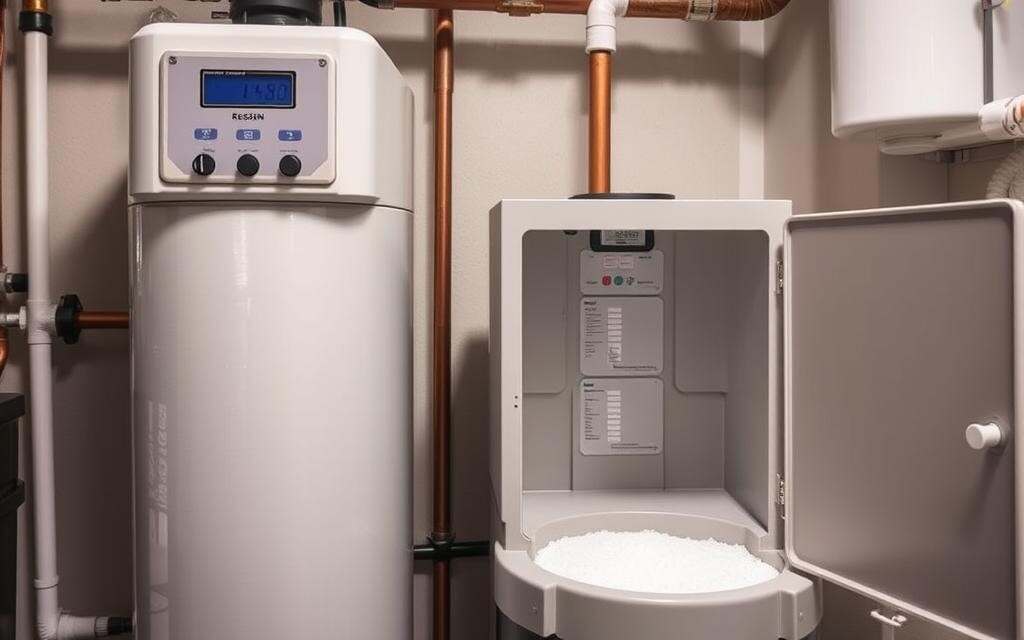
The fix is straightforward: check your softener’s salt levels regularly. Most manufacturers, including Culligan, recommend checking the brine tank at least once a month. Keeping a spare bag on hand means you’re never caught without one.

Signs Your Water Softener Is Low on Salt
Knowing the early warning signs means you can refill before hard water actually reaches your taps.
Physical Indicators in Your Home
Trouble getting soap or shampoo to lather is often the first sign. White spots on shower doors and sinks usually follow. Brown or orange staining in sinks and bathtubs shows up too, as minerals start passing through untreated.
Changes in Water Quality
When salt runs low, water feels noticeably harder on skin and hair. Some households also notice an unpleasant taste or odor returning, the same one a working softener normally eliminates.
System Performance Issues
A salt-depleted softener can also show up as reduced water flow or inconsistent softening. Some fixtures might get soft water while others don’t. Checking and refilling salt on a regular schedule is the simplest way to avoid all of this.
Impact on Your Home’s Plumbing System
Running out of salt doesn’t just affect your water. Without softening, calcium and magnesium build up inside your pipes as limescale. That narrows the interior diameter and slows water flow over time.
That narrowing can eventually cause clogs, reduced pressure, and slow draining at sinks, showers, and appliances. In more severe, long-neglected cases, the added strain can contribute to leaks.
Mineral buildup also puts extra stress on the plumbing system as a whole. That can mean more frequent repairs, or a shorter lifespan for both pipes and the appliances connected to them.
| Plumbing System Effects | Potential Outcomes |
|---|---|
| Limescale buildup |
|
| Increased strain on pipes |
|
| Damage to appliances and fixtures |
|
Keeping your softener stocked with salt is a small, cheap habit. It’s nothing compared to the plumbing repairs hard water can eventually cause.
Effects on Appliances and Fixtures
A salt shortage does more than change how your water feels. Left unaddressed, it can shorten the working life of several appliances at once.
Damage to Water Heaters
Hard water minerals build up inside a water heater’s tank. That buildup acts as insulation between the burner or heating element and the water itself. A Pacific Northwest National Laboratory study found this kind of scale buildup measurably reduces efficiency in gas storage water heaters. It can also shorten a heater’s working life by 25 to 40%. That translates directly into longer heating times and higher energy bills.
Impact on Dishwashers and Washing Machines
Dishwashers and washing machines both rely on soft water to clean effectively. Without it, dishes and laundry come out duller, and soap doesn’t rinse away as cleanly. Both appliances have to work harder to get the same results, which shortens their usable life.
Bathroom and Kitchen Fixture Issues
Faucets, showerheads, and sinks are often the most visible casualties. Hard water leaves them stained and discolored. That buildup can be stubborn enough that some fixtures eventually need parts replaced rather than just cleaned.

| Appliance/Fixture | Issue | Impact |
|---|---|---|
| Water heater | Mineral buildup on heating elements | Reduced efficiency, higher energy bills, potential early failure |
| Dishwasher and washing machine | Scale buildup affecting performance | Weaker cleaning results, shorter appliance lifespan |
| Bathroom and kitchen fixtures | Mineral deposit staining | Unsightly appearance, difficult to clean, possible part replacement |
Proper Salt Maintenance Guidelines
Keeping the right salt level in your water softener is what keeps the whole system working the way it should.
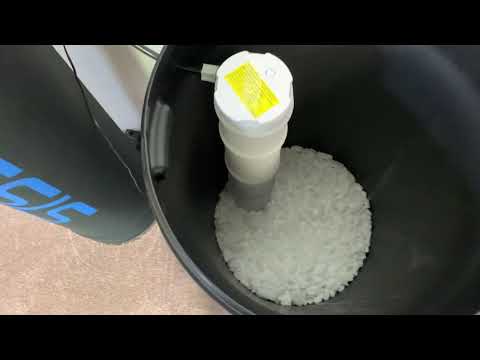
Check the brine tank about once a month. Plan on refilling roughly every 4 to 8 weeks, depending on your household’s water use and hardness level. Knowing what happens if my water softener runs out of salt is exactly why this small habit is worth keeping. The tank should generally stay around half full. Too much salt, on the other hand, can cause its own problems, like salt bridging or salt mushing. Both interfere with regeneration just as much as running dry does.
- Set up a regular salt-buying routine, or a delivery service if your area offers one. That way you’re never caught with an empty tank.
- Consider a softener with built-in salt-level monitoring and low-salt alerts. These smart features make it much easier to stay ahead of maintenance.
Good salt management protects the resin bed, the brine tank, and every fixture downstream that depends on soft water. Consistent salt replenishment really is the simplest way to keep a water softener running smoothly and effectively.
Types of Salt for Water Softeners
Choosing the right salt matters more than most people expect, since purity directly affects how much maintenance the system needs.
Rock Salt vs. Pellets
Rock salt is the least pure option, typically 95-98% sodium chloride. Its insoluble minerals can form a hard sludge in the brine tank that needs cleaning out a few times a year. Pellet forms of purer salts dissolve more evenly and leave far less residue behind.
Solar Salt
Solar salt is produced by evaporating seawater and runs around 99.5% purity. It’s a popular middle-ground choice, needing cleaning only about once a year in most systems.
Evaporated Salt
Evaporated salt is the purest option available, typically 99.6-99.99% sodium chloride. It leaves minimal residue and often stretches maintenance intervals out to 12-18 months. It usually costs more per bag than rock or solar salt, though.
| Salt Type | Purity | Maintenance | Cost |
|---|---|---|---|
| Rock Salt | 95-98% | Every few months | Lowest |
| Solar Salt | ~99.5% | About once a year | Moderate |
| Evaporated Salt | 99.6-99.99% | Every 12-18 months | Highest |
The right choice depends on your water’s hardness, your system, and how much upkeep you’re willing to do. For most households, weighing cost against purity and maintenance time is the deciding factor.
Common Salt-Related Problems and Solutions
Even with a full tank, salt can cause its own issues if it isn’t managed correctly.
Salt bridging and salt mushing are two distinct problems, though both stop the brine solution from forming correctly. A salt bridge is a hard crust that forms near the top of the brine tank, usually from humidity or temperature swings. It leaves a hollow space underneath even though the tank looks full. Salt mushing is different: it’s soft, clumped salt that recrystallizes at the bottom of the tank, often because the water was too cold to dissolve it properly.
- Regular upkeep and good-quality salt help prevent both problems. Avoid overfilling the tank, which is one of the most common causes of bridging.
- If you find a salt bridge, break up the crust carefully with a broom handle or similar tool. For mushing, you’ll need to remove and clean out the clumped salt sediment.
- A softener with salt monitoring and low-salt alerts can help you catch and prevent both issues early.
| Problem | Cause | Solution |
|---|---|---|
| Salt bridging | Hard salt crust forming near the top of the brine tank | Break up the crust, use high-quality salt, avoid overfilling |
| Salt mushing | Salt recrystallizing into clumps at the bottom of the tank | Remove and clean out the sediment, use evaporated or solar salt |
Working through these salt-related problems, and following the maintenance basics above, keeps your softener running well. It’ll keep protecting your home’s plumbing and appliances the way it’s meant to.
Conclusion
So, what happens if my water softener runs out of salt? The system keeps running, but it quietly stops doing its job. Hard water starts working its way back into your pipes, appliances, and fixtures. Left unaddressed long enough, that can mean real repair bills down the road.
The fix costs almost nothing by comparison. Check the brine tank about once a month, keep a spare bag of salt on hand, and use a type suited to your system and water hardness. For more on keeping the rest of the system in shape, see this guide to cleaning a water softener’s resin tank, check how regeneration frequency and salt use connect, or see how long a water softener typically lasts. A few minutes of attention each month is what keeps a softener working the way it should.


Hey, My name is MAMON. I am a SEO content creator and affiliate marketer with over 8 years of experience. I create honest product reviews, in-depth buying guides, and practical how-to articles to help readers make informed decisions. My mission is to provide trustworthy, research-backed content that delivers real value.