


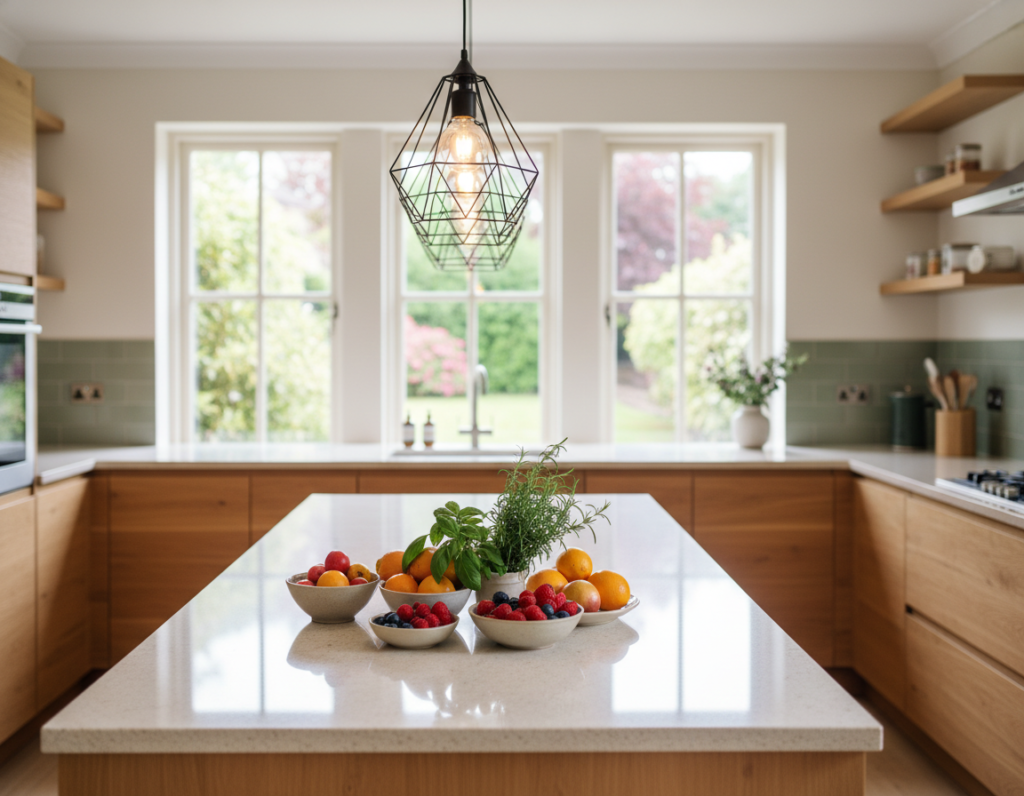
You walk into a familiar room and imagine simple changes that make it feel fresh and personal. A homeowner in Denver followed popular kitchen trends by swapping plain cabinets for warm wood and soft colors, then found the space felt friendlier and lasted through several seasons.
As you plan your remodel, focus on lasting style that balances beauty with function. Small choices—like layered lighting or a clear layout—help your home work for daily life and future resale.


In this guide, you’ll find curated ideas that steer away from one-size-fits-all looks. Expect practical design ways to update colors, materials, and layouts so your kitchens and adjacent spaces feel current without losing warmth.
Key Takeaways
- Choose elements that blend beauty with lasting function.
- Personal touches prevent a cookie-cutter look.
- Simple color and material swaps refresh your space affordably.
- Plan layouts that support daily routines and future needs.
- Well-chosen updates can make your home feel modern for years.
Embracing Nature-Inspired Design
Bring the outdoors in by choosing finishes that age gracefully and feel rooted in nature. You can make practical choices that also reduce environmental impact.
Natural materials like FSC-certified wood, bamboo cabinetry, and eco-friendly quartz countertops are rising in popularity. These options give your kitchen a warm look while supporting sustainable sourcing.
Natural Materials
Stone slab and clay tile backsplashes add timeless character and require little upkeep. Reclaimed wood accents and exposed wood beams create depth and visual warmth.
Organic Textures
Woven pendant lights and textured surfaces make the space feel handcrafted. Soft green tones paired with rich wood textures connect your home to the outdoors.
“Selecting sustainable materials ensures your space stays beautiful and responsible for years to come.”
- Use bamboo or reclaimed wood for cabinetry and accents.
- Choose stone or eco quartz for durable, elegant countertops.
- Add clay tile or woven fixtures to introduce tactile interest.
| Material | Benefit | Best Use |
|---|---|---|
| FSC Wood | Certified sustainable, warm tone | Cabinetry, flooring |
| Bamboo | Renewable, durable | Cabinet faces, shelving |
| Eco Quartz | Low maintenance, recyclable | Countertops |
The Rise of Stainless Steel Kitchens
Homes are adopting stainless steel in bold new ways that feel warm, not industrial. Designers mix metal with burlwood walls, marble floors, and cool-toned wood to soften the shine.
LA.M Studio showed matte stainless steel cabinets paired with burlwood and checkered marble to create depth and warmth. Keep Studio went further by matching appliances and custom steel drawers for a unified, sleek look.
Sophie Rowell adds modern backsplashes to balance reflective appliances and bring contrast. You can also add stone countertops and textured walls so the overall style reads elevated and cozy.
- Appliances and cabinets in steel can feel integrated, not cold.
- Sinks and custom cabinetry extend the look for cohesion.
- Contrast with wood and stone adds depth and warmth.
“Stainless steel kitchens offer an effortless aesthetic that opens new design possibilities.”
| Element | Example | Benefit | Design Tip |
|---|---|---|---|
| Cabinet Finish | Matte stainless | Durable, modern | Pair with burlwood walls |
| Appliances | Integrated steel fronts | Seamless look | Match with steel drawers |
| Surfaces | Stone countertops | Warmth and texture | Add textured walls |
| Backsplash | Modern tile | Visual contrast | Use to balance reflective metal |
Modern Kitchen Trends for Your Home
Today’s home hubs blend cooking, work, and social time into one carefully designed space.
In 2026, the focus is on multi‑functionality. Cedreo reports the move toward rooms that work harder for daily life and hosting. Professional remodelers now use 3D design software to map how the area will perform before construction begins.
When you plan a kitchen remodel, think beyond looks. Combine energy‑efficient appliances with natural materials like certified wood and eco quartz. This keeps the space practical and warm.

A skilled designer helps you mix global designs and personal style so the result feels layered and future‑ready. The latest kitchen ideas encourage built‑in storage, flexible islands, and tech that simplifies daily tasks.
- Make the room work for cooking, working, and entertaining.
- Use 3D plans to avoid surprises during a kitchen remodel.
- Prioritize efficient appliances and durable finishes for long‑term value.
Flat Panel Cabinetry Taking Center Stage
Simple cabinet faces let color, grain, and hardware speak without visual noise. Flat panel fronts bring a calm, modern look that suits many remodeling goals.
In 2026, this clean approach is replacing more ornate choices. Flat panel cabinetry highlights high‑end materials and bold paint while keeping your overall design restrained.
Shaker Cabinet Alternatives
Katy Popple Design uses smooth fronts so countertops and finishes stand out. Workstead adds warmth with round wood knobs that feel simple but special.
Monika Michalowska sets wood cabinet faces slightly back from the frame to create subtle depth. These details add personality without adding clutter.
- Minimal profiles reduce visual noise in open-plan kitchens and enhance the sense of space.
- Flat panels pair well with natural wood and varied countertops, so your materials remain the focal point.
- The movement toward flat fronts reflects a broader shift to intentional, functional lines in modern design.
“Flat panels let the materials and hardware do the talking, creating a calm, cohesive space.”
The Shift Toward Warm Neutral Tones
Soft neutrals are quietly replacing stark white palettes, lending rooms a gentle, lived-in warmth.
Warm neutral tones — think creamy wall tiles, greige cabinetry, and soft off-white walls — make the space feel inviting while keeping lines clean. Nina Farmer Interiors uses creamy wall tile to give a space a comforting, subtle hug for the eyes.
Mandy Cheng Design pairs Zellige tile with white cabinets and stainless steel accents. The result balances reflective metal with textured tile and black stone countertops for depth and warmth.
Ome Dezin shows how cream-toned brick creates a warm brutalist look that still feels cozy. Adding natural wood materials alongside neutral tones brings texture and grounding to the room.
“Warm neutrals replace sterile white with a softer, more livable palette.”
- Use greige or off-white cabinetry to brighten a smaller kitchen without losing coziness.
- Layer stone, tile, and wood to create a refined, lived-in style.
Incorporating Bold Colors and Contrast
A pop of deep color can reset the mood of your room and make other finishes sing. Bold choices add drama without sacrificing function.

Deep green accents bring a rich, natural depth that pairs well with warm wood and white countertops. Leah Bradley’s California coastal palette uses patterned tile to inject energy into a neutral space. Small doses—on an island, lower cabinets, or a backsplash—create a focal point.
Deep Green Accents
Use deep green on lower cabinetry or a single wall to ground an open plan. Pair with stainless steel sinks and chrome stools for modern contrast.
Navy Blue Cabinetry
Navy brings sophistication and works well with white countertops and bright tile. Abbie Naber’s short tile stripes show how modest tile choices lift a design. Vaughan Design & Development proves that horizontal backsplash stripes can make a space feel custom and layered.
- Contrast with light surfaces to highlight form and materials.
- Limit bold color to key elements so the room stays balanced.
- Use textured tile and larger backsplash pieces for visual interest.
| Choice | Where to Use | Design Benefit |
|---|---|---|
| Deep Green | Island, lower cabinets, accent wall | Adds depth; complements wood |
| Navy Blue | Cabinetry, island base | Sophisticated contrast with white |
| Bold Tile Pattern | Backsplash, feature wall | Injects energy; defines the space |
Statement Stone and Marble Countertops
A bold slab of natural stone can redefine how your space feels and functions. Statement stone and marble countertops now act as the main visual anchor in many modern kitchen designs.
Designers often carry the same slab up the wall as a seamless backsplash. Finch Studio’s render shows a green countertop used as a quiet but powerful focal point. Electric Bowery proves deep green stone reads as a refined alternative to black.
Marble remains prized for its veining and timeless look. At the same time, quartzite and soapstone slabs replace tile to create dramatic visual flow. Heidi Caillier Design uses tonal green-on-green to make a layered, luxurious room.
- Countertops as art: the stone’s movement becomes the room’s main pattern.
- Pairing tip: subdued cabinetry and soft ambient light let bold colors and grain stand out.
- Island focus: use a single slab to anchor an island and tie the overall style together.
| Stone Type | Characteristic | Best Use |
|---|---|---|
| Marble | Elegant veining | Classic islands, countertops |
| Quartzite | Bold patterns, durable | Seamless backsplashes |
| Soapstone | Mellow, deep tones | Dark, dramatic looks |
Functional Layouts for Modern Living
You need a layout that supports cooking, working, and social life without friction. Thoughtful planning makes the most of your space and keeps daily routines smooth.
Multi-Functional Islands
Islands now do more than prep work. Many include built-in seating, a second sink, and beverage fridges so they become true hubs for cooking and hosting.
In 2025, 35% of homeowners increased their kitchen size to fit these multi-use islands. Adding power and storage keeps the island practical for work and play.
Creating Zones
Define cooking, dining, and work zones to keep flow and reduce clutter. Clear zones help guests understand the room and make daily tasks faster.
Use cabinetry, lighting, and different countertop materials to mark each area without building walls.
Outdoor Connections
Large glass doors and skylights bring natural light into the main living area. Those openings extend your living space to the yard and lift the overall color palette.
| Layout Element | Common Feature | Benefit |
|---|---|---|
| Island | Second sink, seating, fridge | Multi-use hub for cooking and entertaining |
| Zones | Distinct prep, work, dining areas | Improved flow and organization |
| Outdoor Connection | Glass doors, skylights | More light and indoor-outdoor flow |
The Return of the Walk In Pantry
A walk-in pantry no longer just stores cans — it becomes a full prep room that keeps your main kitchen surfaces uncluttered and ready for guests.
Many modern pantries now house small appliances, a secondary sink, or a beverage center so you can prep, stage, and clean without crowding the primary work area.

These hidden spaces are perfect for dry goods and countertop machines. With built-in shelving and task lighting, a pantry can be as organized and attractive as your kitchen cabinets.
- Value boost: a dedicated prep room adds resale appeal and functional square footage.
- Clutter control: stow appliances and supplies to keep dining and living areas calm.
- Efficiency: having a secondary sink or fridge streamlines food prep and cleanup.
| Feature | Benefit | Best Use |
|---|---|---|
| Appliance storage | Reduces countertop clutter | Bakeware, mixers |
| Task lighting | Improves prep speed | Shelves, counters |
| Secondary sink | Speeds cleanup | Prep and staging |
Smart Technology and Energy Efficiency
Modern control systems let you monitor energy use and fine-tune performance from your phone.
Smart appliances like induction cooktops and programmable ovens save time and cut waste. Many homeowners now choose ENERGY STAR certified models to lower their carbon footprint and utility bills.
Small smart units, such as integrated beverage centers, blend into cabinetry for a clean look. Smart lighting adjusts automatically to set the right mood and keeps energy use low.
- Efficiency: induction stoves heat faster and use less power.
- Convenience: programmable ovens and timers simplify meal prep.
- Visibility: energy tracking apps help you spot waste and improve use.
| Device | Main Benefit | Best Use |
|---|---|---|
| Induction Cooktop | Fast, efficient heat | Daily cooking |
| Programmable Oven | Precision baking + remote control | Meal planning |
| Smart Fridge / Beverage Center | Inventory and energy tracking | Entertaining and storage |
“Energy efficiency is no longer just a buzzword; it is a priority for homeowners who want to reduce waste in their kitchen space.”
Pair these tech-forward touches with thoughtful layout planning so your kitchen design is both smart and beautiful.
Lighting Strategies to Set the Mood
Lighting can change how your room feels at every hour, turning practical work areas into warm, invitational spaces.
Layer your light by combining ambient, task, and accent fixtures. Ambient ceiling fixtures give even glow. Task lights over prep zones keep work safe and clear. Accent fixtures highlight texture and art to make the space feel curated.
Pendant lights over an island act as a focal point and a sculptural statement. They add warmth to the dining area and mark the island as a social center. Picture lights above open shelving or artwork lift your walls and add depth without clutter.
Natural light remains essential. Large windows connect the kitchen to the outdoors and reduce daytime electric use. Backlit backsplashes show off textured tile and provide soft task lighting for counters and prep walls.
- Use dimmers to shift from bright prep to soft entertaining.
- Balance warm and cool bulbs to match finishes and natural light.
- Consider luxury vinyl floors (used in 22% of remodels) for durable surfaces that reflect light well.
“Proper lighting defines zones, enhances materials like tile and backsplashes, and makes small spaces feel larger.”
Conclusion
Smart choices make your space both beautiful and useful. Embracing key kitchen trends helps you create rooms that balance personality with daily needs.
Whether you pick bold colors or natural materials, focus on timeless choices for cabinetry and countertops. Layering paint, accents, and quality finishes keeps the look fresh while staying classic.
Work with a designer to turn your ideas into a plan that boosts function and value. Prioritize natural light, smart storage, and durable materials so your home adapts to new design trends without losing its soul.
These ideas aim to inspire you to design a stunning, functional heart of your home that lasts for years.


Hey, My name is MAMON. I am a SEO content creator and affiliate marketer with over 8 years of experience. I create honest product reviews, in-depth buying guides, and practical how-to articles to help readers make informed decisions. My mission is to provide trustworthy, research-backed content that delivers real value.