


Espresso is a favorite among coffee drinkers, but making it well at home trips up a lot of beginners. Learning how to work an espresso machine really comes down to one idea. It’s forcing hot water through finely ground, tightly packed coffee at high pressure. The result is a small, concentrated shot that’s thick, dark, and topped with a reddish-brown layer of foam called crema. Get the grind, dose, and tamp right, and that shot comes out balanced. Get any one of them wrong, and it turns bitter, sour, or watery fast.
This guide walks through the actual steps of pulling a shot and the different types of machines you’ll run into. It also covers a bit of the surprisingly interesting history behind the machine, plus the real benefits of having one on your own counter.
Key Takeaways
- Espresso is defined by pressure: the Specialty Coffee Association’s standard calls for 9 to 10 bars of pressure and water between 195°F and 205°F.
- A standard shot uses 7-9 grams of coffee for a single or 14-18 grams for a double, extracted in 20-30 seconds.
- Tamping levelness matters more than tamping force. A consistent, level tamp at 15-30 lbs beats an uneven, harder one.
- The modern espresso machine traces back to an 1884 Italian patent, but the crema-producing lever machine wasn’t invented until after World War II.
What’s Actually Happening Inside an Espresso Machine?
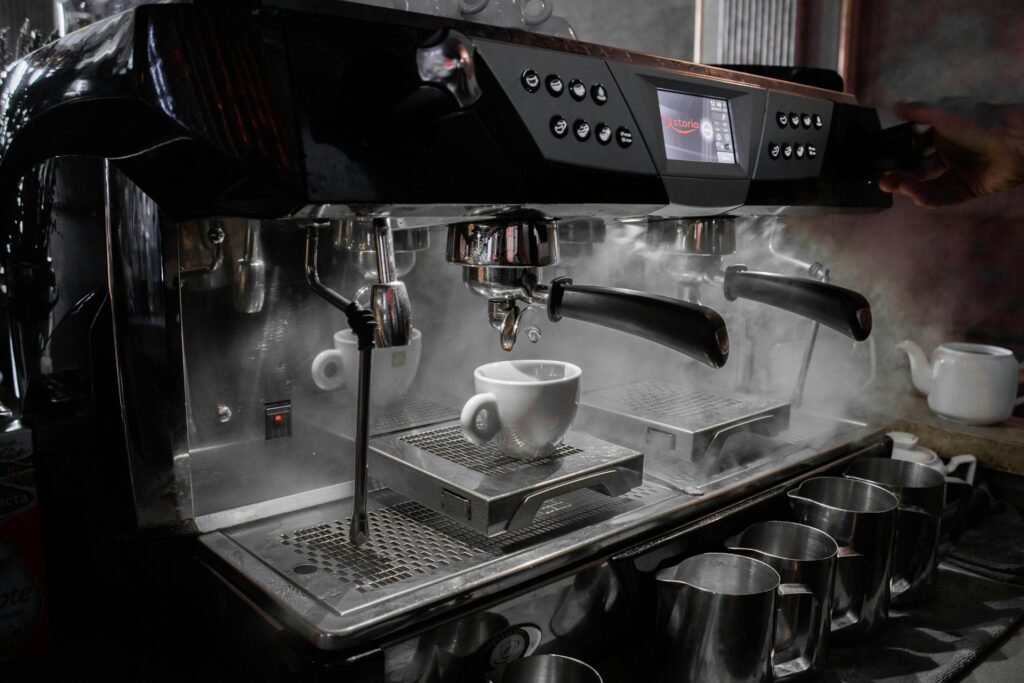
An espresso machine heats water to just below boiling, then forces it through a compact puck of finely ground coffee at roughly 9 bars of pressure. That’s about nine times normal atmospheric pressure. That combination of heat and pressure extracts oils and dissolved compounds from the coffee far faster than a drip machine or French press. The crema on top forms from tiny CO2 bubbles and coffee oils emulsified by that pressure. That’s part of why a well-pulled shot looks so different from regular brewed coffee.
How to Work an Espresso Machine, Step by Step
Here’s the process broken down into the actual steps that make or break a shot. This works whether you’re using a manual lever machine or a semi-automatic one.
- Detach and wipe the portafilter. Remove the portafilter from the group head and wipe out any leftover grounds or residue from the last shot. Starting clean prevents old, stale coffee oils from tainting the new shot.
- Grind fresh, and grind fine. Espresso needs a fine grind, close to the texture of table salt or slightly coarser. Grind beans fresh right before brewing since pre-ground coffee loses aroma and flavor within minutes of grinding.
- Dose the portafilter. Dispense ground coffee into the portafilter basket. A standard single shot uses about 7-9 grams; a double uses 14-18 grams, matching the basket size on most home machines.
- Level and tamp. Level the grounds first, then tamp firmly and evenly, somewhere in the 15-30 lb range. A perfectly level tamp matters more than how hard you press. An uneven tamp lets water rush through the thin spot, leaving the shot under-extracted and sour.
- Lock in the portafilter. Re-attach the portafilter to the machine’s group head and lock it into place immediately. The puck starts absorbing ambient moisture the moment it’s exposed to air.
- Start the shot. Begin brewing into an espresso cup. A properly dialed-in shot should run 20-30 seconds. It should yield roughly double the dry coffee weight in liquid, a 1:2 ratio, per the brewing guidelines from the Specialty Coffee Association.
- Serve immediately. Place the cup on a saucer and drink the espresso right away. Crema starts breaking down within a couple of minutes, so espresso is best enjoyed fresh, not left sitting.
Beyond technique, the coffee itself matters. Not sure which beans or roast level work best in a home machine? Our guide on what coffee to use for an espresso machine breaks it down.

Common Mistakes When Learning How to Work an Espresso Machine
Most espresso problems trace back to a handful of predictable mistakes. Watery, sour shots usually mean under-extraction. That’s typically caused by a grind that’s too coarse, too little coffee in the basket, or too short a brew time. Bitter, harsh shots point the other direction, toward over-extraction. That’s usually from too fine a grind, too much coffee, or letting the shot run past 30 seconds.
Channeling is another common culprit. It happens when water finds a weak spot in an uneven puck and rushes through it instead of soaking the whole bed of coffee evenly. It shows up as a shot that starts weak, then suddenly sprays or spurts near the end. Fixing channeling almost always comes down to distributing grounds evenly before tamping and keeping that tamp level, not pressing harder.
Types of Espresso Machines
Not every espresso machine works the same way. Picking the right type affects how much control you have over the process above.
- Manual or lever machines. These require the user to physically create pressure with a spring-loaded or direct lever. They give full control but demand the most skill and practice.
- Semi-automatic machines. The most common type for home use. The machine controls water temperature and pressure, but the user starts and stops the shot manually, controlling extraction time.
- Automatic machines. These stop the shot automatically once a pre-programmed volume is reached. That removes one variable from the process, though manual grinding and tamping are still required.
- Super-automatic machines. These grind, dose, tamp, and brew at the press of a single button, trading hands-on control for speed and consistency.
Shopping for your first machine? Our guide on what to look for in a home espresso machine covers which type fits your budget and skill level.
A Quick History of the Espresso Machine
Espresso is newer than most people assume. Angelo Moriondo of Turin patented the first steam-driven espresso machine in 1884, but he never commercialized it. Luigi Bezzera picked up the idea in the early 1900s and added the portafilter and multiple brew heads still recognizable in machines today. Desiderio Pavoni bought Bezzera’s patents and turned “espresso” into a marketed product. His Ideale machine debuted at the 1906 Milan Fair, according to the Smithsonian’s history of the machine.
The espresso most people recognize today didn’t actually exist until after World War II. Achille Gaggia’s lever-driven design pushed pressure up from roughly 1.5-2 bars to 8-10 bars, which is what finally produced crema. The Faema E61, released in 1961, replaced the manual lever with a motorized pump. That set the template most semi-automatic machines still follow today.
Benefits of Owning an Espresso Machine
You’ll save money over time
A café-bought espresso drink typically runs $4-6 in the U.S. Brewing the same shot at home costs a fraction of that in beans and water. The machine itself is the upfront cost, but daily savings add up fast for anyone drinking espresso regularly.
A wider variety of drinks
Drinking straight espresso every day gets old for most people. Once you know how to work an espresso machine, you can also make a latte, cappuccino, or macchiato using the same base shot. It just takes different amounts of steamed milk and foam.
Extra built-in features
Many machines come with a milk frother for lattes and cappuccinos, plus a built-in grinder for fresher coffee. A bypass doser lets you switch between regular and decaf grounds without cleaning out the hopper.
Genuine convenience
Skipping the drive to a coffee shop saves real time on busy mornings. Most semi-automatic and automatic machines can pull a shot in under a minute once they’re warmed up. That’s faster than most coffee shop lines.
Fresher coffee, every time
A machine with a built-in grinder lets you grind beans immediately before brewing. Coffee starts losing aroma within minutes of grinding. That freshness translates directly into a better-tasting cup than pre-ground coffee sitting in a bag.
Room to experiment with flavor
Beyond a plain shot, home machines make it easy to try different roasts, milk ratios, and drink styles: a dry cappuccino one morning, a sweeter mocha the next. Once you’re comfortable with the basics, experimenting is part of the fun.
Keeping Your Espresso Machine in Good Shape
Coffee oils build up inside the group head with every shot. Mineral deposits build up in the boiler from tap water over time, too. Both affect flavor if left unaddressed. Backflushing clears out those oils by running plain water or a cleaning detergent backward through the group head with a blind basket. It should happen weekly for anyone using their machine daily. Descaling removes mineral buildup from the boiler using a descaling solution. It’s typically needed every one to three months depending on how hard your local water is. Skipping either one eventually shows up as a flat, dull-tasting shot no amount of good beans can fix.
Watch: How to Use an Espresso Machine

This walkthrough covers the same dosing, tamping, and extraction steps above in real time. It helps if you’d rather watch the process before trying it yourself. Got the basics down? Our breakdown of how much an espresso machine costs is worth a look before you upgrade from a starter model.
Frequently Asked Questions About How to Work an Espresso Machine
How long should it take to pull a shot of espresso?
A properly extracted shot runs 20 to 30 seconds from the moment the pump starts to when you stop it. A shot that finishes much faster is usually under-extracted and sour; one that runs much longer is often over-extracted and bitter.
What grind size is best for an espresso machine?
Espresso needs a fine grind, close to the texture of table salt. Too coarse and water rushes through too fast; too fine and it can’t push through at all, or extraction runs too slow and bitter.
Do I need to tamp espresso hard?
Not particularly. A moderate, level tamp in the 15-30 lb range works fine. Keeping the tamper level and the grounds evenly distributed matters far more to extraction quality than how much force you apply.
Why does my espresso not have crema?
Thin or missing crema usually points to stale beans, since crema comes largely from CO2 that escapes coffee as it ages. It can also mean the grind is too coarse or the machine isn’t reaching full brewing pressure.
How often should I clean my espresso machine?
Backflush the group head weekly if you’re using the machine daily. Descale the boiler every one to three months, depending on your water hardness. Both matter for flavor, not just the machine’s lifespan.
What’s the difference between espresso and regular coffee?
Espresso uses finely ground coffee, high pressure, and a short brew time to produce a small, concentrated shot with crema. Regular drip coffee uses a coarser grind, no added pressure, and a longer brew time, producing a larger, less concentrated cup.
Final Thoughts
Espresso used to be something you could only get at a café or restaurant. Home machines have since made it an everyday option for millions of U.S. households. Once you understand how to work an espresso machine, the process becomes second nature. Grind fresh, dose accurately, tamp level, and pull the shot within that 20-30 second window. From there, the machine pays for itself in savings, convenience, and the sheer variety of drinks you can make without leaving the kitchen.


Hey, My name is MAMON. I am a SEO content creator and affiliate marketer with over 8 years of experience. I create honest product reviews, in-depth buying guides, and practical how-to articles to help readers make informed decisions. My mission is to provide trustworthy, research-backed content that delivers real value.