

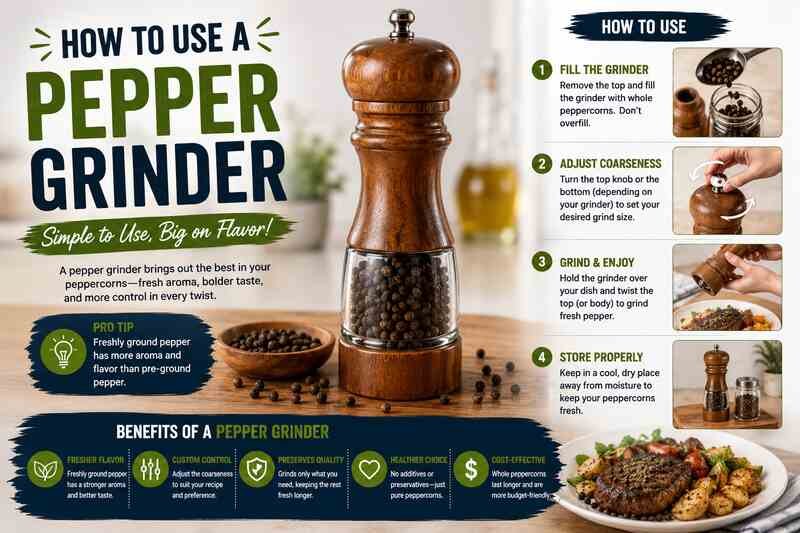

As a professional chef, I’ve always believed in the power of freshly ground pepper. It adds an unmatched aroma and flavor to dishes, which is why I always have a pepper grinder ready in my kitchen. Learning how to use a pepper grinder properly is a small skill that makes a real difference.
One of my favorite memories is watching my grandmother grind peppercorns for her famous spaghetti bolognese. The sound of the grinder and the scent of peppercorns taught me how much freshness changes a dish’s taste.
Key Takeaways
- Freshly ground pepper offers noticeably better flavor than pre-ground spice
- Learning how to use a pepper grinder well involves filling, adjusting grind size, and regular maintenance
- Both manual and electric pepper grinders work well, depending on your style
- Understanding peppercorn varieties helps you choose the right one for each dish
- Adjusting grind size and grinding timing both change how a dish tastes
Understanding Different Types of Pepper Grinders
A good pepper grinder can really boost your dish’s flavor. There are mainly two types: manual and electric.
Manual vs. Electric Models
Manual grinders use two burrs with rough edges that you twist to grind peppercorns, giving full control over grind size, which chefs and precision-minded home cooks tend to prefer.
Electric grinders use a motor to grind peppercorns quickly at the push of a button. They’re great for fast seasoning in busy kitchens, though with less fine control than manual models. Our electric salt and pepper grinder buying guide compares top models if you’re considering the switch.
Choosing the Right Grinder for You
Think about how often you’ll use it, the grind you want, and your kitchen’s style. Pick one that looks good on your counter and works the way you need it to.
The Anatomy of a Pepper Grinder
Knowing how a pepper grinder works helps you use it well. For a full breakdown, see our guide on how a pepper grinder works, but here’s the short version.
Key Components Explained
A pepper grinder has a handful of parts that work together: the body, grinding mechanism, adjustable top nut, and storage compartment.
- The grinding mechanism is often carbon steel, ceramic, or stainless steel. Carbon steel stays sharp for grinding pepper, while ceramic works well for both salt and pepper since it doesn’t rust.
- The adjustable top nut lets you change the grind size, from fine to coarse, depending on what you need.
- The storage compartment at the bottom holds whole peppercorns, ready to be ground when you need them.
How Each Part Works Together
Turning the adjustable top nut moves the grinding mechanism, which crushes the peppercorns between two burrs and releases their aromatic oils. The ground pepper then falls into the dispenser, ready to season your food. It’s a simple mechanism, but getting each part clean and properly aligned is what keeps a grinder working smoothly for years.
Selecting the Right Peppercorns
Choosing the right peppercorns adds a special flavor to your dishes. There are several types, each with its own taste and best use, from bold black peppercorns to soft pink ones.


Types of Peppercorns
- Black Peppercorns: the most common, known for their bold flavor and use in most savory dishes.
- White Peppercorns: milder, with a hint of citrus, great for creamy dishes and sauces.
- Green Peppercorns: unripe, with a fresh taste, perfect for pickling, vinaigrettes, and Thai curries.
- Red Peppercorns: rare, with a fruity, floral taste, used in specialty dishes.
- Pink Peppercorns: not from the Piper nigrum plant, known for a fruity taste, used as garnishes or in baked goods.
What to Consider When Choosing Peppercorns
When picking peppercorns, think about origin, freshness, and how you’ll use them. Single-origin peppercorns like Tellicherry from India’s Kerala region cost more but taste better. According to The Spice House, Tellicherry peppercorns are the largest, most mature berries left longer on the vine, giving them a more complex, piney flavor than standard black pepper. Whole peppercorns also keep their flavor far longer than pre-ground pepper, so buying whole and grinding fresh is worth it for most cooks.
| Peppercorn Variety | Flavor Profile | Best Uses |
|---|---|---|
| Black Peppercorns | Bold, pungent, earthy | Versatile, suitable for most savory dishes |
| White Peppercorns | Milder, slightly citrusy | Creamy dishes, sauces, and light-colored foods |
| Green Peppercorns | Soft, fresh, slightly herbal | Pickling, vinaigrettes, Thai curries |
| Red Peppercorns | Intense, fruity, floral | Limited availability, used as a garnish or in specialty dishes |
| Pink Peppercorns | Fruitier, more delicate | Garnishes, baked goods, and specialty applications |
How to Fill Your Pepper Grinder
Keeping your grinder full of flavorful peppercorns is the first step in learning how to use a pepper grinder well.
Step-by-Step Instructions
- Unscrew the top of your pepper grinder to access the interior compartment.
- Remove the dispenser, typically the narrow spout at the bottom of the grinder.
- Using a small spoon, funnel, or folded piece of paper, pour peppercorns into the storage chamber, being careful not to overfill it.
- Replace the dispenser, making sure it’s properly aligned and secured.
- Screw the top of the grinder back on, making sure it’s tightly closed.
Tips for Avoiding Spills
- Clean the interior before refilling so leftover peppercorns don’t mix with the new batch.
- When using a funnel, tap it gently to keep peppercorns flowing smoothly and reduce spills.
- Avoid overfilling the grinder, since this can cause jams that are hard to clear.
- Hold the grinder over a plate or bowl while refilling to catch any stray peppercorns.
If your grinder ever needs a full teardown rather than a quick refill, our guide on putting a pepper grinder back together walks through that process step by step.
Adjusting the Grind Size
Using a pepper grinder well is about more than flavor; it’s also about grind size, since the size of the particles changes how your food tastes and feels. Whether it’s a juicy steak or a creamy soup, the right grind size matters.
Importance of Grind Size in Cooking
Coarse grinds work well for hearty dishes like meat and salads, giving a strong pepper bite. Fine grinds suit sauces and soups better, blending in without overpowering the dish.
How to Change Settings on Your Grinder
- Find the adjustment knob or ring, usually at the top or bottom of the grinder.
- Turn it counterclockwise for coarser grinds and clockwise for finer ones.
- Don’t over-tighten it, since that can strain the mechanism and affect its performance.
- Test the grind before using it in your dish, and adjust as needed.
- Try different settings and note which ones work best for specific recipes.
Knowing how to adjust your grinder opens up new flavors in your cooking, whether you’re a pro chef or a home cook.
Proper Techniques for Grinding Pepper
Learning to grind peppercorns the right way is what unlocks their full flavor. Let’s look at the basics of how to use a pepper grinder well.

Using Your Hands Effectively
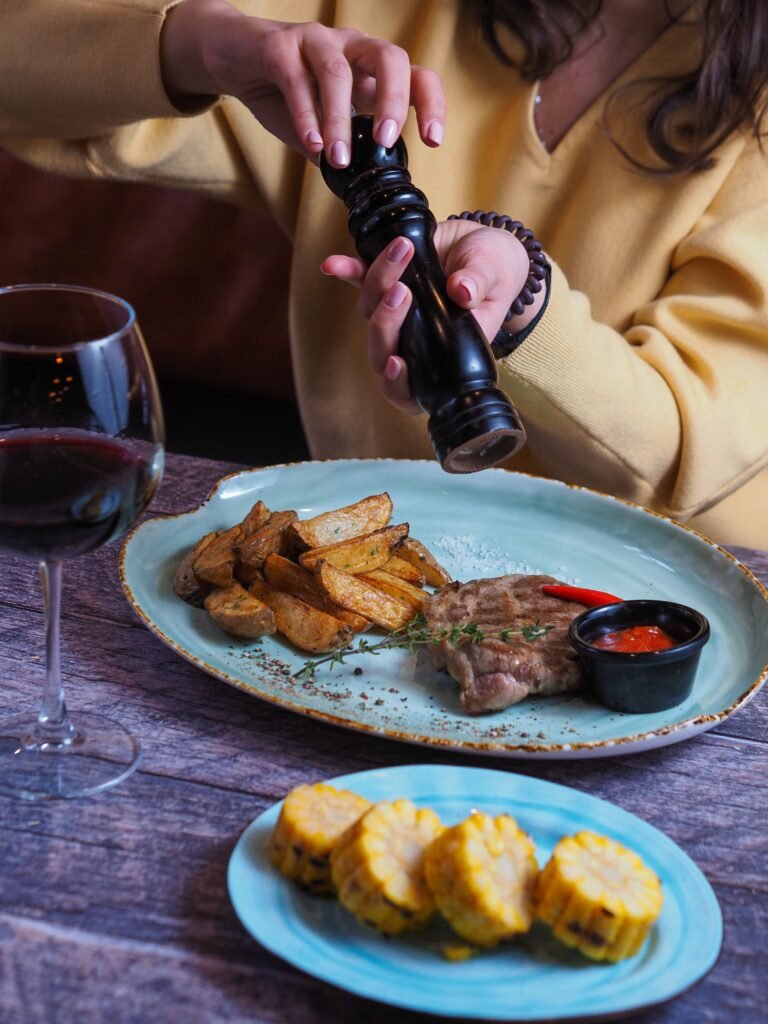
Hold the grinder with one hand on the body and the other on the top. This gives you good control and lets you apply even pressure. Use a smooth, steady motion when twisting, always turning in one direction to avoid clogs or uneven grinds.
The Right Motion for Best Results
- Grind directly over your food just before serving to preserve freshness and aroma.
- Adjust your grip and motion based on your particular grinder’s design and your own comfort.
- Experiment with different techniques to find what works best for your cooking style.

Timing Your Pepper Grinding
When you grind your pepper matters as much as how. Freshly ground pepper brings a bold, aromatic taste that pre-ground pepper can’t match, and the reason comes down to chemistry. Peppercorns contain piperine, which creates the heat, along with separate aromatic oils that create the smell. According to ScienceInsights, the outer shell of a whole peppercorn protects those oils and piperine from air and light, but once ground, pepper loses much of its aroma within about 30 days. Grinding right before you use it captures both the heat and the aroma at their peak.
When to Grind for Optimal Flavor
- For long-cooked dishes, add a little pepper at the start and more toward the end, so the flavor builds and holds.
- When seasoning raw meat, grind pepper just before cooking so the flavor penetrates as it cooks.
- For salads, dressings, and other finished dishes, grind right before serving to keep the taste lively.
Storing Ground Pepper and Peppercorns
Proper storage keeps your pepper tasting its best, since ground pepper loses flavor much faster than whole peppercorns.
Best Practices for Flavor Preservation
Store whole peppercorns in an airtight container in a cool, dark spot, away from heat and sunlight, to protect the oils that give pepper its flavor. If you do keep pre-ground pepper on hand, try to use it within a few weeks for the best taste.
Ideal Conditions for Storage
- Keep your pepper grinder away from moisture to prevent clumping and mold growth.
- For wooden grinders, avoid high-humidity areas that can damage the wood.
- Store any pre-ground pepper in an airtight container in a cool, dark cabinet.
- Keep pepper away from heat sources, since warmth speeds up the loss of flavor compounds.
Cleaning and Maintenance of Your Grinder
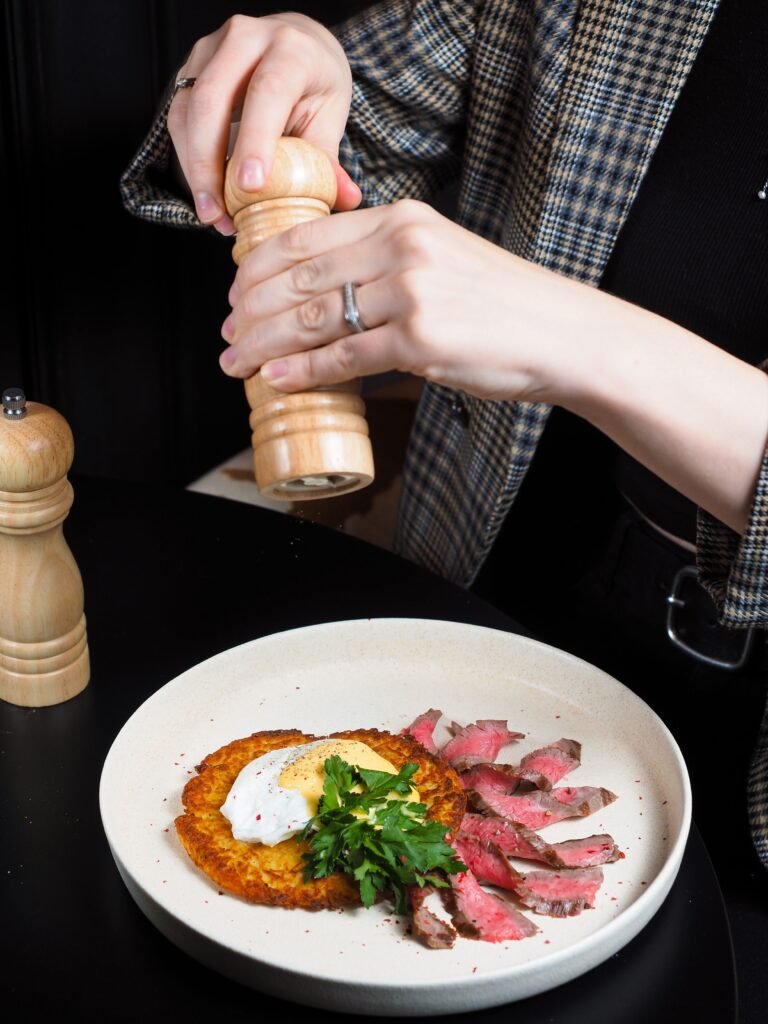
Keeping your pepper grinder clean helps your food taste great and helps the grinder last longer, whether it’s manual or electric.
How to Clean Different Grinder Types
Wooden grinders need a dry brush to remove buildup; don’t soak them in water, since that can damage the wood. Metal or plastic grinders can usually be taken apart, washed in warm soapy water, and dried thoroughly before reassembly. For tough spots, a white vinegar and water mix works well. Our full pepper grinder cleaning guide covers this in more depth.
Regular Maintenance Tips
- Clean your grinder every few weeks, or as needed, to keep it performing well.
- For wooden grinders, polish the exterior every six months with olive oil and vinegar.
- Don’t put salt in your pepper grinder, since it can cause corrosion.
- Keep your grinder in a cool, dry spot to stop peppercorns from clumping.
- Refresh the peppercorns regularly for the best flavor.
Troubleshooting Common Pepper Grinder Issues
Even when you know how to use a pepper grinder well, it can still run into problems occasionally. Here’s how to tackle the most common ones.
Grinder Jams or Blockages
If your grinder jams, take it apart as the manual describes and remove any stuck peppercorns or debris. Make sure your peppercorns are dry, since moisture is a common cause of clumping and clogging. Our guide on putting a pepper grinder back together covers the full disassembly and reassembly process if you need it.
Uneven Grinding Problems
Uneven grinding usually means the grinding parts are worn and need replacing, or the adjustment nut has come loose and needs tightening. For electric grinders, also check the battery or power connection if the motor won’t start, and confirm everything is reassembled correctly.
When to Replace Your Pepper Grinder
Even the best pepper grinders wear out eventually. Watch for loose parts, cracks, or trouble adjusting the grind size, all clear signs it’s time for a new one.
Signs of Wear and Tear
Regular use can wear down the grinding mechanism, leading to uneven grinds. If performance drops, settings stop holding, or the body feels loose or cracked, it’s nearing the end of its life.
Choosing a New Grinder
When picking a new pepper grinder, prioritize durability and quality. Ceramic or carbon steel parts last longer and grind better than plastic or cheap metal. Our salt and pepper grinder reviews can help you compare models if you’re in the market for one.
Frequently Asked Questions
How do you use a pepper grinder for the first time?
Fill it with whole peppercorns following the steps above, set the grind to medium while you get a feel for the mechanism, and grind a little onto a plate to test the flavor and texture before using it on food.
How many turns of a pepper grinder equal a teaspoon?
It varies by grinder and grind size, but as a rough guide, about 20 to 25 turns of a typical manual grinder produces roughly a teaspoon of coarsely ground pepper. Test your own grinder once to know its output.
Can you put wet peppercorns in a pepper grinder?
No. Wet or oily peppercorns clump together and clog the grinding mechanism. Always use fully dry peppercorns, and keep your grinder itself away from moisture.
Is it better to use a pepper grinder or pre-ground pepper?
A pepper grinder almost always wins on flavor, since whole peppercorns hold onto their aromatic oils far longer than pre-ground pepper does. Pre-ground pepper is more convenient, but it loses much of its character within weeks.
Conclusion: How to Use a Pepper Grinder Like a Pro
Learning how to use a pepper grinder properly, from filling and adjusting grind size to timing your grind and keeping the mechanism clean, turns a simple kitchen tool into one of the easiest ways to improve a dish. Once you’ve dialed in your grinder and found the peppercorns you like best, freshly ground pepper becomes second nature, and pre-ground pepper is hard to go back to.


Hey, My name is MAMON. I am a SEO content creator and affiliate marketer with over 8 years of experience. I create honest product reviews, in-depth buying guides, and practical how-to articles to help readers make informed decisions. My mission is to provide trustworthy, research-backed content that delivers real value.