


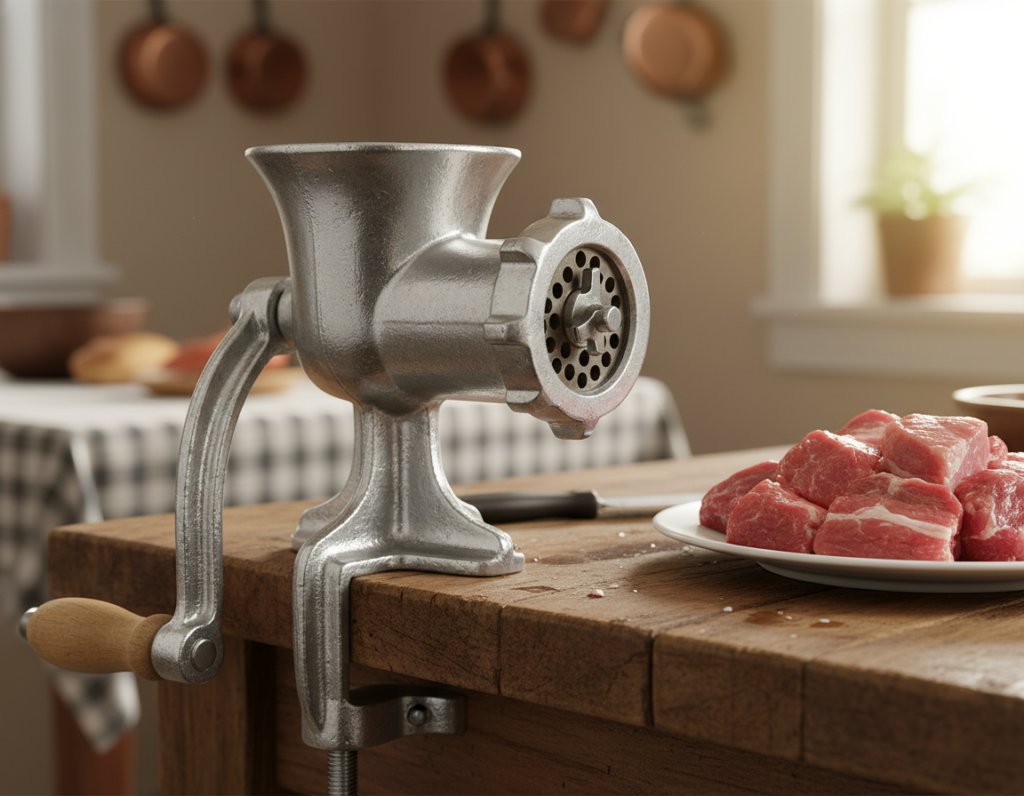
You remember the first time you tried a recipe and the texture felt off. You wanted juicy burgers and a smooth sausage mix, but the result was uneven. That moment led you to discover how to use a manual meat grinder for fresher, more consistent results. This guide covers the grinding process, plate choices, blade care, and prep steps that make a real difference.


By the end, you will feel confident handling the parts, selecting the right plate size, and keeping the device clean with warm, soapy water. This short introduction sets the stage for clear, practical steps that help you get consistent, tasty results at home.
Key Takeaways
- Fresh grinding improves flavor and texture for burgers and sausage.
- Plate size and blade condition shape your final grind.
- Cold meat and clean parts speed the process and boost safety.
- Hand-operated devices offer control and fit small kitchens well.
- Grinding mixes surface bacteria throughout the meat, so it needs a higher safe cooking temperature than a whole cut.
- Clean parts with warm, soapy water after every use.
Understanding the Anatomy of Your Meat Grinder
Open the box and you’ll find several metal parts that together shape your final grind. Knowing each component makes assembly faster and helps you get consistent texture in beef or sausage. For more on the mechanics, see our guide on how a meat grinder works.
Key Components
Hopper: This is where you place chunks of meat. It guides pieces toward the auger and keeps feeding steady.
Auger (screw): A twisting metal piece that pushes meat forward. It forces the product into the blades and then through the plate.
Blades and plate: Sharp blades cut the meat before it passes through the plate. The plate’s hole size sets the final texture for ground beef or sausage.
The Role of the Auger
The auger determines flow and pressure. In hand models, the crank controls speed and force. Correct fitting of blade and plate prevents jams and preserves part life.
- Size options: #5 and #8 suit home use; #32 is commercial.
- Check metal parts for wear and align the blade with the plate every time.
How to Use a Manual Meat Grinder Effectively
Start by clamping the unit firmly; a stable base keeps each turn safe and steady. Secure the clamp to a flat counter or sturdy table before assembling parts. A fixed setup prevents slipping and protects your hands while you work.
Cut your meat into small, even strips or cubes so the auger feeds smoothly. Always push pieces with the provided pusher and never press with fingers near the blades. This practice maintains safety and prevents jams.
Turn the hand crank at a steady pace. Manual operation takes physical effort, but that effort gives you control over texture and grind. With time, your rhythm improves and the process becomes quicker and easier.
- Control: Hand models let you adjust pressure and produce consistent ground meat.
- Portability: No power source needed, so you can grind indoors or outdoors.
- Quality: Home grinding lets you choose cuts and manage fat content for better food results.
Preparing Your Meat for the Best Results
Cold meat handles better and gives a cleaner cut when you prepare it for grinding. Chill your cuts in the fridge for at least 30 minutes before you start.
Temperature Control
Keep protein and fat firm. Cold pieces slice cleanly and reduce smear. This helps the blades and screw move product evenly through the hopper.
Cut to fit. Trim and cube pieces so they feed easily; for a larger roast, our guide on how to slice meat thin at home helps with breaking it into strips first. Avoid overloading the hopper.
- Chill meat and tools before work.
- Feed at a steady pace for consistent texture.
- Check blade sharpness; dull edges cause tearing and unsafe effort.
- Keep your workspace clean for best safety and food quality.
| Stage | Why it matters | Recommended temp | Quick tip |
|---|---|---|---|
| Pre-chill | Firm fat, less smear | 28-34°F (-2-1°C) | Place meat on a tray in fridge |
| Cutting | Even feed, fewer jams | Cold but workable | Cube to hopper size |
| Feeding | Consistent grind | Cold throughout | Do not overload hopper |
Selecting the Right Grinding Plates and Blades
Plate hole size and blade sharpness decide whether your outcome is silky or chunky. Choose plates that match the recipe so the texture fits burgers, sausage, or chili.

Hole sizes matter: Fine 1/8″ (3mm) plates make smooth grinds for hot dogs or delicate patties. Medium 1/4″ (6mm) plates are the most versatile for ground beef, tacos, and many sausages. Large 1/2″ (12mm) plates give a rustic, chunky result for chili or coarse sausage.
Blade care: Keep blades sharp so they cut cleanly against the plate instead of tearing. Most blades are stainless steel, which resists rust and holds an edge well.
| Plate Hole | Texture | Best For |
|---|---|---|
| 1/8″ (3mm) | Fine | Hot dogs, smooth patties |
| 1/4″ (6mm) | Medium | Ground beef, tacos, sausages |
| 1/2″ (12mm) | Coarse | Chili, rustic sausages |
Always check that the plate and blade fit your grinder size. Inspect parts for wear and replace worn plates or blades to protect internal metal components and keep grinding consistent.
Essential Safety Precautions for Home Grinding
A single slip can turn a routine grind into an emergency. Prevent that risk with a few simple steps.
Never place fingers or hands inside the feed tube. Always use the supplied pusher so your hands stay well away from the internal blades. Our guide on how to prevent cuts in the kitchen covers grip habits that apply directly to grinder work too.
When working with an electric meat grinder, unplug the unit before any cleaning or maintenance. That simple step removes the biggest electrical risk.
Keep the unit clamped on a steady, dry place. A secure setup prevents the grinder from slipping or tipping during grinding.
- Inspect parts before each session. Replace cracked or warped pieces.
- Wear snug clothing and tie back long hair to avoid snagging.
- Keep blades sharp and the machine free of debris to reduce jams.
- Use mild cleaners and dry components completely; water left on parts invites rust.
Follow the manufacturer’s instructions for your model. These rules protect you and keep meat grinding safe and efficient in your kitchen.
Food Safety When Grinding Meat at Home
Grinding changes the food safety math, not just the texture. A whole cut only carries bacteria on its outer surface, so searing that surface can make a lower internal temperature safe. Grinding mixes that surface bacteria all the way through, which is why the USDA’s Food Safety and Inspection Service recommends cooking ground beef to a minimum internal temperature of 160°F, checked with a food thermometer rather than by color alone.
A few habits keep home-ground meat safe. Grind in small batches so nothing sits out longer than necessary, refrigerate or freeze what you are not cooking within about two hours, and wash the hopper, auger, blade, and plate in hot, soapy water right after use. This closes the one real safety gap that store-bought ground meat does not have: knowing exactly what went into the mix.
Step by Step Assembly and Setup
Lay out each component on a clean counter so nothing gets lost during assembly.


Attach the grinding head to the main body and align the openings. Make sure the fit is snug before you move on.
Slide the auger into the head with the spiral pointing inward so it turns freely when you crank. Next, place the blade on the auger shaft with the sharp edges facing outward toward the plate.
Select the plate size that matches the texture you want. Secure the plate with the locking ring and tighten until it sits flush.
Fix the unit to a stable countertop using the clamp or suction base. Keep a bowl under the outlet to catch ground meat as it exits the plate.
Clean equipment and clear debris before assembly, and double-check all parts are tightened. Loose blades or plates cause poor results and reduce safety.
Tip: Proper setup protects parts, improves grinding, and extends the life of your grinders so you can focus on good food.
Maintenance Tips for Longevity and Hygiene
A few minutes of attention after grinding saves hours of repair later. Clean, dry, and lightly oiled parts prevent rust and keep performance steady.
Cleaning Procedures
After each use, dismantle the unit and wash all components in warm, soapy water. Use a brush to reach inside the feed tube and around the plate and blade.
Do not leave metal pieces soaking. Extended contact with water harms finishes and can breed bacteria.
Drying and Rust Prevention
Dry every piece thoroughly. Carbon steel parts need extra care. Wipe with a dry cloth and let components air for a few minutes.
Store metal parts in a dry place and wrap them in oil-soaked paper if humidity is a concern.
Lubricating Moving Parts
Apply a small amount of food-grade mineral oil to the auger and shaft. This reduces friction and keeps cranking smooth.
“Regular maintenance extends lifespan and protects food safety.”
Portion what you will not cook right away. Our guide on how to wrap meat for freezing covers packaging steps that keep home-ground beef and sausage from picking up freezer burn.
| Task | When | Why |
|---|---|---|
| Washing in soapy water | After every use | Removes meat residue and bacteria |
| Drying and oiling | Immediately after cleaning | Prevents rust and keeps parts moving |
| Inspect blades and plate | Monthly or after heavy use | Sharp blades ensure cleaner grinding |
Comparing Manual and Electric Grinding Options
Portability often favors hand devices, while heavy-duty jobs favor powered machines.


Manual meat grinders win for low cost, easy cleaning, and quiet operation, and they fit small kitchens well.
Electric meat units bring more power and speed, reducing time for large batches and tougher cuts.
- Portability and price — manual options
- Volume and speed — electric units
- Maintenance — fewer parts for hand models, more careful cleaning for powered equipment
- Safety — both require respect, but motors add accidental-start risks
| Feature | Manual | Electric |
|---|---|---|
| Cost | Lower | Higher |
| Power | Hand effort | Motor-driven |
| Best for | Small batches, home use | Large amounts, frequent grinding |
| Maintenance | Simple cleaning, oil metal | More parts, careful cleaning |
Match your choice to volume, budget, and the desired grind texture for beef, sausage, or other food projects.
Top Recommendations for Reliable Manual Grinders
Pick a model that matches your workload and kitchen space.
Trusted names like LEM Products #10, Weston #22, Victoria, and Huanyu earn praise for build and longevity, each with its own balance of capacity, weight, and durability. The LEM #10 is a sturdy clamp-on option with a large hopper, Weston #22 suits larger batches, Victoria’s cast iron body gives classic strength, and Huanyu is lighter for occasional use.
For commercial settings, the Hobart 4812-36 is the gold standard for power and steady output. Many of these models include a sausage attachment for making fresh links at home.
- Consider size: #10 and #22 are popular for balance of capacity and ease of use.
- Look for durable parts and available grinding plates for varied texture.
| Model | Best For | Key Feature |
|---|---|---|
| LEM Products #10 | Home, regular use | Stainless steel, large hopper |
| Weston #22 | Larger batches | Robust tinned design |
| Victoria / Huanyu | Home, light to medium | Cast iron / lightweight options |
| Hobart 4812-36 | Commercial | High power, consistent output |
Frequently Asked Questions
Why does my manual meat grinder keep jamming?
Jams usually trace back to warm meat, untrimmed sinew, or a dull blade pressed against a worn plate. Chill the meat, trim connective tissue first, and check that the blade sits flush against the plate before cranking.
Can I grind chicken or fish with a manual meat grinder?
Yes, as long as the meat is well chilled and cut to fit the hopper. Soft proteins grind quickly, so use short bursts and clean the grinder between proteins to avoid cross-contamination.
How long can I keep home-ground meat in the refrigerator?
Cook or freeze home-ground meat within one to two days. Because grinding distributes bacteria throughout the meat, it has a shorter safe window than a whole roast or steak.
Conclusion
Mastering simple grinding steps gives you steady results and better flavor in every bite. With practice, your choice of plates and steady technique will deliver the right texture for burgers, sausages, and other dishes.
Keep parts clean and maintain them regularly to avoid rust and keep performance steady. Safe feeding habits and a careful assembly make the process efficient and reliable.
Follow these tips, trust your rhythm, and enjoy fresh, high-quality food your family will love. Learning how to use a manual meat grinder with confidence is one of the easiest upgrades you can make in the kitchen.


Hey, My name is MAMON. I am a SEO content creator and affiliate marketer with over 8 years of experience. I create honest product reviews, in-depth buying guides, and practical how-to articles to help readers make informed decisions. My mission is to provide trustworthy, research-backed content that delivers real value.