

Learning how to make rice pudding in a rice cooker is one of the easiest ways to turn a handful of pantry staples into a genuinely comforting dessert. It’s creamy, sweet, and nearly foolproof once you know the ratios and timing. This guide walks through the exact ingredients and steps you need to make rice pudding in your rice cooker from scratch.
Making rice pudding in a rice cooker is simple. It uses the machine’s steady heat and timing to get the texture just right. This method works well whether you’re an experienced cook or just starting out, and you’ll end up with a rice pudding that everyone at the table will enjoy.


Key Takeaways
- Rice pudding can be made in a rice cooker with a mostly hands-off approach.
- The rice cooker method gives you consistent results and an easy cleanup.
- You can customize the flavor with vanilla, cinnamon, raisins, or other add-ins.
- Serve it warm or chilled, with whatever toppings you like.
- Leftovers keep for 3-4 days in the fridge, which makes it a solid make-ahead dessert.
Introduction to Rice Pudding
Rice pudding is a creamy dessert that’s been loved for centuries. It’s made by simmering rice in milk and sugar, sometimes with vanilla or cinnamon added. Once you know how to make rice pudding in a rice cooker, it becomes an easy dish for breakfast, dessert, or an afternoon snack.
What is Rice Pudding?
At its core, rice pudding is a mix of rice, milk, and sugar. The starch released by the rice as it cooks is what gives the dish its thick, custard-like texture. From there, you can flavor it dozens of different ways.
A Brief History of Rice Pudding
Rice pudding is old, but its exact origin is less tidy than a lot of recipe sites claim. Rather than starting in one single place, food historians generally trace rice-and-milk dishes back thousands of years to ancient India and China, according to a food history overview from The Daily Meal, with Middle Eastern and later Roman versions developing separately as rice spread along trade routes. From there it moved into Europe, where English “whitepot” recipes date back to the Tudor period, and eventually into the Americas.
Today, rice pudding recipes vary widely by region and culture.

Benefits of Using a Rice Cooker
Using a rice cooker for rice pudding has real advantages over the stovetop. Once you learn how to make rice pudding in a rice cooker, the process is easier and more forgiving, and it turns out consistently good results even if you’re not watching closely.
Consistent Cooking Results
Rice cookers hold temperature and cooking time steady, which means your rice pudding turns out well every time. Features like an automatic keep-warm setting help even first-time cooks get good results.
Easy Cleanup
Making rice pudding on the stovetop can get messy fast, especially once milk starts to scorch on the bottom of a pan. A rice cooker’s nonstick inner pot is far easier to wipe clean, so you can spend more time enjoying dessert. If your rice cooker’s pot has picked up stains or a stubborn smell over time, our guide to cleaning a rice cooker effectively will get it looking new again.
Versatile Cooking Options
Many rice cookers include a “porridge” or “congee” setting that works well for rice pudding. That same setting also makes the machine useful for other soft, simmered dishes, whether it’s fluffy coconut rice, a creamy risotto, or even quinoa cooked in a rice cooker as a savory alternative.
| Feature | Benefit |
|---|---|
| Consistent Cooking | Ensures perfectly cooked rice pudding every time |
| Easy Cleanup | Nonstick inner pots make cleaning a breeze |
| Versatile Cooking | Can be used for a variety of rice cooker desserts and savory dishes |
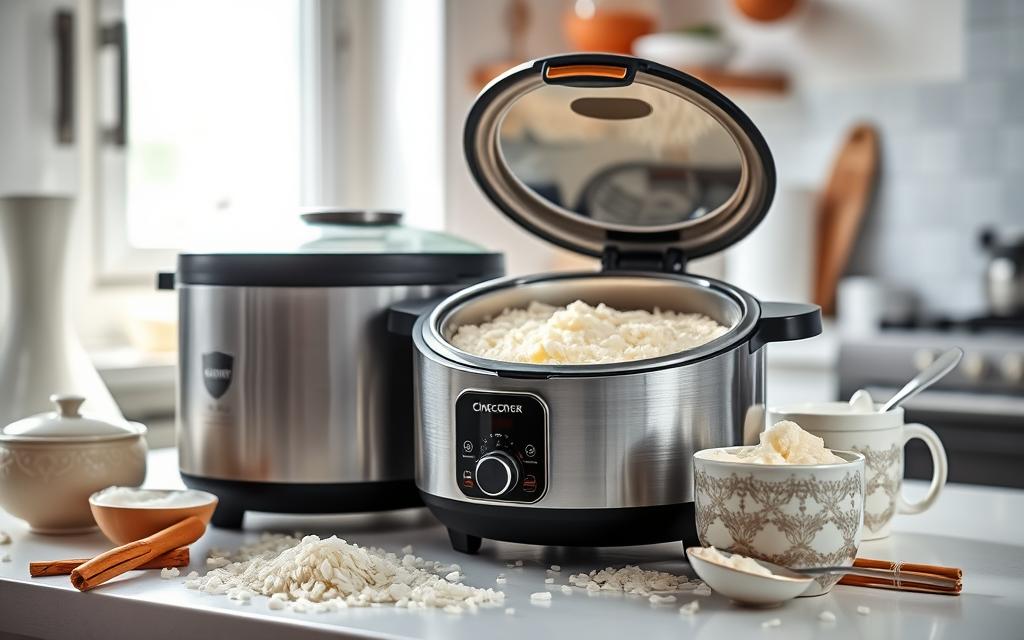

A rice cooker takes most of the guesswork out of making rice pudding, which frees you up to focus on flavor instead of babysitting a pot on the stove.
Ingredients for Rice Pudding
Making rice pudding in a rice cooker doesn’t take much. You need rice, milk, sugar, and a bit of salt, though a few extra ingredients can take it even further.
Essential Ingredients
- 1/2 cup long-grain rice, such as jasmine rice
- 3 cups milk
- 1/4 cup granulated sugar
- 1/4 teaspoon kosher salt
Optional Flavor Additions
- 1 teaspoon vanilla extract
- 1/2 teaspoon ground cinnamon
- 1/2 cup raisins or dried cranberries
Recommended Types of Rice
Both long-grain and short-grain rice work for pudding. Jasmine rice adds a light floral flavor, while Arborio rice, the same short-grain variety used for risotto, makes an especially creamy result. If you’d rather start with a plainer base and build flavor from there, our guide to cooking brown rice in a rice cooker covers the fundamentals of grain-to-liquid ratios that also apply here.
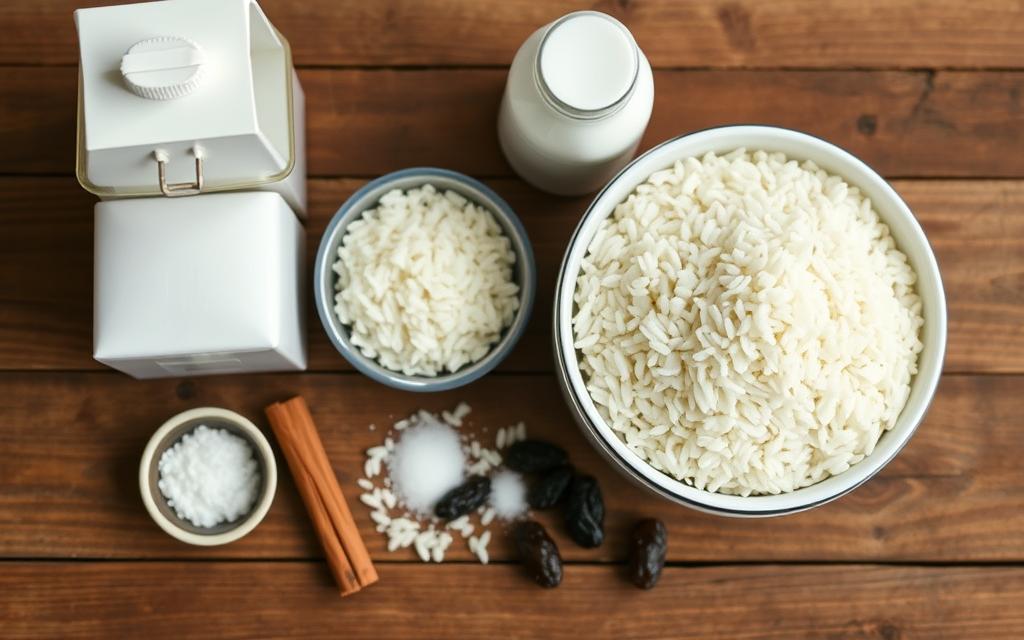

With these ingredients on hand, you’re ready to make a tasty rice pudding in your rice cooker. Try a couple of different rice types to find the texture you like best.
Preparing the Rice
Before you make rice pudding in your rice cooker, it’s worth properly preparing the rice first. This simple step sets up the right texture and flavor for the final dish.
Washing the Rice
Start by giving the rice a thorough rinse. Place the uncooked rice in a fine-mesh strainer and run it under cool water, gently swirling it with your fingers. This removes excess surface starch, which actually helps you get a creamier pudding once the rice’s own starch is released during cooking. Repeat the rinse two to three times until the water runs mostly clear.
Soaking Techniques
- Some recipes call for soaking the rinsed rice in water for 30 minutes to an hour before cooking, which can produce an even creamier texture.
- If you do soak the rice, drain it thoroughly before adding it to the rice cooker.
- The ratio of rice to liquid matters more than almost anything else here, so follow your recipe’s measurements closely.
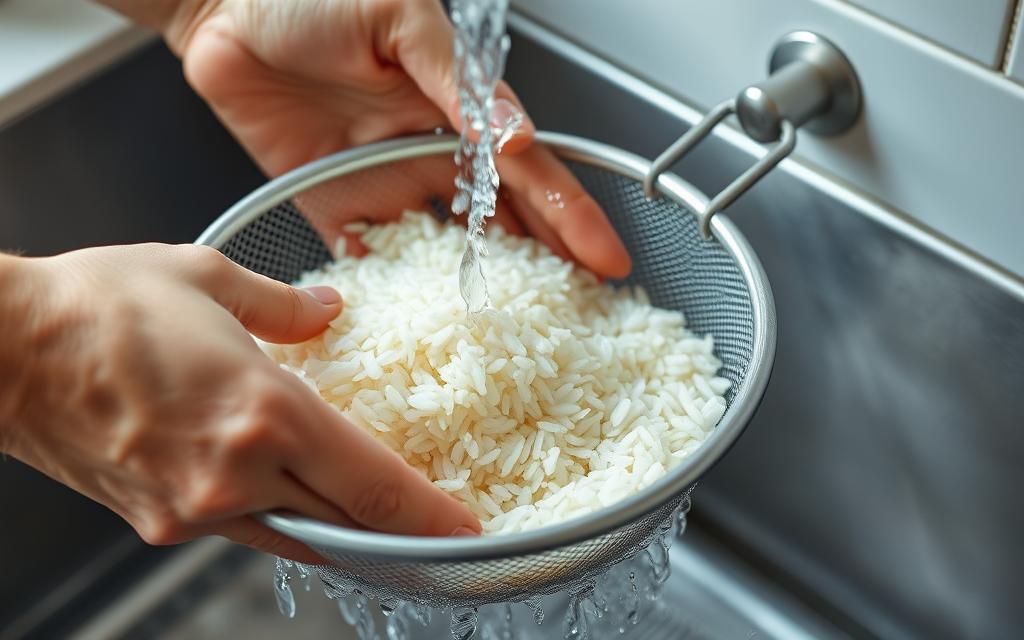
Taking a few extra minutes to properly prepare the rice sets the stage for a creamy, well-textured rice pudding made right in your rice cooker.
How to Make Rice Pudding in a Rice Cooker: Step-by-Step Instructions
Making rice pudding in your rice cooker takes only a few steps. Here’s exactly how to make rice pudding in a rice cooker from start to finish:
Step-by-Step Instructions
- Put the rice, milk, sugar, and a pinch of salt into the rice cooker pot.
- If your cooker has a porridge setting, use it. If not, use the regular setting with the lid left open.
- Cook for 45 to 50 minutes, stirring occasionally, until the mixture thickens.
- Let it sit for another 10 to 15 minutes with the lid still open, which helps it get even creamier.
Cooking Settings to Use
Choosing the right setting matters for texture. Use the porridge mode if your rice cooker has one. If it doesn’t, the regular rice setting with the lid left open works nearly as well.
Common Mistakes to Avoid
- Don’t close the lid if your cooker lacks a porridge setting, since the mixture can bubble up and spill over.
- Stir occasionally to keep the pudding from sticking or scorching on the bottom.
- Don’t skip the extra 10 to 15 minutes of resting time after cooking. It’s what makes the pudding noticeably creamier.
Follow these steps and you’ll turn out a rice cooker dessert that’s genuinely easy to make and worth repeating.
Adding Flavors and Sweeteners
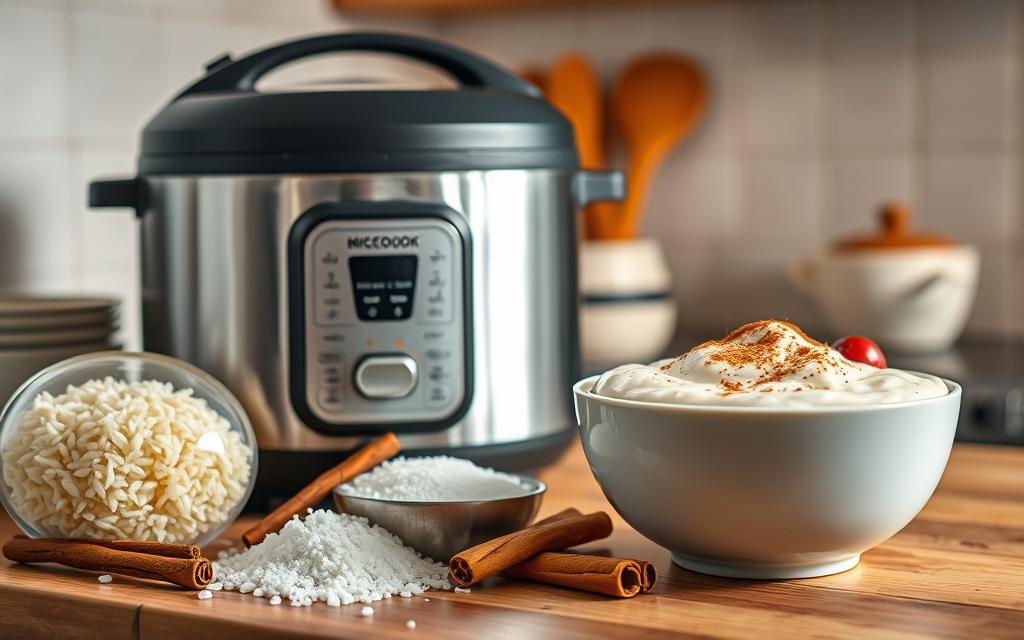
Once you’ve got the base method down, it’s easy to make your rice pudding your own. Vanilla extract and ground cinnamon are classic starting points, and honey is a good natural alternative to sugar.
Vanilla and Cinnamon
A teaspoon or two of pure vanilla extract adds real depth to the finished pudding, and its floral sweetness pairs well with the creamy texture. A bit of ground cinnamon brings a warm spice note that suits the dish’s comforting character.
Sweeteners: Sugar vs. Honey
- White granulated sugar is the standard choice. It dissolves cleanly and gives a straightforward sweetness.
- Honey is a natural alternative that adds a floral or slightly earthy flavor to the pudding.
- Honey is sweeter than sugar cup for cup, so start with less and adjust to taste.
Raisins and Other Add-Ins
Raisins are a classic mix-in, adding a chewy texture and a sweet-tart bite. Dried apricots, cranberries, or diced mango work just as well if you want to switch things up.
Toasted nuts, like slivered almonds or pecans, are a nice finishing touch for crunch. Treat rice pudding as a base recipe, and experiment until you land on the flavor combination your household likes best.
Checking for Doneness
Knowing when your rice pudding is ready comes down to texture. Look for a creamy, pudding-like consistency, with tender rice and a mixture that’s visibly thickened.
If you prefer a thicker pudding, let it cook a bit longer, but keep in mind it will continue to thicken as it cools. Aim for a slightly looser texture while it’s still hot, since it firms up on standing.
If it does end up too thick after cooling, a splash of milk stirred in will loosen it right back up.
Signs Your Rice Pudding is Ready
- Rice grains are tender with a soft, creamy texture.
- The mixture has thickened to a pudding-like consistency.
- The pudding coats the back of a spoon when you stir it.
Adjusting Texture to Your Preference
If your rice pudding turns out too thick, stir in a tablespoon or two of milk at a time until it loosens up. If it’s too loose instead, give it a few more minutes of cooking time to thicken.
Adjusting texture is one of the easiest parts of this recipe.
Serving Suggestions
Whether you’ve just made a fresh batch or you’re working through leftovers, there are plenty of good ways to serve rice pudding. It holds up well warm or chilled, and toppings make it easy to change up.
Toppings for Rice Pudding
- Dried raisins or cranberries for a chewy, sweet contrast
- Toasted nuts like almonds, pecans, or walnuts for crunch
- A sprinkle of ground cinnamon or nutmeg for warm spice
- Fresh berries such as raspberries, blueberries, or sliced strawberries
- A drizzle of caramel or honey for extra sweetness
- Toasted coconut flakes for a tropical twist
Pairing Rice Pudding with Fruits and Nuts
For a lighter, fresher pairing, try serving rice pudding with seasonal fruit. Sliced peaches, nectarines, or apricots add a juicy, summery note, while diced mango, pineapple, or kiwi work well too. Top it with chopped toasted almonds, pecans, or pistachios for crunch and richness.
There’s no single right way to serve rice pudding. Try a few combinations and see which one becomes your family’s go-to.
Storage Tips
A bowl of homemade rice pudding is a treat on its own, but leftovers deserve some care too. With the right storage, it stays fresh and tasty for days.
Keeping Leftovers Fresh
Store leftover pudding in an airtight container in the fridge to keep it from drying out or forming a skin on top. Pressing plastic wrap or parchment paper directly onto the surface before sealing the container helps even more.
Cooked rice pudding is a dairy-based leftover, and it follows the same general food-safety window as other cooked leftovers: the USDA Food Safety and Inspection Service recommends keeping refrigerated leftovers for 3 to 4 days. If you’re also keeping cooked rice on hand separately, our guide on how long you can keep rice in a rice cooker covers the same storage principles in more detail.
Reheating Rice Pudding
The microwave is the fastest way to reheat rice pudding. Add a splash of milk and heat in 30-second bursts, stirring between each one, until it’s warm throughout.
You can also reheat it on the stovetop over low heat. Stir in a bit of milk to keep it creamy, and stir constantly until it’s hot enough to serve.
Either method works well, so use whichever is more convenient when you’re ready for a bowl of leftover rice pudding.
Conclusion
Rice cooker rice pudding is a simple, forgiving dessert that can easily become a family favorite. It works well for beginners and experienced cooks alike, and with a little practice, you’ll turn out a pudding people ask for again and again. Once you’ve learned how to make rice pudding in a rice cooker, the method barely changes. Only the flavors you build on top of it do.
Making Rice Pudding a Family Favorite
Whether you stick to a classic recipe or branch out into new flavors, rice pudding made in a rice cooker is comforting and easy enough for a weeknight. Working in your family’s favorite add-ins, like raisins or warm spices, can turn it into a dish people specifically request.
Encouragement to Experiment
Don’t be afraid to try new things with rice pudding. Swapping in a different type of rice changes both texture and flavor, and mix-ins like chocolate, fresh fruit, or a swirl of dulce de leche can take it in a completely different direction. The more you experiment, the closer you’ll get to the version your family asks for by name.


Hey, My name is MAMON. I am a SEO content creator and affiliate marketer with over 8 years of experience. I create honest product reviews, in-depth buying guides, and practical how-to articles to help readers make informed decisions. My mission is to provide trustworthy, research-backed content that delivers real value.