

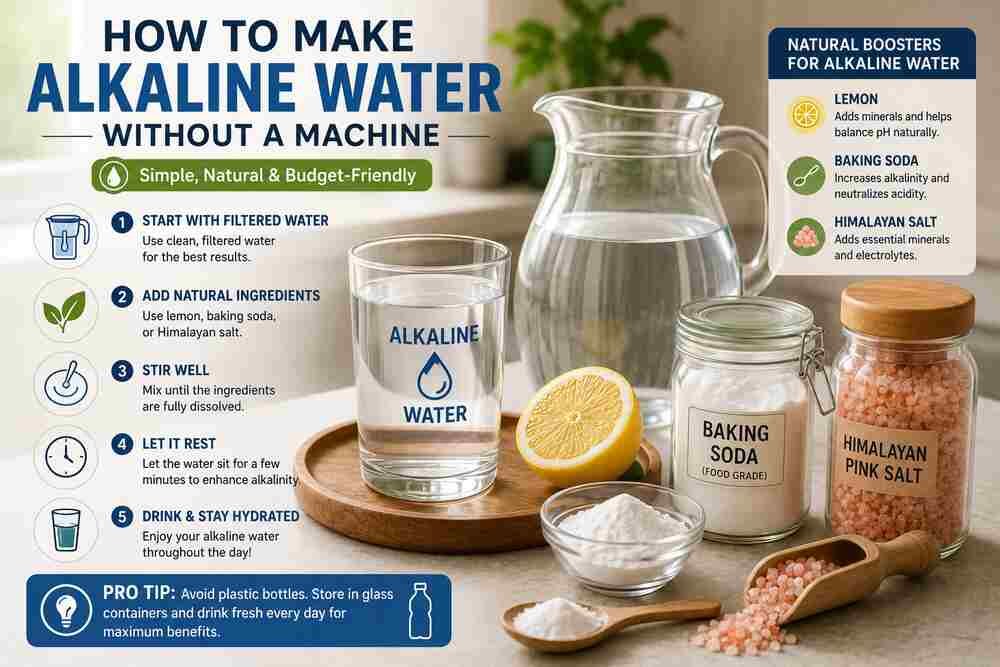

Before learning how to make alkaline water without a machine, it helps to know what alkaline water actually is. The alkalinity of any liquid, including drinking water, depends on its pH level. A pH above 7 is alkaline, or basic. A pH below 7 is acidic.
Normal tap water usually sits close to a neutral pH of 7. Alkaline water typically runs higher, between 8 and 9. It can come naturally from artesian wells or springs rich in dissolved minerals, or it can be produced at home with a few simple, low-cost methods.
Key Takeaways
- Baking soda, lemon juice, pH drops, and filter pitchers can all raise water’s pH without buying a dedicated ionizer machine.
- Mayo Clinic recommends no more than half a teaspoon of baking soda per glass of water, and not for more than two weeks at a time, due to its sodium content.
- Mayo Clinic also notes there isn’t strong evidence that alkaline water offers real health benefits over plain water for most healthy adults.
- A water ionizer machine is the most consistent way to produce alkaline water daily. DIY methods vary more in exact pH.
Is Normal Tap Water Alkaline?
Normal drinking water has a pH close to 7, similar to blood. Tap water specifically ranges from about 6.5 to 8.5 depending on your municipal supply. It also carries minerals like magnesium, calcium, silica, potassium, and bicarbonate. Well water tends to run higher in both pH and mineral content than typical city tap water.
You can raise that pH using a few simple methods at home. The most consistent method remains a dedicated water ionizer machine. Several no-machine options work well for everyday use, too, and cost far less to get started.
How to Make Alkaline Water Without a Machine
Mix in Baking Soda
Baking soda (sodium bicarbonate) has a pH of about 9. That makes it one of the most common ways to alkalize drinking water. For occasional heartburn relief, Mayo Clinic guidance cited by MedCline recommends half a teaspoon dissolved in a glass of water. It can be repeated every two hours, but shouldn’t be used for more than two weeks straight. Stir or shake the mixture thoroughly so the baking soda fully dissolves.
Baking soda carries a meaningful amount of sodium. If you’re on a sodium-restricted diet, pregnant, or taking other oral medications, check with a doctor before using it regularly. It can interfere with how some medications absorb.
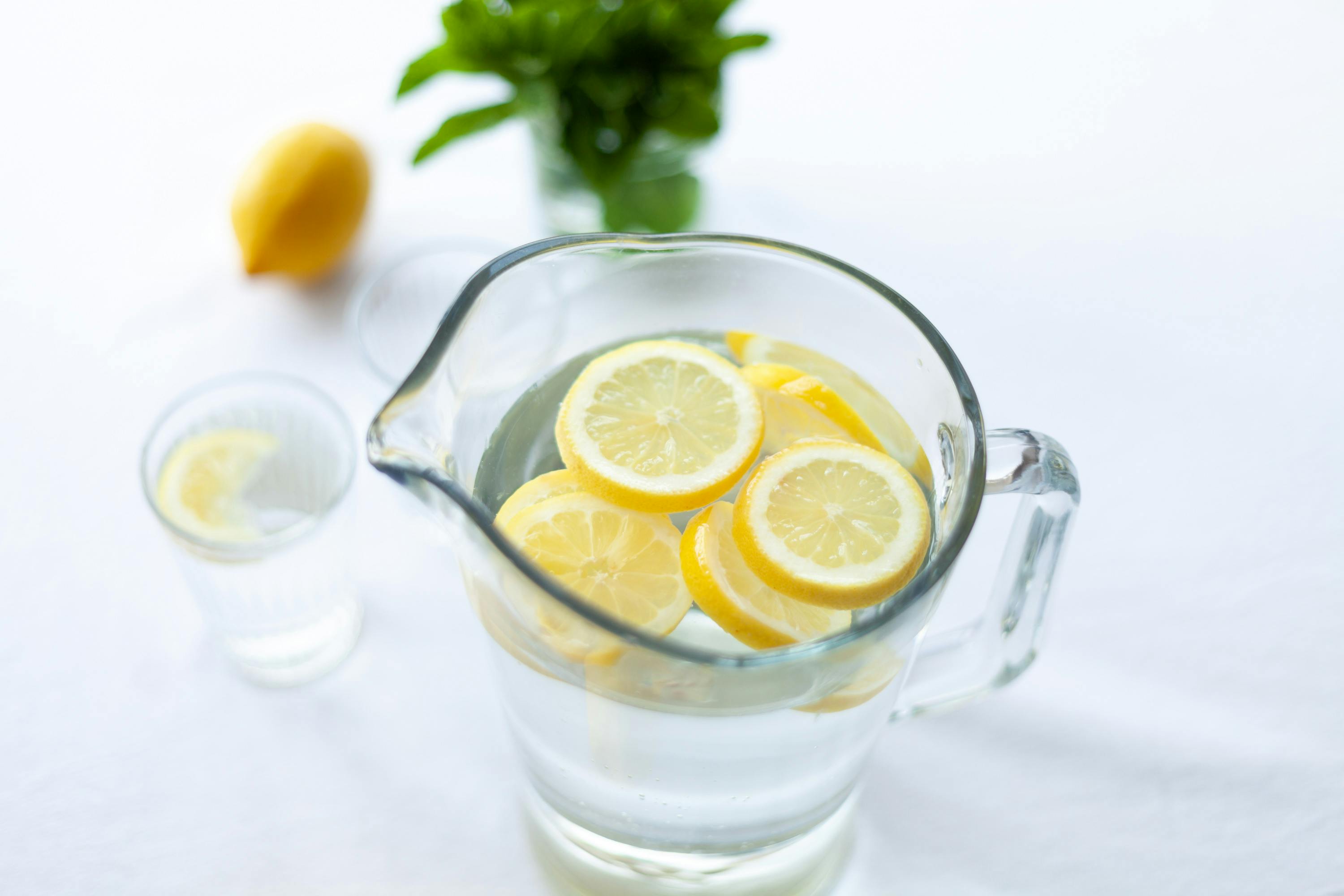
Add Lemon Juice
Lemon juice is a staple of the alkaline diet, despite being acidic itself, with a pH around 2 to 3. Some alkaline diet proponents argue it has an alkalizing effect once metabolized in the body. That claim is more popular in wellness circles than confirmed in mainstream clinical research. Diluted lemon juice is pleasant to drink regardless, adding a bit of vitamin C and a fresh, tart taste.
A common ratio is about 1/8 tablespoon of lemon juice per 250 mL of water. Fresh-squeezed lemon juice keeps well in the refrigerator for a few days, if you’d rather prep it ahead of time.

Use pH Drops
pH drops are a popular convenience option. These concentrated mineral and electrolyte drops raise pH with just 1 to 2 drops per glass of water. A single small bottle typically treats well over a hundred glasses. That makes pH drops more portable and lower effort than baking soda or lemon juice for people who want alkaline water on the go.
Try a Water Filter Pitcher
A filter pitcher purifies water as it passes through layered filtration media. Depending on the specific filter cartridge, some pitchers add trace alkalizing minerals back into the water. Not every pitcher filter is designed to raise pH, though. The main job of most pitcher filters is reducing chlorine taste and odor rather than alkalizing water. Check the product specs before assuming a pitcher will do both.
Install a Water Filtration System
Larger under-sink or whole-house filtration systems remove contaminants like chlorine, fluoride, and heavy metals at a bigger scale than a countertop pitcher. Some systems include a remineralization stage, too, specifically designed to raise pH as part of the filtration process. These systems cost more upfront than a pitcher, but they treat every tap in the house instead of just one container, so the per-glass cost tends to work out lower over time.
Use a Water Ionizer Machine
A water ionizer, or electrolyzer, remains the most consistent method for producing alkaline water regularly. It separates water into two streams using charged electrode plates: an alkaline stream and a more acidic stream. It does this without adding any substances to the water itself. If you’re drinking alkaline water daily, a machine delivers more predictable, repeatable pH than manual mixing.
Comparing the Methods
| Method | Effort Level | Cost | Consistency |
| Baking soda | Low, measure each glass | Very low | Variable |
| Lemon juice | Low, measure each glass | Low | Variable |
| pH drops | Very low, 1-2 drops | Low to moderate | Fairly consistent |
| Filter pitcher | Low, refill and wait | Moderate | Depends on cartridge |
| Water ionizer | Very low, on demand | Higher upfront | Most consistent |
How Long Does Homemade Alkaline Water Stay Alkaline?
Homemade alkaline water doesn’t hold its elevated pH forever. Once mixed, baking soda water and pH-drop water are fairly stable if kept in a sealed container, but exposure to open air gradually pulls the pH back toward neutral as carbon dioxide from the air dissolves into the water. For the most noticeable effect, drink your batch within a few hours of mixing rather than making a large pitcher to sip on over a full day.
Lemon water behaves a bit differently, since the citric acid content is doing the work rather than a stable alkaline mineral. It’s best made fresh each time, or at most a day ahead if refrigerated in a sealed container.
Does Drinking Alkaline Water Have Real Health Benefits?
Alkaline water is often marketed with sweeping health claims, but the research backing them is thinner than the marketing suggests. According to Mayo Clinic’s review of alkaline water, for most healthy people it isn’t meaningfully better than plain water. Some limited research points to possible benefits for acid reflux and bone health when paired with broader dietary changes. Even so, Mayo Clinic is clear that the evidence isn’t strong enough yet to make firm claims either way.
Mayo Clinic also notes a real safety consideration. Water above pH 9.8 has been linked to safety concerns, including elevated blood potassium in people with kidney disease. Most DIY and machine-made alkaline water stays well under that level. Still, it’s worth keeping in mind if you have an existing kidney condition.
Is It Safe to Drink Homemade Alkaline Water?
For most healthy adults, moderate homemade alkaline water in the 8 to 9 pH range is considered safe to drink daily. The bigger safety consideration is usually the method itself rather than the water’s pH. Regular high-sodium baking soda use is a good example. It’s more of a concern for people managing blood pressure than the alkalinity is on its own.
If you’re pregnant, managing a chronic condition, or taking regular medication, have a quick conversation with your doctor first. That’s true before making any DIY method part of your daily routine.
Common Mistakes When Making Alkaline Water at Home
Overdoing the baking soda is the most common mistake. More isn’t better, and excess sodium adds up quickly if you’re drinking several glasses a day. Assuming every filter pitcher raises pH is another common mistake. Most are built to reduce chlorine and odor, not adjust alkalinity, so check the cartridge specs first. Skipping the dilution step with concentrated pH drops can also throw off the taste and effectiveness. These products are formulated for small, measured doses rather than a free pour.
Watch: DIY Ways to Make Alkaline Water at Home

This walkthrough covers a few of the same DIY methods in more visual detail. If you decide a machine is worth the investment down the road, our water ionizer machine reviews compare models by price, filter life, and ease of maintenance.
Already own a machine? Our guide on how to wash a water ionizer machine covers the cleaning routine that keeps it working properly.
Frequently Asked Questions About How to Make Alkaline Water Without a Machine
How much baking soda should I add to a glass of water?
About half a teaspoon per glass, based on the same measurement Mayo Clinic recommends for occasional heartburn relief. Avoid using it daily for more than two weeks in a row due to its sodium content.
Does lemon juice really make water alkaline?
Lemon juice itself is acidic, with a pH around 2 to 3. Some proponents of the alkaline diet claim it has an alkalizing effect after metabolism, though that specific claim isn’t strongly confirmed in mainstream research. It’s still a pleasant, low-cost way to flavor your water.
Are pH drops safe to use every day?
Used as directed, in small measured doses, pH drops are generally considered safe for daily use by most healthy adults. Follow the product’s specific dosage instructions, since concentrations vary by brand.
Do all water filter pitchers make water alkaline?
No. Most pitcher filters are designed primarily to reduce chlorine taste and odor, not to raise pH. Only pitchers with a specific remineralizing or alkalizing filter cartridge will meaningfully change your water’s alkalinity.
Is a water ionizer worth it if I can make alkaline water at home for free?
It depends on how much alkaline water you drink and how much consistency matters to you. DIY methods work fine occasionally, but a machine delivers more predictable pH glass after glass without daily measuring.
Can I mix baking soda and lemon juice together in the same glass?
It’s not recommended. Baking soda is a base and lemon juice is an acid, so combining them triggers a fizzing neutralization reaction that cancels out much of the pH-raising effect from the baking soda. Pick one method per glass for the most predictable result.
Conclusion
Knowing how to make alkaline water without a machine gives you several low-cost options. That includes a pinch of baking soda, a splash of lemon juice, pH drops, or a filter pitcher with a remineralizing cartridge. Each method works, though consistency and effort vary.
Whichever method you choose, keep the health claims in perspective. Mayo Clinic’s research points to alkaline water being safe for most people in moderation, without strong evidence of dramatic health benefits over plain water. If daily consistency matters more to you than experimenting with measurements, a dedicated water ionizer machine remains the more reliable long-term option. Either way, you now know exactly how to make alkaline water without a machine whenever you’d rather skip the equipment.


Hey, My name is MAMON. I am a SEO content creator and affiliate marketer with over 8 years of experience. I create honest product reviews, in-depth buying guides, and practical how-to articles to help readers make informed decisions. My mission is to provide trustworthy, research-backed content that delivers real value.