

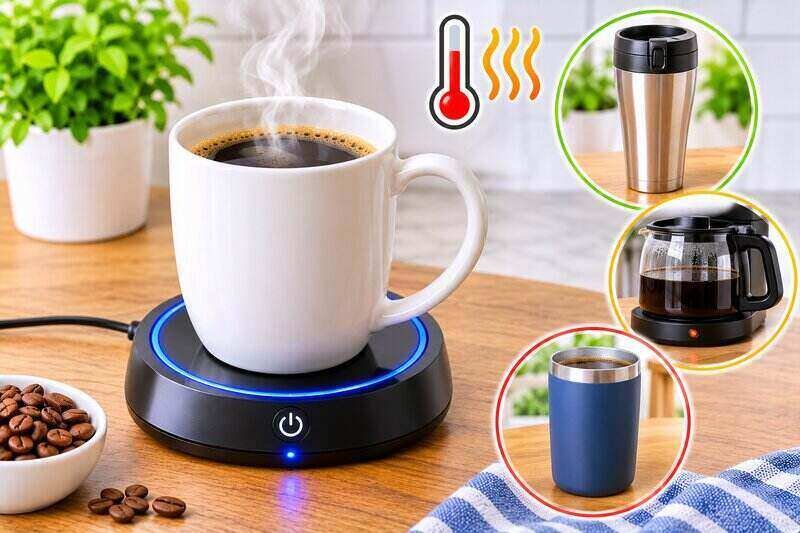
Wondering how to keep coffee warm from the first sip to the last? You are not alone. Freshly brewed coffee starts near 200°F, but in an open mug it drops into the drinkable range within minutes and keeps falling. Fortunately, there are simple ways to slow that heat loss, from preheating your mug to using a thermal carafe or a mug warmer. In this guide, we compare 9 methods using published research, independent product tests, and basic heat-transfer data, so you can pick the right approach for your desk, your kitchen, or your commute.
Key Takeaways
- Coffee brews at about 195°F to 205°F, but a 2008 study in the journal Burns found the optimal drinking temperature is about 136°F.
- In a heat-transfer experiment by HTRI, coffee poured at 95°C (203°F) into a room-temperature mug was ready to sip in about 10 minutes, with the fastest cooling in the first 3 minutes.
- A lid is the single easiest upgrade. In CNN Underscored’s testing, a heated mug ran 2 hours 55 minutes with its lid versus just over 1 hour without.
- Thermal carafes beat glass carafes on a hot plate, which can scorch coffee over time, according to Breville.
- A 17-watt mug warmer costs about 2.5 cents per 8-hour day to run at the U.S. average electricity price.

Why Coffee Gets Cold So Fast
To understand how to keep coffee warm, it helps to know how it loses heat. Coffee loses heat in three main ways. First, steam carries heat away from the open surface through evaporation. Second, the mug itself pulls heat out of the coffee, especially if it starts at room temperature. Finally, the outside of the mug passes heat to the surrounding air.
Importantly, the first few minutes matter most. In a heat-transfer experiment published by HTRI, engineer Holly Huellemeier poured coffee at 95°C (203°F) into a room-temperature mug at 21°C (70°F). The coffee cooled fastest during the first 3 minutes, then more slowly from minutes 3 to 10. Her model predicted the coffee would be ready to sip about 10 minutes after brewing.
For that reason, that fast early drop is useful to know. It means anything that slows heat loss at the start, such as a preheated mug or a lid, has an outsized effect on how long your coffee stays warm.
What Is the Ideal Coffee Temperature?
Before you choose a method, however, it helps to know your target. In a 2008 study in the journal Burns, researchers Fredericka Brown and Kenneth Diller cited consumer data showing a preferred drinking temperature of 140°F, plus or minus 15°F, and calculated an optimal temperature of about 136°F to balance taste and scald risk (PubMed).
| Stage | Typical Temperature | Source |
|---|---|---|
| Brewing water | 195–205°F | Breville |
| Serving (NCA recommendation) | 180–185°F | Breville, citing the National Coffee Association |
| Preferred drinking range | About 125–155°F | Brown & Diller (2008) |
| Optimal drinking temperature | About 136°F | Brown & Diller (2008) |
In other words, the goal is not to keep coffee as hot as possible. Instead, the goal is to keep it in that comfortable 130°F to 145°F zone for as long as you are drinking it.
How to Keep Coffee Warm: 9 Methods Compared
So, here is how to keep coffee warm using the most common methods, ranked roughly from simplest to most effective for long sipping sessions.
| Method | Cost | Best For | Drawback |
|---|---|---|---|
| Preheat the mug | Free | Every cup | Small effect alone |
| Add a lid | Free to low | Desk sipping | Need a matching lid |
| Thicker ceramic mug | Low | Home use | Absorbs heat at first |
| Insulated tumbler | Moderate | Commuting | Slowly cools |
| Thermal carafe | Moderate | Full pots | Each poured cup cools |
| Brew smaller batches | Free | Fresh taste | More brewing |
| Mug warmer plate | Low to moderate | One desk | Needs the right mug |
| Self-heating mug | High | Moving around | Battery limits |
| Gentle reheating | Free | Rescuing a cold cup | Can dull flavor |
1. Preheat Your Mug
Surprisingly, a cold ceramic mug acts like a heat sponge. As a result, some of your coffee’s heat goes straight into warming the mug. To avoid that, fill the mug with hot water for about a minute, then pour it out just before you add coffee. If you use an electric kettle, you can heat the rinse water in seconds; see our guide to the best electric kettle.
Based on the HTRI experiment’s fast early cooling, this step targets exactly the period when coffee loses heat fastest. On its own, admittedly, the effect is modest. Combined with a lid, however, it makes a noticeable difference.
2. Use a Lid
An open mug loses heat through steam and air movement at the surface. Fortunately, a lid blocks most of that. In CNN Underscored’s testing of heated mugs, for example, a Nextmug lasted 2 hours 55 minutes with its lid compared with just over 1 hour without. Although that test measured battery life rather than plain mugs, it shows how much heat escapes through an open top.
If your mug has no lid, though, a small saucer on top works in a pinch. Better yet, silicone mug lids are cheap and fit many sizes.
3. Choose the Right Mug
In addition, mug material changes how fast coffee cools. For example, thin glass and thin ceramic let heat pass quickly to the air. On the other hand, thicker ceramic holds heat once warmed, especially if you preheat it. Meanwhile, double-wall vacuum-insulated mugs slow heat transfer the most, which is why they are popular for travel.
4. Switch to an Insulated Tumbler
Vacuum insulation works because a near-vacuum between two walls blocks most heat transfer, a principle that dates back to the Dewar flask invented by Sir James Dewar in 1892, as HTRI notes. According to Breville, insulated mugs with lids can keep coffee hot for a full workday. In practice, however, results depend on the brand and how often you open the lid.
5. Store Coffee in a Thermal Carafe

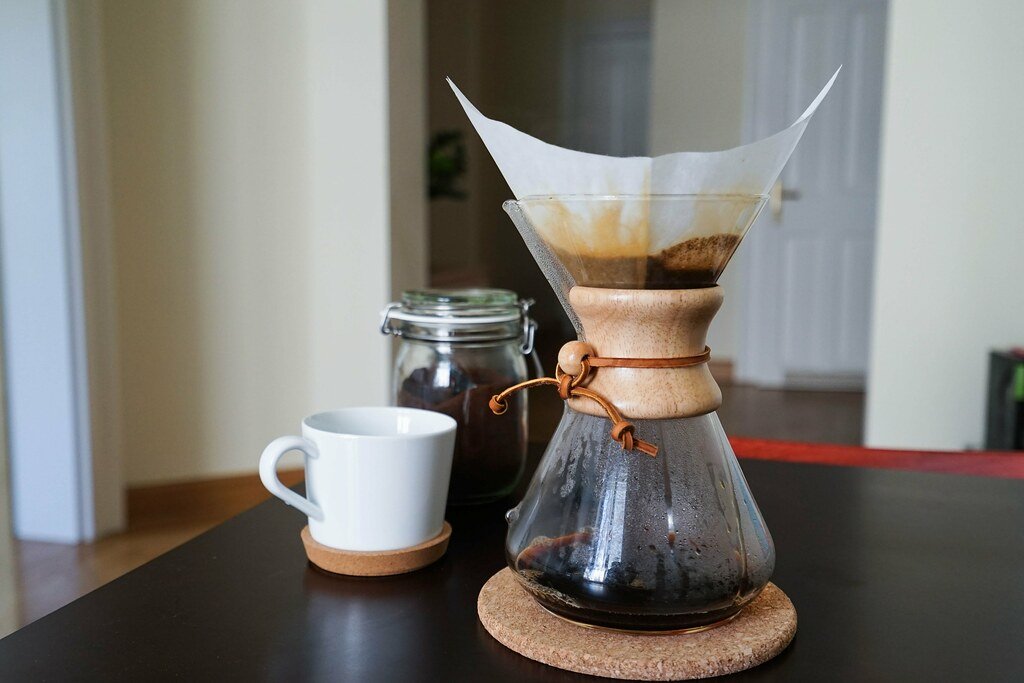
Photo: John Beans via Flickr (CC BY 2.0).
If you brew a full pot, a thermal carafe is one of the best ways to keep coffee warm without extra heat. According to Breville, thermal carafes hold heat much better than glass ones. By contrast, the warming plates under glass carafes can be inconsistent on cheaper machines, sometimes scorching coffee and sometimes letting it cool too much. Breville also recommends a carafe that is insulated, airtight, and sized to your batch, so there is little air space inside.
6. Brew Smaller Batches
Brewing less coffee more often is one of the simplest ways to keep coffee warm and fresh. Breville recommends this over keeping a large pot warm for hours. If you are curious how much power each brew uses, our guide on how many watts a coffee maker uses breaks it down.
7. Use a Mug Warmer Plate
A plug-in warming plate sits under your mug and slows cooling at a desk. Typically, most use between 17 and 50 watts. However, independent testing shows their limits. In CNN Underscored’s test, several basic plates kept coffee at or below about 120°F to 130°F, while a 75-watt smart plate reached 130°F in just under 20 minutes. So, start with hot coffee and use a thin, flat-bottomed mug for the best contact.
8. Try a Self-Heating Mug
A self-heating mug has a heater and battery built in, and it holds a set temperature on or off its charging coaster. As a result, these are the most precise option, but they cost more and run on limited battery power. For instance, CNN found the Ember Mug 2 raised coffee about 10°F in 10 minutes, which shows these mugs work best at maintaining heat rather than reheating.
9. Reheat Gently When Needed
Sometimes, despite your best efforts, coffee goes cold. In that case, a microwave can rescue it. Breville suggests using a lower power setting, and it notes that coffee that has gone fully cold can taste unpleasant when reheated. Also, stir halfway through to avoid hot spots. To see what that costs, check our guide on how much electricity a microwave uses.

Video: Whole Latte Love shares practical ways to keep coffee hot.
Best Method by Situation
Ultimately, how to keep coffee warm depends on where you drink it. Here is a quick guide:
- At a desk all morning: First, preheat your mug, add a lid, and set it on a mug warmer plate.
- Walking around the house or office: Instead, a self-heating mug keeps a steady temperature wherever you go.
- Commuting: Similarly, a vacuum-insulated tumbler with a sealed lid is the most practical choice.
- Serving a group: Meanwhile, a thermal carafe keeps a full pot warm without scorching.
- Weekend sipping: Finally, brewing smaller batches gives you fresher, hotter cups.
How to Keep Coffee Warm Without Electricity
You do not need a gadget to enjoy warmer coffee. In fact, several of the most effective steps are free. Here is how to keep coffee warm without plugging anything in:
- Preheat the mug. First, swirl hot water in your mug for about a minute, then pour it out.
- Cover it. Next, add a lid or a saucer to block heat loss from steam.
- Wrap it. Also, a knit mug cozy or sleeve slows heat loss through the sides.
- Pour smaller servings. Then, refill from an insulated carafe instead of filling a large mug at once.
- Keep it away from drafts. Finally, set your mug away from fans, open windows, and air vents.
Together, these steps target each way coffee loses heat. As a result, they can stretch your comfortable sipping window without any added cost.
How to Keep Coffee Warm for Hours
If you sip slowly over a long morning, combine methods. For example, brew into a thermal carafe, pour one small cup at a time into a preheated mug with a lid, and set it on a mug warmer. In this way, the carafe protects the main supply while the warmer and lid protect the cup in your hand.
Alternatively, a self-heating mug on its charging coaster can hold a set temperature all day. However, it costs more, and most models are hand wash only. So, for many people, a carafe plus a simple lid is the most practical answer to how to keep coffee warm for hours.
How Much Does It Cost to Keep Coffee Warm?

Photo: Beige Alert via Flickr (CC BY 2.0).
Luckily, most methods are free or nearly free. Meanwhile, powered options use small amounts of electricity. The table below shows our estimates, using the U.S. Energy Information Administration’s average residential price of about 18.16 cents per kWh and assuming full power for 8 hours.
| Device | Power | Energy per 8 Hours | Cost per Day |
|---|---|---|---|
| Basic mug warmer | 17 W | 0.136 kWh | About 2.5 cents |
| Stronger mug warmer | 36 W | 0.288 kWh | About 5.2 cents |
| Smart warming plate | 75 W | 0.6 kWh | About 10.9 cents |
Because thermostatic warmers cycle on and off, actual costs are often lower. In short, learning how to keep coffee warm rarely costs more than a few dollars a year. By comparison, thermal carafes, lids, and insulated tumblers use no electricity at all.
Common Mistakes That Make Coffee Cold Faster
- Pouring into a cold mug. As a result, the mug absorbs heat during the fastest cooling period.
- Leaving the mug uncovered. In fact, steam and surface air carry away a lot of heat.
- Adding cold milk straight from the fridge. Instead, warm or froth the milk first, since cold milk lowers the temperature right away.
- Keeping a glass carafe on a hot plate for hours. Otherwise, the coffee may scorch, as Breville warns.
- Reheating at full power. Similarly, high heat can create hot spots and harsh flavors.
- Using a footed mug on a warmer. Consequently, only a small ring touches the plate, so little heat transfers.
Tips for a Hotter Cup From the Start
Of course, keeping coffee warm is easier if it starts hot. Breville notes that brewing water should be about 195°F to 205°F. If your coffee maker runs cool, your coffee will cool into lukewarm faster. Our guide on what coffee maker makes the hottest coffee explains which brewers reach proper temperatures. Also, see our guide on how to brew coffee in a coffee maker for brewing basics.
Frequently Asked Questions
What is the best way to keep coffee warm at a desk?
First, preheat your mug, add a lid, and use a mug warmer plate with a thin, flat-bottomed mug. Together, these steps slow heat loss the most.
How long does coffee stay hot in a regular mug?
Not long. For example, in HTRI’s experiment, coffee poured at 203°F into a room-temperature mug was ready to sip in about 10 minutes and kept cooling after that.
Does a lid really keep coffee warmer?
Yes. Essentially, a lid blocks heat loss from steam and surface air. In CNN Underscored’s heated-mug tests, lids roughly doubled or tripled run time.
Is it bad to keep coffee on a hot plate?
Over long periods, unfortunately, it can be. Breville notes that warming plates on cheaper machines can scorch coffee, so a thermal carafe is a better option for full pots.
What temperature should coffee be kept at?
Generally, about 130°F to 145°F is comfortable for most people. Research in the journal Burns calculated an optimal drinking temperature of about 136°F.
Final Thoughts
Learning how to keep coffee warm comes down to slowing heat loss, especially in the first few minutes. Start by preheating your mug and adding a lid, since both are free and effective. Next, match the tool to your routine: a mug warmer for a desk, a self-heating mug for moving around, an insulated tumbler for commuting, and a thermal carafe for a full pot. Finally, aim for about 130°F to 145°F, and you will enjoy better-tasting coffee for longer.


Hey, My name is MAMON. I am a SEO content creator and affiliate marketer with over 8 years of experience. I create honest product reviews, in-depth buying guides, and practical how-to articles to help readers make informed decisions. My mission is to provide trustworthy, research-backed content that delivers real value.