


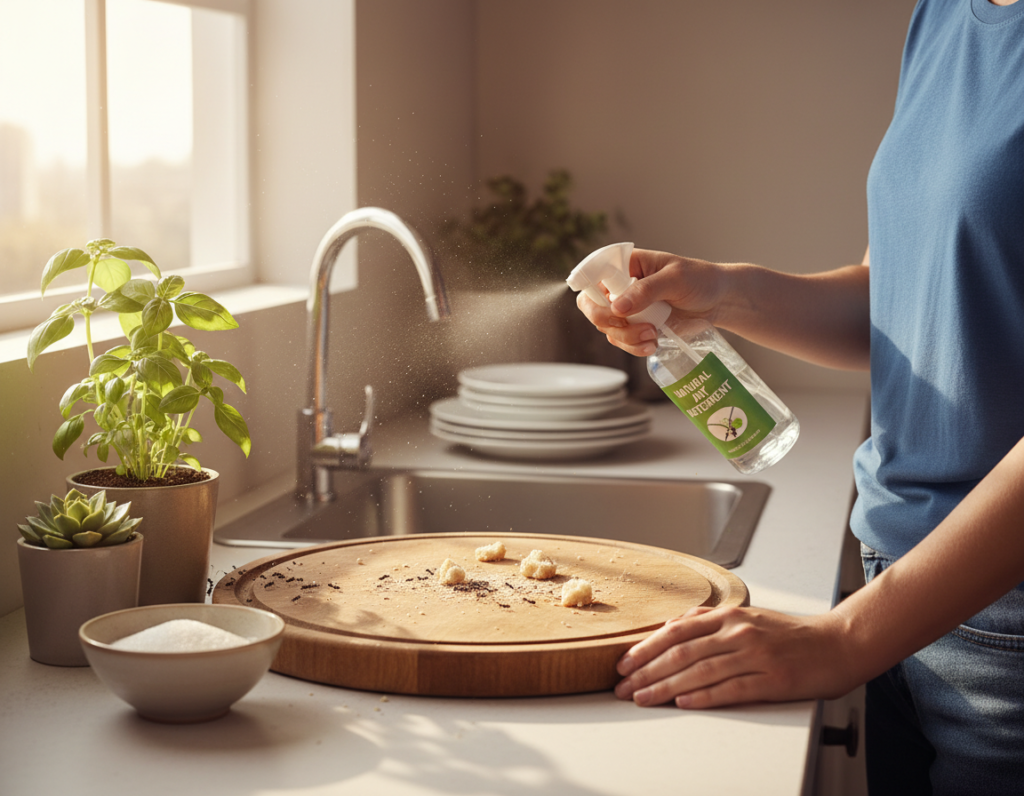
Your morning starts with toast and coffee, and then you spot a trail of tiny ants near the fruit bowl. You freeze, wipe a crumb, and watch as a steady line leads across your countertop. That moment makes your home feel invaded, leaving you searching for how to get rid of ants on the kitchen counters before they spread throughout your kitchen.
Understanding these pests is the first step. Tiny ants are persistent and enter through tiny gaps to reach snacks and spills. Identifying the species helps you pick the best removal plan.
Simple habits make a big difference. Clean spills promptly, seal food, and check entry points. A systematic routine stops most infestations and keeps your food prep surfaces safe.


Key Takeaways
- Spotting tiny ants early helps prevent larger problems.
- Identify the type of ant for the most effective measures.
- Keep counters clean and seal food storage tightly.
- Check small gaps and entry points around your kitchen.
- Use a steady, systematic approach to keep ants away.
Why Ants Invade Your Kitchen
A single stray crumb can turn a quiet kitchen corner into a crowded pathway. Small workers search for steady food and water, and your counters often offer both. Understanding their pull helps you stop the problem at the source.
The Role of Food Sources
Sweet and greasy spots are the biggest attractors. One worker finds a sugar spill or oil film and leaves a scent trail of pheromones.
That trail guides other colony members straight to your food. Even tiny crumbs on floors or in cracks can create a permanent route.
Moisture and Humidity
Ants also seek water. Damp areas under sinks, leaky pipes, or condensation on floors draw them in during dry seasons.
Inspect entry points around baseboards and plumbing. Fix leaks and dry wet spots to remove the water source and make your home less inviting.
- Keep counters crumb-free: small changes stop long trails.
- Seal gaps: block tiny entry points where workers slip inside.
Identifying Common Kitchen Ant Species
Small lines of workers in your food prep area often point to a nearby nest.

There are thousands of species worldwide, but only a few invade your kitchen or pantry. Spot size and behavior help you learn which one you face.
House or pavement ants are about 1/8 inch long and usually enter through any entry gap looking for food. Pharaoh ant workers are tinier, often nesting inside walls near warm areas.
- House ants: small, black, outdoor origin but common inside.
- Pharaoh ants: tiny, nest in walls, hard to eliminate.
- Harvester ants: larger (1/4 inch) and can be aggressive around nests.
- Thief ants: nest in cabinets and cracks; persistent pests.
“Identifying the species helps you decide if this is a simple nuisance or a full colony problem.”
How to Get Rid of Ants on the Kitchen Counters Quickly
You open a cabinet and notice a steady line of tiny workers crossing the counter toward a sugar jar. Act fast: removing the scent trail and cutting food access ends most incursions before they grow.

Wiping Away Pheromone Trails
Mix equal parts white vinegar and water in a spray bottle. Spray affected surfaces and wipe with a clean cloth.
This 1:1 vinegar mixture breaks the scent that worker ants follow. Repeat after cleaning, especially near cracks and entry points.
Using Bait Traps Effectively
Place bait near visible entry areas so foragers carry poison back to nests. Bait works slowly by design; patience kills the colony rather than just nearby workers.
Make sure food is stored in airtight containers so bait remains the most attractive option for ants in your home.
Applying Soapy Water Mixtures
For immediate removal, spray a mild soap and water mixture on trails and surfaces. Soap disrupts ants’ breathing and removes scent at once.
Clean floors and wash dishes right away to remove crumbs and spills. Use cotton balls soaked in peppermint oil or lemon near entry points as a natural deterrent.
“Remove trails, cut food access, then use bait near entry points for lasting control.”
- Wipe surfaces with soapy water first.
- Use vinegar spray to disrupt pheromones.
- Set bait traps near entry spots.
- Store food in sealed containers and clean dishes promptly.
Natural Repellents and Cleaning Solutions
A botanical approach can protect food prep surfaces while avoiding harsh chemicals. Essential oils and simple cleaners mask the scent trails that draw workers from outside.

Essential Oils and Botanical Deterrents
Peppermint oil is a top choice. Mix 10–20 drops with 2 cups of water in a spray bottle. Spray baseboards, windows, and other entry areas once a day until activity stops.
Use lemon eucalyptus on cotton balls and place them near gaps, behind appliances, and inside cabinets. The strong scent masks sugar and food scents and discourages return visits.
“Natural products let you control pests while keeping kitchen surfaces safe for food prep.”
- Vinegar and water cleansers remove pheromone trails from surfaces.
- Peppermint spray treats baseboards and windows in a simple bottle mixture.
- Place cotton balls soaked in botanical oil at likely entry areas for added protection.
Long-Term Strategies for a Pest-Free Home
You can build lasting control by sealing access and removing the resources that attract ants. Start with small fixes that block entry points and remove food and water sources.
Seal cracks around windows, baseboards, and plumbing. Trim bushes and tree branches that touch your house so workers cannot bridge inside.
- Store all food in airtight containers and clean crumbs from floors and counters daily.
- Use bait traps near entry areas so foragers carry poison back to the colony source.
- Fix leaks and dry wet spots; ants need water and will follow damp paths.
- For persistent infestation, consider professional-grade products or an expert that can treat nests in walls.
- Use peppermint or lemon oil cotton balls at likely entry points as a preventive scent barrier.
“Long-term control is about blocking access, removing food and water, and using targeted bait where needed.”
| Measure | Benefit | How Often |
|---|---|---|
| Seal cracks & windows | Reduces entry and bridges | Once, then inspect yearly |
| Trim vegetation | Stops outdoor ants reaching your kitchen | Monthly in growing season |
| Bait placement | Eliminates colony at the source | Check weekly until activity ends |
Conclusion
A simple, steady routine will keep your food areas clean and make infestations less likely.
Combine consistent cleaning with natural repellents like vinegar and peppermint oil. Wipe spills, dry standing water, and store snacks in airtight containers.
Use bait near visible entry and let foragers carry it back to the nest. Identify the species of ant first so you choose the right products, such as bait traps or cotton balls.


Hey, My name is MAMON. I am a SEO content creator and affiliate marketer with over 8 years of experience. I create honest product reviews, in-depth buying guides, and practical how-to articles to help readers make informed decisions. My mission is to provide trustworthy, research-backed content that delivers real value.