



Key Takeaways
- How you clean a Cuisinart coffee grinder depends on the type. Blade grinders get the classic rice trick, while burr grinders need disassembly and a dry brush.
- Coffee beans are oily. Those oils build up on blades and burrs over time, going stale and affecting the taste of every cup afterward.
- Cuisinart’s own product manuals warn against ever immersing the grinder’s base unit in water. Only the removable hopper and lid are safe to wash.
- Plan to deep-clean your grinder every 2–4 weeks with regular use, and do a quick wipe-down weekly.
- Skip the water on burr assemblies entirely. A dry brush and a dry cloth are enough, and they prevent the rust and clumping that water causes.
You love your Cuisinart coffee grinder, but like any kitchen appliance, it needs regular maintenance to keep performing well. Coffee grounds and oils build up inside the grinding chamber faster than most people expect. That residue affects both how the grinder runs and how your coffee tastes. Here’s how to clean your Cuisinart coffee grinder the right way, whether you have a blade or burr model.
Why Cleaning Your Coffee Grinder Matters
Coffee beans contain natural oils that get released as soon as the beans are ground. Those oils coat the inside of the grinder. Over time they turn stale and start affecting the flavor of fresh coffee ground afterward. The National Coffee Association’s guidance on coffee storage identifies air, moisture, heat, and light as the main threats to coffee freshness. A dirty grinder chamber exposes fresh grounds to all four at once, plus the leftover residue from your last several batches. If you’re buying beans specifically to grind fresh, our guide on why fresh coffee beats instant coffee covers why that freshness is worth protecting.
Beyond taste, buildup causes practical problems. Clogged burrs produce inconsistent grind sizes, and stuck grounds can jam blade mechanisms. Rancid oil residue also creates the stale, slightly bitter smell many people wrongly blame on their coffee beans instead of their grinder. A grinder left dirty for months can even develop mold or mildew in humid kitchens, since trapped grounds retain moisture long after the beans are gone. That’s a health reason to clean regularly, not just a flavor one.
Signs Your Grinder Needs Cleaning Right Now
A few warning signs mean you shouldn’t wait for your regular cleaning schedule:
- A stale or rancid smell coming from the hopper or grounds bin, even right after grinding.
- Visibly oily residue coating the inside of the chamber, hopper, or burrs.
- Uneven grind size, with some grounds much finer or coarser than others.
- Reduced grinding speed or a grinder that seems to strain more than usual.
- Coffee that tastes flat or bitter despite using freshly roasted beans.
Any one of these is a signal to stop and clean before your next batch. Don’t wait for the calendar reminder.
Identify Your Grinder Type: Blade or Burr
Cuisinart makes both types, and the cleaning method is different for each, so check which one you own before starting.
- Blade grinders use spinning blades, similar to a blender, that chop beans into grounds. They’re less precise but simpler to clean.
- Burr grinders (conical or flat) crush beans between two abrasive surfaces for a more even, consistent grind. Cuisinart’s conical burr models, including the Supreme Grind and Grind Central lines, are the most common type sold today.
Whether your model is manual or automatic doesn’t change the cleaning process — what matters is the blade-versus-burr mechanism inside.
What You’ll Need
- ¼ cup uncooked white rice (for blade grinders)
- A soft, dry cleaning brush (an unused paintbrush or pastry brush works well)
- Dry paper towels or a lint-free cloth
- Dish soap and warm water (for removable plastic parts only)
- A small screwdriver, if your model requires a tool to remove the inner burr
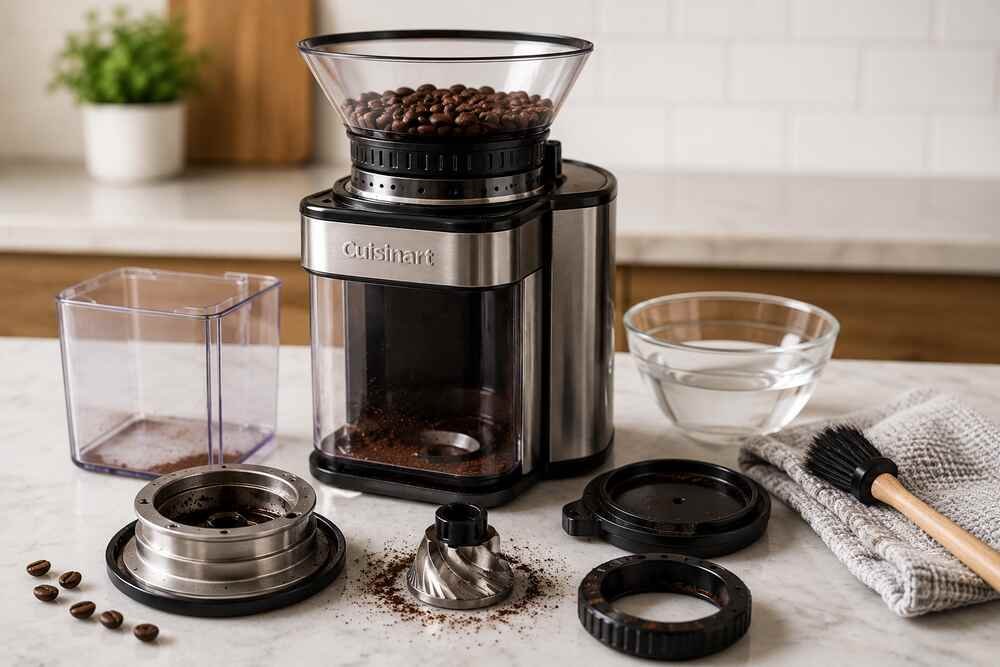

How to Clean a Cuisinart Blade Coffee Grinder
Blade grinders have two or three blades enclosed in a small chamber, and those blades will pulverize almost anything you put in, which is exactly what makes the rice trick work:
- Add ¼ cup of uncooked rice to the hopper.
- Run the grinder until the rice turns into a fine powder. The rice absorbs oil residue and scrubs the inside of the chamber as it grinds.
- Discard the rice powder.
- Unplug the grinder. Wipe the inside of the chamber with a dry or slightly damp cloth to remove any remaining powder and residue.
Do this whenever the grinder looks dirty or starts giving off a stale, oily smell. Coffee oils stick to blades and gradually turn rancid. That’s the source of the smell.
How to Clean a Cuisinart Conical Burr Grinder
Burr grinders have a more complex mechanism, so they need a more careful cleaning process. Beans feed into a chamber with an inner and outer burr. Moving them closer together or further apart changes the grind size. Here’s how to clean one properly:
- Remove and wash the hopper. The bean hopper and its lid can be washed by hand in warm, soapy water.
- Run the grinder empty for a few seconds. With the hopper off, run the grinder briefly to clear any beans still sitting in the burr chamber.
- Unplug the grinder. Always disconnect power before disassembling any part of the mechanism.
- Remove all plastic and rubber parts. Anything that contacts the beans, plus the grounds catch bin, should come off and get washed by hand.
- Remove the inner burr. Some models need a small screwdriver for this step. Once it’s out, use a dry, stiff brush to knock loose any coffee grounds stuck to the burr surfaces.
- Wipe both burrs with a dry cloth. The dry cloth absorbs oil residue that the brush leaves behind. Do not use water on the burrs themselves.
- Let everything air-dry completely before reassembling. Trapped moisture can cause grounds to clump once the grinder is back in use.
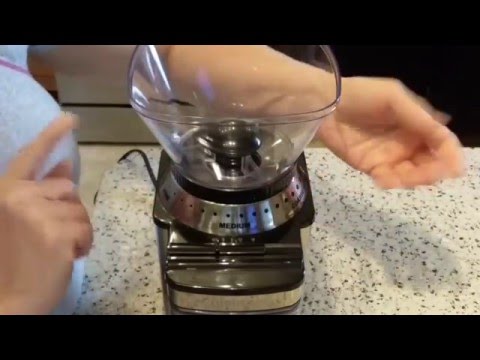
The video below shows this disassembly process on a Cuisinart burr grinder. It’s a helpful visual reference for the steps above.
Using Cleaning Tablets (The Quick Method)
If you’d rather skip disassembly, grinder cleaning tablets are a faster alternative. Place them in the hopper and pulse the grinder until they’ve fully run through the machine. Then run about an ounce of coffee beans through afterward and discard those grounds, along with any tablet residue. Rinse the grounds catch bin when you’re done.
Tablets are convenient, but they’re not as thorough as a full hand-cleaning. Reserve them for in-between touch-ups, and still plan on a full disassembly clean every month or so.
Cleaning the Outside of Your Grinder
The inside of the grinder gets most of the attention, but the exterior matters too. Fine coffee dust tends to settle around the hopper seat and control buttons. Wipe down the housing with a dry or barely damp microfiber cloth after each use to keep dust from working its way into seams and buttons over time. Avoid spraying cleaner directly onto the unit. Spray a cloth instead and wipe, so liquid doesn’t run down into the base or motor housing.
What Cuisinart’s Manual Actually Says
It’s worth checking the specifics for your exact model, since instructions vary slightly across Cuisinart’s grinder lineup. But the official Cuisinart product manuals are consistent on a few points worth repeating:
- Never immerse the base unit in water or any other liquid. Only the removable hopper, lid, and bin are dishwasher- or hand-wash-safe.
- Unplug the grinder before cleaning — every time, no exceptions.
- Wipe the base with a damp paper towel, then dry completely before the next use.
Note that Cuisinart’s printed manuals generally don’t cover the rice trick or burr disassembly in detail. Those techniques come from experienced home baristas and appliance repair guides, not the manufacturer. They still work well, as long as you follow the manufacturer’s core safety rule: keep water away from the base and the electrical components.
How Often Should You Clean Your Coffee Grinder?
A quick wipe-down after each use, or at least once a week, keeps loose grounds from building up. Plan for a full deep clean, including disassembly on burr models, every 2 to 4 weeks if you grind coffee daily. Clean sooner if you notice a stale smell, inconsistent grind size, or visible oil residue coating the chamber walls.
Common Mistakes to Avoid
- Washing the burrs with water. This causes rust on metal burrs and makes leftover grounds clump instead of grinding evenly.
- Skipping the unplug step. Never reach into a grinder chamber, even briefly, while it’s plugged in.
- Using too much rice. More than ¼ cup can strain the motor on smaller blade grinders. Stick to the recommended amount.
- Letting parts dry incompletely before reassembly. Trapped moisture leads to clumped, stale-tasting grounds in your next batch.
If cleaning doesn’t fix a grinding problem, or your machine is due for retirement, our coffee grinder and brewer reviews and buyer’s guide can help you compare replacement options. If you’re using the same machine to brew, our guide on how to make coffee in a Cuisinart coffee maker covers the rest of the system.
Frequently Asked Questions
Can I wash the burrs of my Cuisinart grinder with water?
No. Water on metal burrs can cause rust and makes ground coffee clump instead of flowing freely. Use a dry brush to remove loose grounds and a dry cloth to wipe away oil residue instead.
Why does my coffee taste stale even with fresh beans?
Rancid oil residue inside the grinder is a common culprit. Old coffee oils coat the blades or burrs and transfer stale, bitter notes to every batch that follows, even with fresh beans. A thorough clean usually resolves it.
How much rice should I use to clean a blade grinder?
Stick to about ¼ cup of uncooked white rice. Using significantly more can put unnecessary strain on smaller grinder motors.
Can I put grinder parts in the dishwasher?
Only the removable plastic parts, like the hopper, lid, and grounds bin, and only if your specific model’s manual confirms they’re dishwasher-safe. The base unit and any metal burr components should never go in a dishwasher or be submerged in water.
Is it normal for a grinder to smell like coffee even after cleaning?
A faint coffee aroma is normal, since some residue in the housing is unavoidable. A strong, stale, or rancid smell usually means oil residue is still trapped somewhere. Check the burr chamber threads or under a burr you didn’t fully remove.
Can I use rice to clean a burr grinder instead of disassembling it?
It’s not recommended. The rice trick works for blade grinders because the blades pulverize the rice into a fine, oil-absorbing powder. In a burr grinder, rice can get lodged between the burrs and potentially damage the mechanism. Stick to disassembly and a dry brush instead.
What’s the difference between cleaning tablets and the rice method?
Cleaning tablets are formulated specifically to absorb oils and are safe for both blade and burr grinders without disassembly. The rice trick is a free, at-home alternative that works well for blade grinders. It isn’t a substitute for the deeper clean a burr grinder needs periodically.
Final Thoughts
Your grinder is your coffee routine’s best friend, and a few minutes of regular maintenance keeps it working the way it should. Now you know how to clean your Cuisinart coffee grinder properly: the rice trick for a blade model, or a full disassembly for a burr grinder. For more ways to get the best results, check out our tips for making the perfect cup of coffee. If your grinder is ever out of commission, our guide on how to grind coffee beans in a blender covers a backup method.


Hey, My name is MAMON. I am a SEO content creator and affiliate marketer with over 8 years of experience. I create honest product reviews, in-depth buying guides, and practical how-to articles to help readers make informed decisions. My mission is to provide trustworthy, research-backed content that delivers real value.