

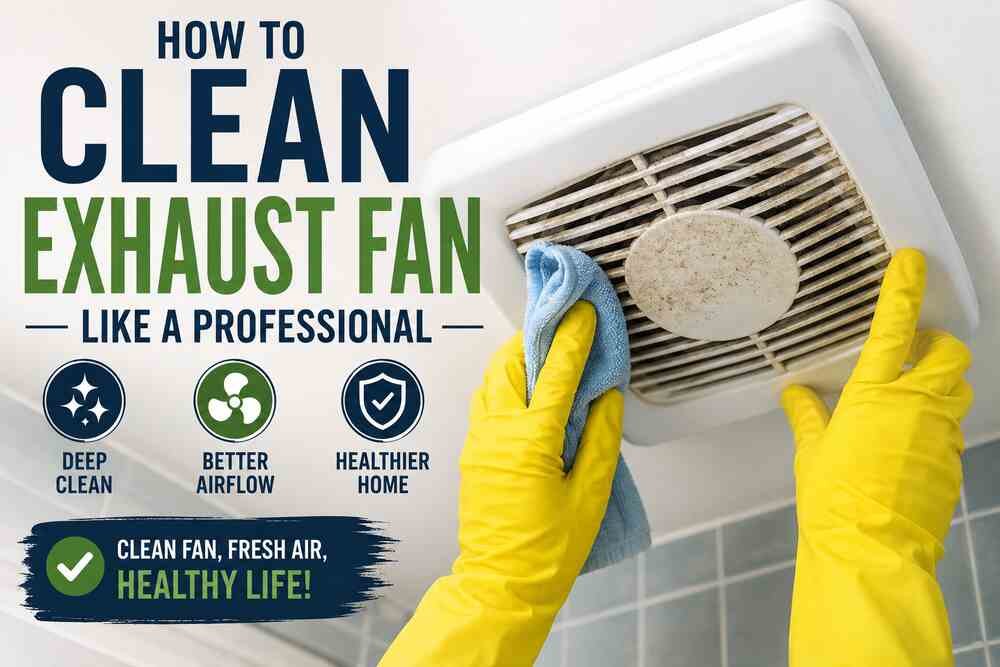

The fastest way to clean a kitchen exhaust fan is to remove the grease filter, soak it in hot water with dish soap and baking soda for 15-20 minutes, scrub with a soft brush, then wipe down the fan blades and housing with the same solution before drying everything and reassembling. Most home cooks can do this in under an hour with supplies already in the kitchen.
Key Takeaways
- A clogged grease filter forces the fan motor to work harder and cuts ventilation efficiency, letting more smoke, grease, and moisture stay in the kitchen air.
- Aluminum mesh and stainless steel baffle filters are usually dishwasher-safe; charcoal filters can’t be cleaned and need replacing every 3-6 months (Broan-NuTone).
- Soak metal filters 15-20 minutes in hot, soapy water; extend to an hour or more if it’s been months since the last clean.
- Cooking is the leading cause of home fires in the U.S., and a grease-caked exhaust system is a documented contributing factor (NFPA).
- Clean the filter monthly under normal use, and inspect the fan blades and housing quarterly.
Kitchen exhaust fans pull smoke, steam, and airborne grease out of the cooking area so they don’t end up on your cabinets, walls, and lungs. Every bit of that grease has to land somewhere first, and most of it lands on the filter. Skip cleaning it for a few months and the filter turns into a solid, sticky mat that blocks airflow, forces the motor to strain, and leaves grease coating everything downstream of it, including the fan blades and duct opening. This guide covers exactly how to clean kitchen exhaust fan filters, blades, and housing the way appliance manufacturers actually recommend, plus how often you should be doing it.
Why a Greasy Exhaust Fan Is More Than a Cosmetic Problem
A dirty filter doesn’t just look bad. It reduces suction, which means your kitchen holds onto more airborne grease and moisture than it should, some of which settles right back onto your stovetop, cabinets, and countertops. Reduced airflow also makes the fan motor work harder to move the same amount of air, which shortens its working life over time.
There’s a safety angle too. Cooking remains the leading cause of home structure fires in the United States (NFPA), and accumulated grease anywhere near heat, including inside a range hood or exhaust fan housing, is a documented fuel source. You don’t need a commercial-kitchen-level cleaning schedule at home, but letting grease build up indefinitely is a genuine, avoidable risk, not just a maintenance inconvenience.
What You’ll Need
- Dish soap (a standard degreasing formula works well)
- Baking soda
- Hot water
- A large bowl, sink, or tub big enough to submerge the filter
- A soft-bristle scrub brush or non-abrasive sponge
- Rubber gloves
- Two clean cloths (one damp, one dry)
- Optional: a degreasing spray for heavy buildup
Skip steel wool and abrasive scouring pads. They can scratch or warp thin aluminum mesh filters and strip the finish off stainless steel baffle filters.


How to Clean Kitchen Exhaust Fan Filters Step by Step
1. Turn Off and Unplug the Unit First
Switch off the hood and, if it’s not hardwired, unplug it before touching anything. If your range hood is hardwired into a wall switch, flip that breaker off at the panel. Working near an active electrical connection while your hands are wet with cleaning solution is not worth the risk.
2. Locate and Remove the Grease Filter
The filter is usually a rectangular metal panel, either fine aluminum mesh or a baffle-style filter with angled slats, mounted on the underside of the hood. It typically releases with a lever, a twist-lock, or a simple slide-out motion. Check your owner’s manual if you can’t find the release mechanism; hood filters vary more by model than most kitchen appliances.
If the filter feels stuck, it’s probably glued in place by dried grease around the frame edges. Run a thin, blunt tool like a butter knife along the seam to loosen it rather than forcing it, which can bend the frame.
3. Make the Cleaning Solution
This is the core of how to clean kitchen exhaust fan filters effectively: hot water breaks grease down far faster than cold or lukewarm water. Fill a sink, bowl, or tub large enough to fully submerge the filter with the hottest water your tap or a kettle can provide. Add roughly a quarter cup of baking soda and a generous squeeze of dish soap per gallon of water.
4. Soak the Filter
Submerge the filter completely and let it sit for 15-20 minutes. If the filter hasn’t been cleaned in several months, extend the soak to an hour or more; some heavily used kitchens do better with an overnight soak. The hot, alkaline solution softens baked-on grease so it lifts away with minimal scrubbing instead of requiring you to force it off.
5. Scrub, Rinse, and Dry Completely
After soaking, scrub the entire surface with a soft brush, working in the direction of the mesh or slats rather than across it. Rinse thoroughly with hot water until no soap residue or slippery film remains, then set the filter somewhere to air-dry completely. Reinstalling a damp filter traps moisture against the metal and invites corrosion, especially on aluminum.
6. Check If Your Filter Is Dishwasher-Safe
Many aluminum mesh and stainless steel baffle filters are dishwasher-safe, and running one through a normal cycle (ideally after a quick pre-soak) can save the hand-scrubbing step entirely (Broan-NuTone filter guide). Charcoal filters are the exception. They’re not washable at all and need to be replaced roughly every 3-6 months, sooner if you fry or wok-cook often. Check your specific model’s manual before putting any filter in the dishwasher, since some manufacturers warn that phosphate-based detergents can discolor metal filters, even though it doesn’t affect performance.
7. Clean the Fan Blades and Housing
While the filter soaks or dries, use a cloth dampened in the same soapy solution to wipe down the fan blades, the interior housing, and the exterior of the hood. Grease tends to coat the blades in a thin film that’s easy to miss because it’s out of sight above the filter. Clean in the direction of any brushed-metal finish to avoid leaving streaks, and rinse with a separate clean, damp cloth afterward.
8. Reassemble and Test
Once every part is completely dry, including the filter, slide or clip it back into place using the same mechanism you used to remove it. Reconnect power (or flip the breaker back on) and run the fan briefly to confirm it’s operating normally and quietly.
How Often Should You Clean a Kitchen Exhaust Fan?
- Metal filters: monthly under typical home cooking; every 2-3 weeks if you fry, sear, or wok-cook frequently
- Charcoal filters: replace every 3-6 months (Broan-NuTone); they cannot be cleaned and reused
- Fan blades and housing: a quick wipe monthly alongside the filter clean, with a deeper clean quarterly
- Ductwork (ducted hoods only): have a professional inspect ducted systems every couple of years, more often for heavy daily cooking, since grease buildup deep in ductwork isn’t something you can safely reach or assess from the kitchen
Common Mistakes to Avoid
- Using cold water. Grease resolidifies in cold water almost as fast as it dissolves in hot, so you end up scrubbing far longer for the same result.
- Skipping the fan blades and housing. Most of the visible grease sits on the filter, but the blades collect a thin coating too, and it’s easy to forget since you can’t see it without looking up into the hood.
- Reinstalling a wet filter. Trapped moisture accelerates corrosion, particularly on aluminum mesh.
- Using steel wool on baffle or mesh filters. It scratches stainless finishes and can distort fine aluminum mesh, reducing airflow further instead of restoring it.
- Ignoring a persistently weak fan after cleaning. If suction stays weak even with a clean filter, the motor or the ductwork itself may need professional attention. Our guide on whether gas ranges need to be vented covers what proper ventilation airflow should actually look like.
When to Call a Professional
Most exhaust fan maintenance is a straightforward DIY job, but call an appliance technician if you notice grinding or squealing from the motor, a burning smell, a light that flickers along with fan issues, or visible grease coating the inside of the duct beyond the filter itself. Heavy duct-level buildup, especially in homes that fry or wok-cook often, is a job for a professional hood-and-duct cleaning service rather than a DIY soak. If you’re weighing ventilation needs for a new range altogether, see our guide to choosing a gas range for your kitchen for CFM and hood-sizing basics.
Video: Cleaning a Kitchen Exhaust Fan

FAQ:
How do I know my kitchen exhaust fan needs cleaning? Weak suction, visible grease film on the filter, a burning or stale-oil smell when the fan runs, and grease residue appearing on nearby cabinets are all signs it’s overdue.
Can I put my exhaust fan filter in the dishwasher? Many aluminum mesh and stainless baffle filters are dishwasher-safe, but check your model’s manual first. Charcoal filters should never go in a dishwasher; they’re not washable at all and need replacing instead (Broan-NuTone).
What’s the best homemade solution for how to clean a kitchen exhaust fan filter? Hot water, a squeeze of dish soap, and a quarter cup of baking soda per gallon covers most grease buildup. For heavily caked filters, a degreasing spray or an extended overnight soak works better than scrubbing harder.
Is a greasy exhaust fan actually a fire risk at home? Yes, to a degree. Cooking is the leading cause of home fires in the U.S. (NFPA), and accumulated grease near heat sources is a recognized contributing factor, even outside commercial kitchens where the risk is regulated more strictly.
How long should I soak the filter? 15-20 minutes for a filter cleaned on a normal monthly schedule. Extend to an hour or more, or soak overnight, if it’s been several months since the last clean.
Conclusion
Knowing how to clean kitchen exhaust fan filters properly comes down to a simple routine: hot water, a mild degreasing solution, a soft brush, and complete drying before reassembly. Do it monthly and the job stays quick. Let it slide for months at a time and you’re looking at a longer soak, more scrubbing, and a fan working harder than it should have to.
itchen will look and the longer the life of this unit will last.


Hey, My name is MAMON. I am a SEO content creator and affiliate marketer with over 8 years of experience. I create honest product reviews, in-depth buying guides, and practical how-to articles to help readers make informed decisions. My mission is to provide trustworthy, research-backed content that delivers real value.