

Learning how to clean a mug warmer properly keeps it working well, looking good, and staying safe. Coffee drips, tea rings, and milk spills can bake onto a hot plate, and they may leave stains, odors, or sticky residue. However, mug warmers are electrical devices, so you cannot just rinse them in the sink. In this guide, we pull together the care instructions from popular brands, explain the safest step-by-step cleaning method for plate warmers and self-heating mugs, and cover the mistakes that can damage your warmer or void its warranty.
Key Takeaways
- First, always unplug the warmer and let it cool completely before cleaning.
- Never submerge a plug-in mug warmer. For example, Mr. Coffee’s care instructions say to spot or wipe clean only.
- Many newer warmers use a waterproof or spill-resistant glass top, which wipes clean easily with a damp cloth.
- Most self-heating mugs are hand wash only. Ember says its Mug 2 is submersible up to 1 meter, while PUSEE warns against hot-water cleaning, dishwashers, and microwaves.
- Finally, make sure the warmer, mug base, and charging contacts are completely dry before using them again.

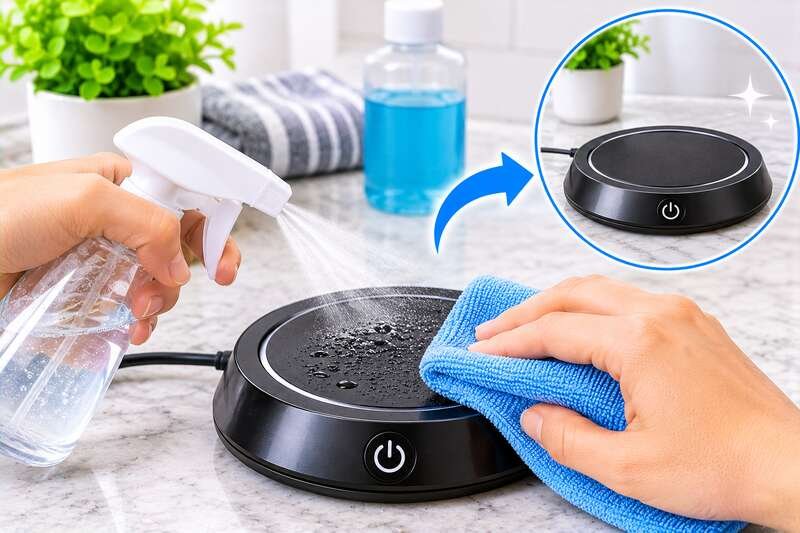
Why Cleaning Your Mug Warmer Matters
A mug warmer gets hot every time you use it. As a result, any coffee, tea, or milk that drips onto the plate can bake on and harden. Over time, that residue can create stains, sticky spots, and burnt smells. In addition, a dirty plate makes poorer contact with your mug, which can reduce heat transfer.
Safety matters too. Because a warmer is an electrical appliance, spilled liquid near the cord or controls is a risk. Therefore, regular cleaning, done the right way, helps your warmer last longer and keeps it safe to use.
What the Brands Say About Cleaning
Before you learn how to clean a mug warmer, check your manual. Here is a summary of the care guidance from popular mug warmers and heated mugs, based on their official product data or Amazon listings in November 2026.
| Product | Care Guidance |
|---|---|
| Mr. Coffee MWBLK | Spot or wipe clean |
| VOBAGA | Spill-proof design for easy cleaning |
| SWEETFULL DS1295 | Waterproof glass surface for easy cleanup after spills |
| House Gem | Easy-clean glass heating plate |
| Ember Mug 2 | Hand wash only; submersible up to 1 meter |
| Ember Tumbler 2 | Top-rack dishwasher safe, per Ember |
| Kepwam T1 | Hand wash only; no dishwasher, microwave, or hot water |
| PUSEE 14 oz | No hot water, dishwasher, or microwave; dry base before use |
As you can see, the rules differ a lot between plate warmers and heated mugs. In general, plate warmers should only be wiped, while heated mugs need careful hand washing and a fully dry base.
How to Clean a Mug Warmer Plate: Step by Step
Here is how to clean a mug warmer plate safely. This method works for most plug-in warming plates. Always follow your manual if it says something different.
- Unplug and cool. First, switch the warmer off, unplug it, and wait until the plate is completely cool to the touch. Some warmers flash a light while the plate is still hot.
- Remove loose debris. Next, brush away crumbs or dried flakes with a dry, soft cloth.
- Wipe with a damp cloth. Then, dampen a soft cloth with warm water and a drop of mild dish soap. Wring it out well so it is not dripping.
- Treat stuck-on stains. After that, for baked-on coffee, lay the damp cloth over the spot for a few minutes to soften it, then wipe gently.
- Rinse the surface. In addition, wipe again with a cloth dampened in plain water to remove soap.
- Dry thoroughly. Finally, dry the plate, edges, and controls with a clean towel, and let it air-dry before plugging it back in.
Importantly, never pour water onto the warmer, hold it under the tap, or submerge it. Water can reach the electronics and create a shock or fire hazard.
Removing Tough Stains and Residue

Photo: Keith Williamson via Flickr (CC BY 2.0).
Sometimes a simple wipe is not enough. For stubborn rings and baked-on residue, try these gentle options, testing each on a small area first:
- Warm soapy cloth soak: First, lay a warm, damp, soapy cloth on the stain for 5 to 10 minutes to loosen it.
- Baking soda paste: Next, mix a little baking soda with water into a paste, apply it with a soft cloth, wipe gently, and then wipe clean with a damp cloth.
- Diluted white vinegar: Also, a cloth dampened with a mix of vinegar and water can help with mineral spots on glass tops.
- Plastic scraper: Finally, for thick residue on a glass top, a plastic scraper can lift it without scratching.
On the other hand, avoid steel wool, scouring pads, and harsh chemicals. These can scratch glass tops, damage coatings, and leave residue that smells when heated. If you reheat coffee instead of warming it, see how much electricity a microwave uses. And if you are dealing with heat-baked stains on other kitchen items, our guide on how to clean a burnt microwave shares more gentle techniques.
How to Clean a Mug Warmer With a Glass Top
Many newer warmers, such as the SWEETFULL and House Gem models, use a glass heating surface. Glass is the easiest to clean, but it can crack with sudden temperature changes. So, first make sure the plate is fully cool. Then, wipe it with a soft, damp cloth and a drop of dish soap, and follow with a clean damp cloth. For streaks, a lightly dampened microfiber cloth works well. Afterward, buff it dry so no water spots remain. Above all, never put an ice-cold cloth on a warm glass plate.
How to Clean a Mug Warmer With a Metal Plate
Older and budget warmers often have a metal or coated plate. In this case, avoid abrasive pads that can scratch the coating. Instead, use a soft sponge with mild soap, and treat stuck-on stains with a soaked cloth or a gentle baking soda paste. Next, wipe away all residue, since leftover paste can bake on and smell. Finally, dry the edges where the plate meets the housing, because water can collect there.
How to Clean a Mug Warmer After a Big Spill
A large spill needs quick, careful action. First, unplug the warmer immediately and move it away from the liquid. Next, blot up as much liquid as you can with paper towels, without tipping the warmer. Then, wipe the outside with a damp cloth and dry it thoroughly. After that, let it sit unplugged for at least several hours, or overnight, so any hidden moisture can evaporate. However, if liquid got inside the housing, if you see damage, or if it smells burnt when you test it, stop using it and contact the manufacturer. In short, when in doubt, replace it rather than risk a hazard.
How to Clean a Self-Heating Mug
Self-heating mugs need extra care because they contain a battery and electronics. Here is a safe general method:
- Empty and cool. First, pour out any drink and let the mug cool.
- Check the manual. Next, confirm whether your mug can be submerged. For example, Ember says its Mug 2 is safe to hand wash and submersible up to 1 meter, while other brands warn against hot water.
- Wash gently. Then, use warm (not hot) water, mild dish soap, and a soft sponge. Avoid abrasive pads that can scratch the coating.
- Rinse well. After that, rinse the inside thoroughly so no soap taste remains.
- Dry the base and contacts. Finally, dry the outside, base, and charging contacts completely before setting the mug on its coaster.
Never put a self-heating mug in the dishwasher or microwave unless the brand clearly says it is safe. For instance, Ember describes only its newer Tumbler 2 as top-rack dishwasher safe.

Video: Ember shares care and cleaning tips for its smart mug.
How to Clean the Charging Coaster
The charging coaster for a heated mug also collects drips. To clean it, first unplug it. Then, wipe it with a slightly damp cloth and dry it completely. Pay special attention to the charging contacts, since moisture or residue there can stop the mug from charging. Never submerge the coaster or run it under water.
How Often Should You Clean It?
| Task | How Often |
|---|---|
| Wipe up spills | Right away, once unplugged and cool |
| Quick wipe of the plate | Every few days of regular use |
| Deep clean for stains | About once a month, or as needed |
| Wash a self-heating mug | After each use |
| Check cord and plug | Every time you deep clean |
These are our general suggestions. If your warmer gets daily use with milk drinks, clean it more often, since milk residue sours and smells faster than plain coffee.
Common Cleaning Mistakes to Avoid
- Cleaning while it is hot. As a result, you risk burns and can crack a glass top with sudden cold water.
- Submerging a plate warmer. In fact, water can reach the wiring and create a shock hazard.
- Using abrasive pads. Instead, use a soft cloth or sponge to protect the surface.
- Spraying cleaner directly on it. Rather, spray onto a cloth first so liquid does not drip into the controls.
- Putting a heated mug in the dishwasher. Otherwise, heat and water can damage the battery and heater.
- Plugging it in before it is dry. Finally, always let it dry completely first.
Safety Tips While Cleaning
Mug warmer plates can stay hot after you switch them off, and some list settings up to 176°F or 185°F. For context, the U.S. Consumer Product Safety Commission reports that water at 150°F can cause third-degree burns in about 2 seconds. Therefore, always wait for the plate to cool fully. In addition, inspect the cord each time you clean, and stop using the warmer if the cord is frayed, the plug is damaged, or the plate is cracked.
Tips to Keep Your Warmer Cleaner
- Use a lid. First, a lid prevents splashes and also keeps your coffee hotter.
- Wipe the mug base. Next, dry the bottom of your mug before setting it down, so drips do not bake onto the plate.
- Avoid overfilling. Also, leave a little room at the top to prevent spills.
- Keep a cloth nearby. In addition, a dedicated cloth makes quick wipes easy.
- Unplug at day’s end. Finally, unplugging gives you a safe moment to wipe the plate.
If you use a warmer next to your kettle or coffee maker, it helps to keep those clean too. For example, see our guide to the best electric kettle for models that are easy to descale, and our guide on how to clean discolored stainless steel pots for steel care tips.
Frequently Asked Questions
Can I put my mug warmer in water to clean it?
No. Plug-in mug warmers should never be submerged. Instead, unplug it, let it cool, and wipe it with a damp cloth.
How do I remove coffee stains from a mug warmer?
Lay a warm, soapy damp cloth over the stain for a few minutes, then wipe gently. For stubborn spots, a little baking soda paste on a soft cloth often helps.
Is it safe to use vinegar on a mug warmer?
Generally, a cloth lightly dampened with diluted vinegar is fine for glass tops. However, apply it to the cloth, not the warmer, and check your manual first.
Can I put an Ember Mug in the dishwasher?
Not the Mug 2. Ember says it is hand wash only, though submersible up to 1 meter. By contrast, Ember says its Tumbler 2 is top-rack dishwasher safe.
Why does my mug warmer smell when it heats up?
Usually, old coffee or milk residue is baking on the plate. Unplug it, let it cool, and give it a thorough clean.
Do I need special cleaners?
No. In most cases, warm water, a drop of mild dish soap, and a soft cloth are all you need. Special cleaners can leave residue that smells when the plate heats up, so keep it simple.
What is the best cloth for cleaning a mug warmer?
A soft microfiber cloth is ideal. It picks up residue without scratching glass or coatings, and it leaves fewer streaks. In addition, keep a separate dry cloth for buffing the plate after cleaning.
How do I clean a mug warmer used as a candle warmer?
First, let the plate cool and the wax harden. Then, gently lift off hardened wax with a plastic scraper, and wipe away any film with a warm, damp, soapy cloth. Finally, dry it thoroughly before using it for drinks again.
Final Thoughts
Knowing how to clean a mug warmer comes down to a few simple rules: unplug it, let it cool, wipe it with a damp cloth, and dry it completely. Never submerge a plate warmer, and follow your brand’s instructions for self-heating mugs, since most are hand wash only. With quick wipes after spills and a monthly deep clean, your mug warmer will stay safe, odor-free, and working well for years.


Hey, My name is MAMON. I am a SEO content creator and affiliate marketer with over 8 years of experience. I create honest product reviews, in-depth buying guides, and practical how-to articles to help readers make informed decisions. My mission is to provide trustworthy, research-backed content that delivers real value.