


How to choose a gas range: match the size to your kitchen’s cutout (30-inch is standard), pick a BTU range that covers both a high-power burner (15,000+) for boiling and searing and a true simmer burner (down to 500-1,000 BTU) for delicate sauces, confirm your hood’s CFM can handle the total burner output, and decide between freestanding, slide-in, or a gas cooktop paired with a separate wall oven. Get those four decisions right and the rest, finishes, extra features, and price tier, comes down to preference and budget.
A gas range remains the top choice for home cooks who want instant heat, visible flame control, and a stovetop that still works during a power outage. But “gas range” covers a wide spread of products, from a $400 entry-level four-burner to a $7,500 professional-style range with six burners and a griddle. Knowing how to choose a gas range means working through size, BTU output, burner configuration, ignition type, installation style, and the features actually worth paying for in order, so you can shop with a clear checklist instead of getting talked into add-ons you won’t use.
Key Takeaways
- Standard gas ranges come in 30-inch widths for most kitchens, with 36-inch and 48-inch professional-style options for larger cooking spaces.
- Look for at least one burner rated 15,000+ BTU for boiling and searing, and at least one low-output simmer burner that can drop to around 500-1,000 BTU without the flame going out.
- Match your range hood’s CFM to your cooktop’s total BTU output: roughly 100 CFM for every 10,000 BTU, per manufacturer guidance.
- Gas ranges ship configured for natural gas by default; converting to propane requires a proper LP conversion kit with correctly sized orifices, not just hooking up a tank.
Step 1: Confirm your gas connection and measure your space
The first practical step in how to choose a gas range is confirming your setup will support one. Before anything else, confirm your kitchen has a gas line, or budget for running one, and measure the width, depth, and height of your existing range cutout. Standard gas ranges are 30 inches wide, which fits the overwhelming majority of U.S. kitchens. If you’re renovating or have a larger kitchen, 36-inch and 48-inch professional-style ranges give you more burners and cooking surface, but they also draw significantly more total BTU and typically need stronger ventilation to match.
Gas ranges also need a 120V outlet nearby for the electronic ignition, clock, and oven controls, even though the cooking itself runs on gas. That’s a meaningfully lighter electrical requirement than an electric or induction range, which needs a dedicated 240V circuit.
Step 2: Decide on installation style
Gas ranges come in a few distinct installation styles, and picking the wrong one for your cabinetry can mean an awkward gap or a range that won’t sit flush.
- Freestanding: The most common and most affordable style. It has finished side panels and back controls or a backguard, so it can stand alone without cabinets on either side. Best for straightforward replacements and budget-conscious kitchens.
- Slide-in: Designed to sit flush between two cabinets, with the cooktop edges resting on the surrounding countertop for a built-in look. Front controls are standard. Slide-ins cost more than a comparable freestanding range for similar performance, mostly for the seamless appearance.
- Gas cooktop with a separate wall oven: Instead of one all-in-one unit, you install a gas cooktop into the counter and pair it with a standalone electric or gas wall oven elsewhere in the kitchen. This is a layout decision more than a range decision, and it’s common in larger kitchen remodels where the cooktop and oven don’t need to be in the same spot.

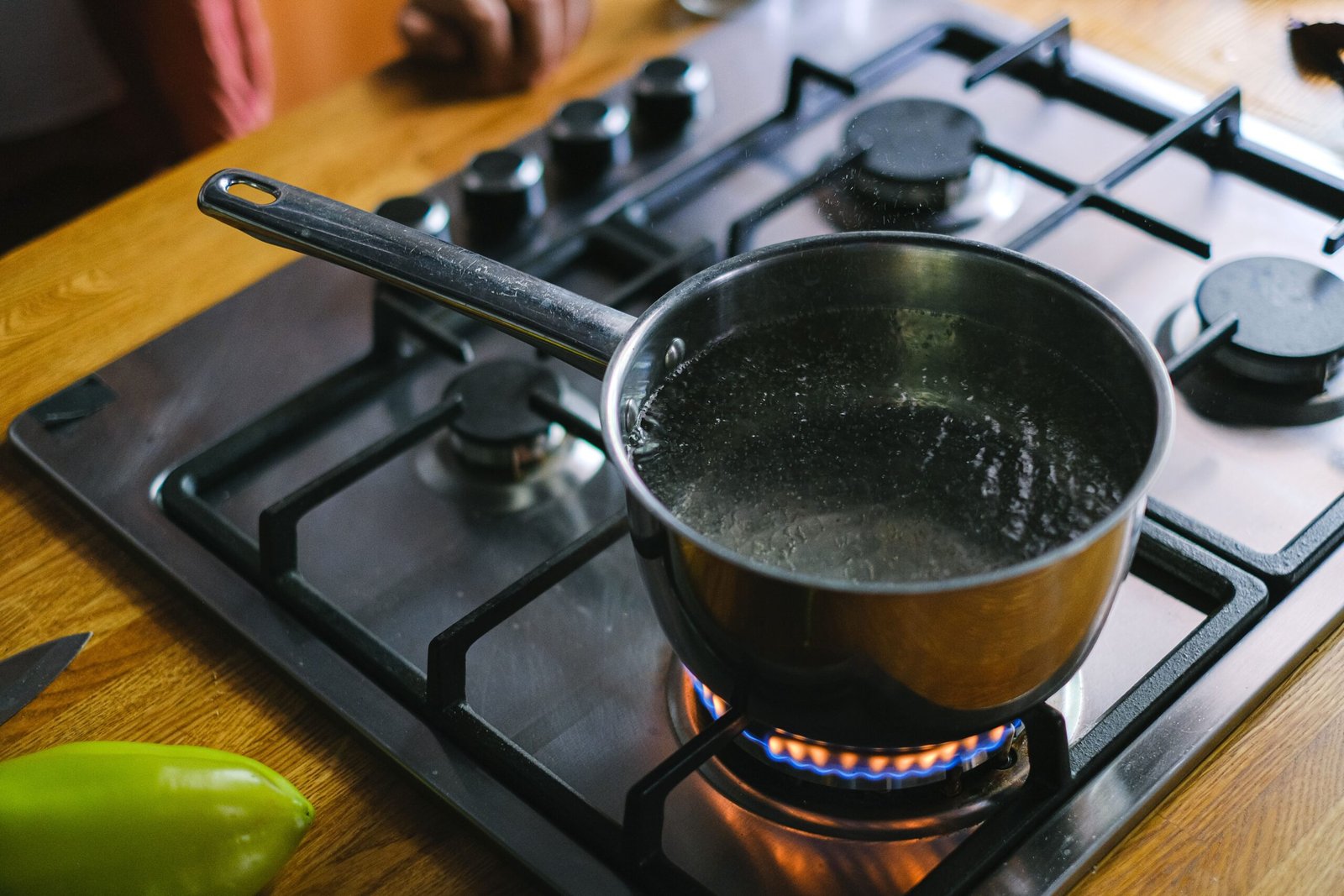
Step 3: Understand BTU output and burner configuration
BTU (British thermal units) measures how much heat a burner can produce per hour, and it’s the number most shoppers fixate on, sometimes for the wrong reasons. A higher max BTU isn’t automatically better: what actually matters is having the right spread of burner outputs for how you cook.
A well-configured gas range typically has:
- One power burner rated 15,000 to 20,000+ BTU, useful for boiling large pots of water quickly or high-heat searing and stir-frying.
- One or two mid-range burners around 9,000 to 12,000 BTU for general cooking, sautéing, and everyday pan work.
- At least one true simmer burner that can hold a low, stable flame, ideally down around 500 to 1,000 BTU, for delicate sauces, melting chocolate, or gentle simmering without scorching.
Standard ranges have four burners; many mid-range and higher-end models add a fifth, and 36-inch-plus professional-style ranges commonly offer five or six. A well-designed 15,000 BTU burner with proper flame modulation can often simmer as effectively as a lower-rated burner, so don’t rule out a range solely because its lowest burner number looks high on paper; check whether it advertises a true simmer setting.
Step 4: Match your ventilation to your BTU total
This is a step people learning how to choose a gas range often skip, and it shouldn’t be. Add up the BTU rating of every burner on the range, then size your range hood’s CFM (cubic feet per minute) accordingly. A general guideline from KitchenAid is about 100 CFM of venting power for every 10,000 BTU your cooktop produces, though you should always confirm against the specific range’s owner’s manual. A high-output professional-style range with 75,000+ total BTU across all burners needs meaningfully more ventilation than an entry-level four-burner model with a 25,000 BTU total.
Under-ventilating a high-BTU range doesn’t just mean lingering cooking smells; it means grease and combustion byproducts aren’t being cleared effectively from your kitchen air.
Step 5: Choose your ignition and burner type
Nearly all gas ranges sold today use electronic spark ignition rather than an older standing pilot light, which saves gas since nothing burns continuously when the burner is off. Within electronic ignition, look at:
- Sealed burners: The standard on most modern ranges. Spills stay on the cooktop surface instead of dripping into the burner mechanism, which makes cleanup dramatically easier and helps prevent corrosion over time.
- Open (unsealed) burners: Common on some professional-style brands. These allow slightly higher peak outputs and a different cooking feel that some serious cooks prefer, but they’re more work to clean and typically need stronger ventilation.
- Continuous grates: Cast iron grates that span across multiple burners rather than each burner having its own separate small grate. This lets you slide heavy pots between burners without lifting them, which matters more than it sounds like once you’re juggling multiple dishes.
Natural gas vs. propane
Every gas range ships configured for natural gas by default. If your home runs on propane (LP), you’ll need a proper LP conversion kit, sized orifices for every burner plus the oven, a repositioned or replaced pressure regulator, and a full leak and flame check. This isn’t a simple DIY swap: putting high-pressure propane through an orifice sized for natural gas produces large, sooty, yellow flames and unsafe carbon monoxide output. Most manufacturers include an LP kit in the box or sell one separately, but conversion should be done by a qualified installer or gas fitter, and many local codes require it. If you’re unsure which fuel your home uses, check with your utility provider or a licensed plumber before you buy.

Features worth paying for (and ones you can skip)
Worth prioritizing:
- True convection: A convection fan paired with a third heating element circulates air more evenly than basic convection (which just adds a fan to a standard oven), improving roasting and multi-rack baking.
- Double ovens or a double-oven configuration: Useful if you regularly cook multiple dishes at different temperatures, especially around holidays.
- Self-cleaning cycle: Cuts down significantly on manual oven cleaning, though it’s worth checking reviews for how well a specific model’s cycle actually performs.
- Hot surface indicator lights: A genuine safety feature, especially in households with kids, that shows when a burner or surface area is still hot after use.
Often skippable:
- Wi-Fi and app connectivity: Convenient for some, but frequently unused after the first few weeks according to appliance reviewers, and it adds cost without improving actual cooking performance.
- Chasing the highest advertised max BTU: As covered above, home cooks rarely need burners above 18,000 BTU on a regular basis; balanced burner spread and a good simmer setting matter more day to day.
Watch: a quick gas range buying walkthrough
This video runs through a handful of current gas range models side by side, useful for seeing how BTU output, burner layout, and installation style translate into real listed products.

What gas ranges typically cost
Pricing breaks down roughly into three tiers:
- Entry-level ($400-$900): Four burners, manual-clean oven, no dedicated power burner, minimal extra features. Good for rentals, secondary kitchens, or straightforward replacements.
- Mid-range ($900-$2,500): Larger oven capacity, self-clean cycles, a genuine power burner around 15,000 BTU alongside a real simmer burner, sometimes basic convection and a fifth burner.
- Premium and professional-style ($2,500-$7,500+): Five or six burners, true convection, continuous grates, higher total BTU output, double ovens on some models, and finish/customization options like colored enamel.
How to decide between gas and other fuel types
If your kitchen already has a gas line, the decision usually comes down to cooking style rather than infrastructure. Gas gives you visible flame control and near-instant temperature changes, which many cooks prefer for high-heat techniques like searing, wok cooking, and sauce work. Electric and induction cooktops offer more consistent, even heating and easier cleanup, with induction adding faster boil times at the cost of requiring magnetic cookware. If you cook mostly at a gas stove already and want cookware guidance specific to that setup, see our guide to the best cookware for gas stoves.
Frequently asked questions
A few more questions that come up once shoppers know how to choose a gas range and start comparing specific models.
How many BTUs do I actually need for a gas range?
Most home cooks are well served by one burner in the 15,000-18,000 BTU range for boiling and searing, paired with a true simmer burner, rather than chasing the highest total BTU number on the spec sheet. For a fuller breakdown by household and cooking style, see our guide to BTU needs for a gas range.
Do all gas ranges need to be vented?
Yes, proper ventilation is strongly recommended for every gas range, since combustion produces byproducts that need to be cleared from indoor air, not just food odors and grease. Our guide to gas range ventilation requirements covers CFM sizing and hood types in more depth.
What’s the difference between a freestanding and slide-in gas range?
A freestanding range has finished side panels and can stand on its own without flanking cabinets, while a slide-in fits flush between two cabinets with its edges resting on the countertop for a built-in look. Our guide to freestanding gas ranges covers the tradeoffs in more detail.
Can I convert a natural gas range to propane myself?
Technically the parts are available, but conversion involves swapping every burner orifice to a smaller LP-sized one, adjusting or flipping the pressure regulator, and pressure-testing the whole system, work that most manufacturers and local codes require a licensed installer to perform. Attempting it without the correct kit and testing risks unsafe combustion.
Final thoughts
Knowing how to choose a gas range comes down to working through the decisions in order: confirm your gas hookup and measure your space, pick freestanding or slide-in based on your cabinetry, choose a burner spread with both real power and a true simmer option, size your ventilation to match your total BTU, and only then start comparing finishes and extra features. Get the fundamentals right first, and almost any range in your price tier will serve you well for years of daily cooking.


Hey, My name is MAMON. I am a SEO content creator and affiliate marketer with over 8 years of experience. I create honest product reviews, in-depth buying guides, and practical how-to articles to help readers make informed decisions. My mission is to provide trustworthy, research-backed content that delivers real value.