

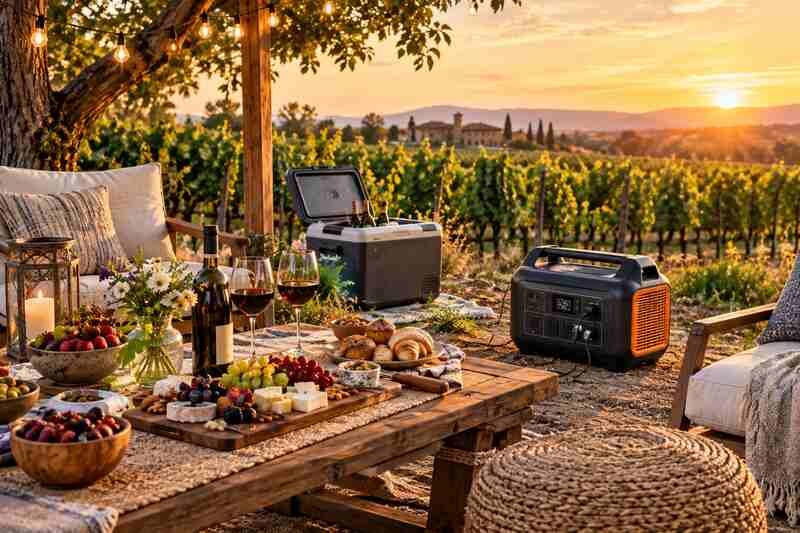

A getaway to wine country should feel unhurried: a glass poured at golden hour, a picnic on a blanket, maybe a night under the stars near the vines. A reliable camping generator keeps that picture intact after dark. It brews the coffee, charges your phone, and runs a string of lights without a noisy gas rig disturbing a quiet vineyard. Pair the right camping generator with a great U.S. wine region, and you’ve got the ingredients for one of the most relaxing trips you can plan this year.
Key Takeaways
- California produces roughly 81% of all U.S. wine, and the country now has 276 federally recognized American Viticultural Areas (AVAs) to explore, 154 of them in California alone.
- Napa Valley, Sonoma, Willamette Valley, the Finger Lakes, and Northern Michigan all have wineries within easy reach of public or on-site camping.
- A solar-charged camping generator like the Jackery Solar Generator 600 v2 (640Wh, 500W/1000W surge) can run string lights, charge devices, and power small kitchen appliances for a full weekend without a drop of gasoline.
- Look for a lithium iron phosphate (LiFePO4) battery, a fast solar recharge time, and quiet operation so you don’t disturb neighboring campsites or tasting-room guests.


Why the U.S. Is One of the Best Places for a Wine Country Getaway
Wine tourism is a genuinely American pastime. The United States now has 276 established American Viticultural Areas (AVAs), the federally defined wine-growing regions that map out everything from the fog-cooled hills of Sonoma to the basalt soils of Washington’s Columbia Valley (California Association of Winegrape Growers). California alone accounts for 154 of those AVAs and produces about 81% of the country’s wine (Wine Institute). Wineries now operate in all 50 states, so a wine-and-camping weekend is realistic no matter where you live.
-
Wide Climate Range
From the Mediterranean warmth of Napa to the cool Willamette Valley and the lake-effect winters of the Finger Lakes, U.S. wine regions cover a wide range of growing conditions. That’s part of why the country produces everything from bold Cabernet Sauvignon to delicate Pinot Noir and Riesling.
-
A Long Tradition of Wine Innovation
California winemakers put American wine on the world map at the 1976 “Judgment of Paris,” where local Cabernets and Chardonnays outscored top French labels in a blind tasting. That result pushed U.S. producers to keep investing in research, sustainable farming, and temperature-controlled fermentation, techniques that are now standard across the industry.
-
Wine Tourism Built for Visitors
Regions like Napa Valley have welcomed tourists since the 1960s. Most wine counties now run dedicated tasting rooms, trail maps, and events built for out-of-town guests, not just wholesale buyers.
-
Farm-to-Glass Dining Nearby
Cities close to wine country, from San Francisco to Portland to the towns around Seneca and Keuka Lakes, lean heavily on local vineyards for their restaurant wine lists. A day of tasting usually ends with a dinner that pairs naturally with what you sampled that afternoon.
-
Research-Backed Wine-growing
Land-grant universities such as UC Davis and Cornell run some of the world’s leading viticulture and enology programs. Their research on soil health, irrigation, and pest management filters down to even small family wineries.
-
An Unusually Wide Range of Grape Varieties
Between California, Oregon, Washington, New York, and Michigan, U.S. growers now plant well over 100 grape varieties, so a single road trip can take you from a bright Finger Lakes Riesling to a rich Napa Cabernet.
With this much variety packed into a few key regions, it’s no surprise the U.S. has become a serious wine-tourism destination in its own right, one that rewards travelers willing to pack a tent, a cooler, and a dependable camping generator.


Exploring Iconic U.S. Wine Regions
These five regions each pair excellent wine with genuine camping options nearby, making them ideal testing grounds for a camping generator.
-
Napa Valley, California
Napa is the name most people picture when they think of American wine. Over 400 wineries sit within a valley barely 30 miles long. Top Winery: Sterling Vineyards, 1111 Dunaweal Ln, Calistoga, CA 94515. It’s known for its aerial tram ride up to the tasting terrace.
- Camp nearby at Bothe-Napa Valley State Park, which has both tent and RV sites a short drive from the tasting rooms.
- Best visited spring through fall, when the vineyards are green and harvest activity picks up in September.
- Bring a generator that can quietly charge devices and run a portable fridge for chilled whites and rosés.
-
Sonoma Valley, California
Just over the mountains from Napa, Sonoma trades crowds for a laid-back, farm-driven feel. Top Winery: Gundlach Bundschu Winery, 2000 Denmark St, Sonoma, CA 95476. It’s one of California’s oldest family wineries, still run by descendants of its 1858 founders.
- Sugarloaf Ridge State Park offers hike-in and drive-in campsites within Sonoma Valley itself.
- The estate hosts regular outdoor concerts and picnic-friendly tasting packages.
- A compact camping generator is enough to keep string lights and a bluetooth speaker running through a picnic evening.
-
Willamette Valley, Oregon
Oregon’s Willamette Valley is the country’s benchmark region for Pinot Noir, thanks to a cool climate similar to Burgundy. Top Winery: Willamette Valley Vineyards, 8800 Enchanted Way SE, Turner, OR 97392. It even runs its own on-site RV camping area, Into the Woods, steps from the vines.
- Camping right on the property means you can plug a generator into your site and skip a hotel entirely.
- Fall brings the valley’s harvest festivals, one of the best times to visit.
- Detroit Lake State Park is a scenic backup option if the winery’s own sites are booked.
-
Finger Lakes, New York
The Finger Lakes region built its reputation on cool-climate Riesling grown along the deep glacial lakes of upstate New York. Top Winery: Fox Run Vineyards, 670 NY-14, Penn Yan, NY 14527, perched on a bluff overlooking Seneca Lake.
- Letchworth State Park, sometimes called the “Grand Canyon of the East,” has extensive tent and RV camping nearby.
- Late summer and early fall bring warm days and cool lake-effect nights, ideal generator-and-campfire weather.
- Several wine trails let you plan a multi-winery day trip from a single home base campsite.
-
Traverse City, Michigan
The Old Mission and Leelanau peninsulas around Traverse City have quietly become a serious wine region, especially for Riesling and sparkling wine. Top Winery: Brys Estate Vineyard & Winery, 3309 Blue Water Rd, Traverse City, MI 49686, known for its lavender fields.
- Timber Ridge Recreation Resort nearby has tent sites, RV hookups, and cabin rentals.
- Late summer pairs the wine trail with Lake Michigan beach days.
- Evenings can get cool off the lake, so a generator that can run a small space heater is a real comfort upgrade.
Five very different landscapes, one common thread: each region rewards travelers who bring their own power along for the ride.
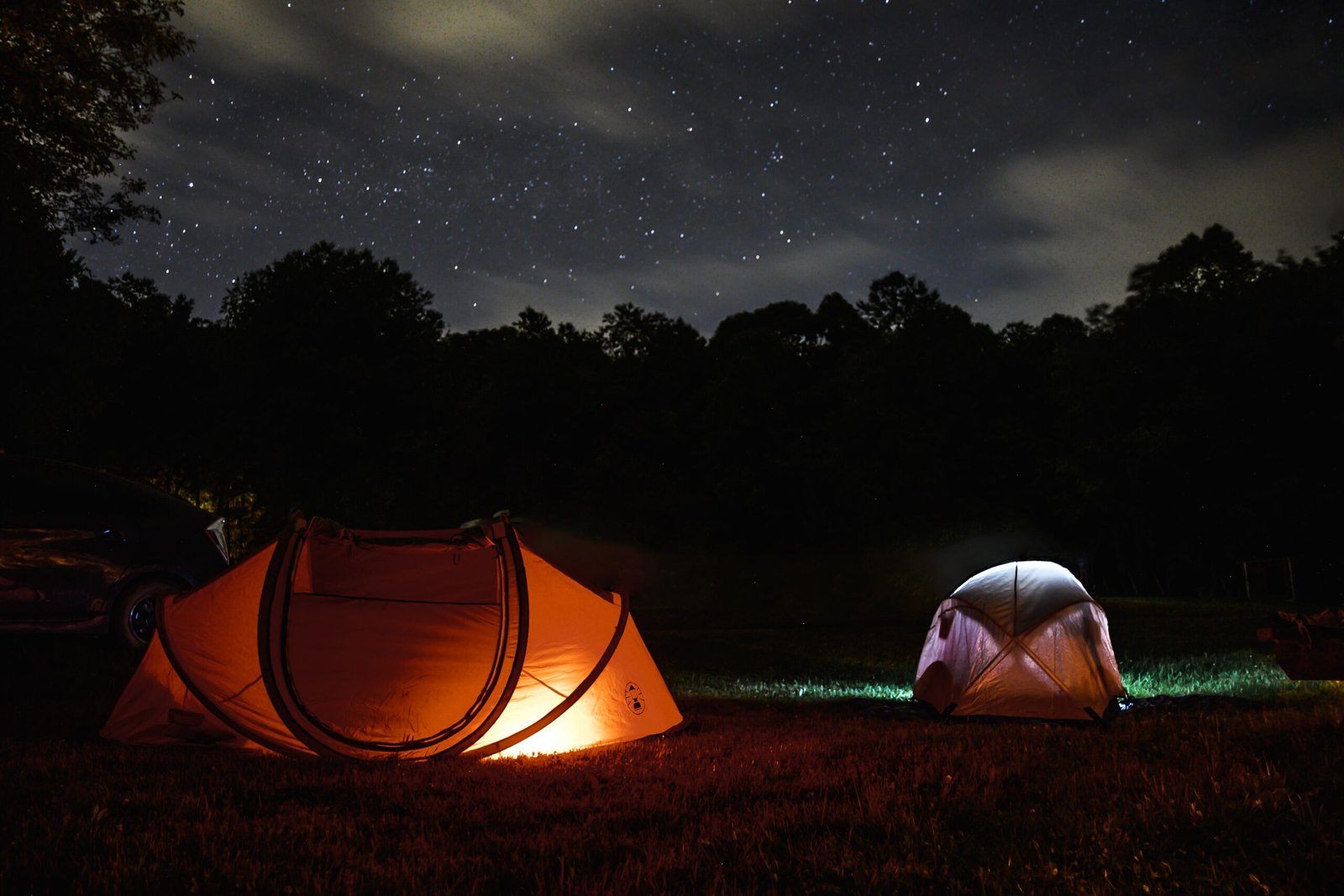

Relaxing at U.S. Wineries
Once you’ve picked a region, the fun part is figuring out how you’ll actually spend your time there.
-
Vineyard Picnics
Most wineries welcome guests to spread a blanket between the rows with a bottle and a cheese board. A camping generator lets you bring along a small cooler or blender for frozen drinks without relying on a winery’s outlets.
-
Farm-to-Table Dining
Many estate wineries now run on-site restaurants built around whatever’s in season locally, pairing each course with wines made just steps away.
-
Overnight Stays Near the Vines
Whether it’s a state park campground or a winery’s own RV lot, camping near the tasting room means you can enjoy a full flight without worrying about the drive home. A generator keeps your site lit and your morning coffee brewing before the first pour of the day.
-
Guided Tours and Vineyard Walks
Educational walking tours through the vines are common at larger estates, explaining everything from soil composition to barrel aging.
-
Small-Group Wine Seminars
Boutique wineries often run intimate seminars comparing vintages or blending your own bottle to take home, a nice rainy-day alternative to an outdoor picnic.
How a Camping Generator Helps You Get the Most Out of a Wine Country Trip
None of this experience depends on staying somewhere with a power hookup, as long as you’ve got the right generator along.


-
Powering Small Appliances
A camping generator can run a coffee maker, a blender for frozen cocktails, or a compact induction cooktop right at your campsite. If you’re weighing wattage, our guide on how many watts a coffee maker uses can help you plan your generator’s load before you leave home.
-
Lighting for Evening Ambience
String lights around a picnic table or tent turn a basic campsite into something worth lingering at after the last tasting of the day wraps up.
-
Basic Climate Control
A small fan on warm Napa afternoons or a space heater on a cool Finger Lakes night can make the difference between a comfortable trip and a miserable one.
-
Keeping Devices Charged
From navigation apps to camera batteries for capturing the vineyard views, a generator means you’re never rationing battery life to make it through the weekend.
Bringing your own cooking setup is part of the appeal too. Our reviews of the best gas grills under $1,000 and a portable electric stove top both cover gear that pairs well with a generator-powered campsite.
The Jackery Solar Generator 600 v2: A Practical Camping Generator for Vineyard Trips
For a wine country weekend, you want a generator that’s light enough for a picnic spot, quiet enough not to disturb your neighbors, and strong enough to run real kitchen gear. The Jackery Solar Generator 600 v2 is a solid match. It delivers a 500W continuous output (1000W surge) from a 640Wh LiFePO4 battery pack, enough to run a coffee maker, charge multiple devices, and power string lights for a full evening.


The included SolarSaga 100W solar panel can take the battery from 0-80% in about 6.5 hours in good sun, or you can top it off from a wall outlet in roughly 100 minutes before you leave home. Jackery rates the LiFePO4 battery for 6,000-plus charge cycles, backed by a 3-year standard warranty plus a 2-year extension when registered. It’s built for repeated wine country weekends, not just one trip. You can browse Jackery’s full lineup of solar generators for camping if you need more or less capacity than the 600 v2 offers.
Watch: Choosing a Camping Generator

Watch “Jackery Explorer 600 V2 Review: The Portable Power Station for Creators & Campers” on YouTube: https://www.youtube.com/watch?v=7Rsn4QXHj_o
What to Pack for a Wine Country Camping Trip
A few extras help a camping-generator-powered wine trip go smoothly:
- A soft cooler or compact fridge for chilled whites and rosés between tastings.
- Reusable wine glasses or a set of stemless plastic tumblers for the picnic blanket.
- A wide-brimmed hat and sunscreen for Napa and Sonoma’s long, sunny afternoons.
- A light jacket for cooler evenings in the Finger Lakes or Willamette Valley.
- Extra charging cables, since a generator only helps if your devices are plugged in and ready.
And if you’re outdoor chair shopping before the trip, our guide to outdoor chairs covers what to look for in something comfortable enough for a long picnic afternoon.
Frequently Asked Questions
What size camping generator do I need for a wine country weekend?
For most weekend trips, a 500-640Wh power station like the Jackery Solar Generator 600 v2 covers lights, devices, and a small appliance. Larger families or longer trips may want a 1000Wh-plus unit.
Can I bring a camping generator into a winery’s picnic area?
Most wineries allow small, quiet battery-based generators in designated picnic or camping areas, but policies vary by property. It’s worth checking with the winery directly, especially if you plan to run it during a scheduled event.
Are solar generators quiet enough for a campsite near other guests?
Yes. Unlike gas generators, battery-based units like the Jackery 600 v2 run silently since there’s no engine, a better fit for shared campgrounds or winery grounds.
Do any U.S. wineries let you camp on-site?
Some do. Willamette Valley Vineyards in Oregon runs its own on-site RV camping area. A growing number of wineries also partner with services like Harvest Hosts for overnight RV stays.
How long can a Jackery Solar Generator 600 v2 run a coffee maker?
A typical drip coffee maker draws around 800-1000W briefly during brewing, so the 600 v2’s 1000W surge rating can handle it, though total run time will depend on your specific machine’s wattage and brew cycle length.
Conclusion
Wine country camping works because the two halves complement each other: wineries provide the scenery and the pour, and a good camping generator provides the comfort that turns a day trip into a genuine getaway. Whether you’re pitching a tent at Bothe-Napa Valley State Park or parking an RV at Willamette Valley Vineyards, a compact, quiet, solar-rechargeable generator like the Jackery Solar Generator 600 v2 keeps the lights on and the evening going long after the last tasting room closes.


Hey, My name is MAMON. I am a SEO content creator and affiliate marketer with over 8 years of experience. I create honest product reviews, in-depth buying guides, and practical how-to articles to help readers make informed decisions. My mission is to provide trustworthy, research-backed content that delivers real value.