

Few things are more annoying than unloading a “clean” dishwasher and finding cups full of water. A dishwasher not drying dishes is one of the most common complaints. Often, it is not a broken part at all. Settings, rinse aid, loading habits, and even the type of dishwasher you own all play a role. This guide covers the 8 most likely causes, backed by manufacturer guidance, and shows you how to fix each one.


Key Takeaways
- Whirlpool lists four main causes: the wrong dry setting, no rinse aid, poor loading, and a faulty heating element.
- Plastic items dry poorly in every dishwasher because they hold less heat than glass or ceramic.
- Many European-style dishwashers, such as most Bosch models, use condensation drying. Some moisture on plastics is normal with this design.
- Unload the bottom rack first so water from the top rack does not drip on dry dishes.
- A heating element replacement typically costs $200 to $350, according to HomeGuide.
How Dishwashers Dry Dishes
Knowing how your machine dries dishes helps you find the problem faster. There are three main methods:
- Heated dry: A heating element in the bottom of the tub warms the air after the final rinse. Many U.S. brands, including Whirlpool, use this method.
- Condensation dry: The final rinse is very hot, which heats the dishes. Moisture then condenses on the cooler stainless steel tub walls and drains away. No heating element is needed.
- Zeolite or mineral drying: Some Bosch models use CrystalDry. According to Bosch, it uses natural minerals that turn moist air into heat up to 176°F.
Check your manual to see which method your dishwasher uses. It changes what “normal” drying looks like.
8 Causes of a Dishwasher Not Drying (and Fixes)
1. The Heated Dry Setting Is Off
Many dishwashers let you turn heated drying on or off. Energy-saving or eco modes may skip it. Whirlpool says to select a Heat Dry or Extended Heat Dry setting if you want dishes to come out dry.
Fix: Check the control panel for a heated dry, extra dry, or sanitize option. Turn it on and run a test cycle.
2. No Rinse Aid
Rinse aid helps water sheet off dishes instead of forming droplets. According to Whirlpool, using a rinse aid with your detergent can help improve drying performance. This is even more important for condensation-drying models.
Fix: Fill the rinse aid dispenser, usually next to the detergent cup. Refill it when the indicator light comes on. Some detergent pods include rinse aid, but a separate dispenser often works better.
3. Lots of Plastic Items
Plastic is the hardest material to dry. Whirlpool notes that plastic items pose a drying challenge due to their lower thermal conductivity. Glass and ceramic hold heat, so water evaporates. Plastic cools quickly, so water stays on it.
Fix: Place plastics on the top rack and use rinse aid. Expect to towel-dry some plastic items, even in a working dishwasher. Our guide on washing bottles in the dishwasher has more tips for plastic items.
4. Overloading or Poor Loading
Crowded racks block airflow and trap water. Whirlpool warns that incorrect loading can reduce both cleaning and drying.
Fix: Avoid overcrowding. Place cups and bowls at an angle so water runs off. Do not nest items together. Leave space between plates.
5. Unloading in the Wrong Order
Cups on the top rack often have water pooled on their bottoms. When you pull out the top rack first, that water can spill onto the dry dishes below.
Fix: Whirlpool recommends unloading the bottom rack first. Tip cups over the sink as you remove them.
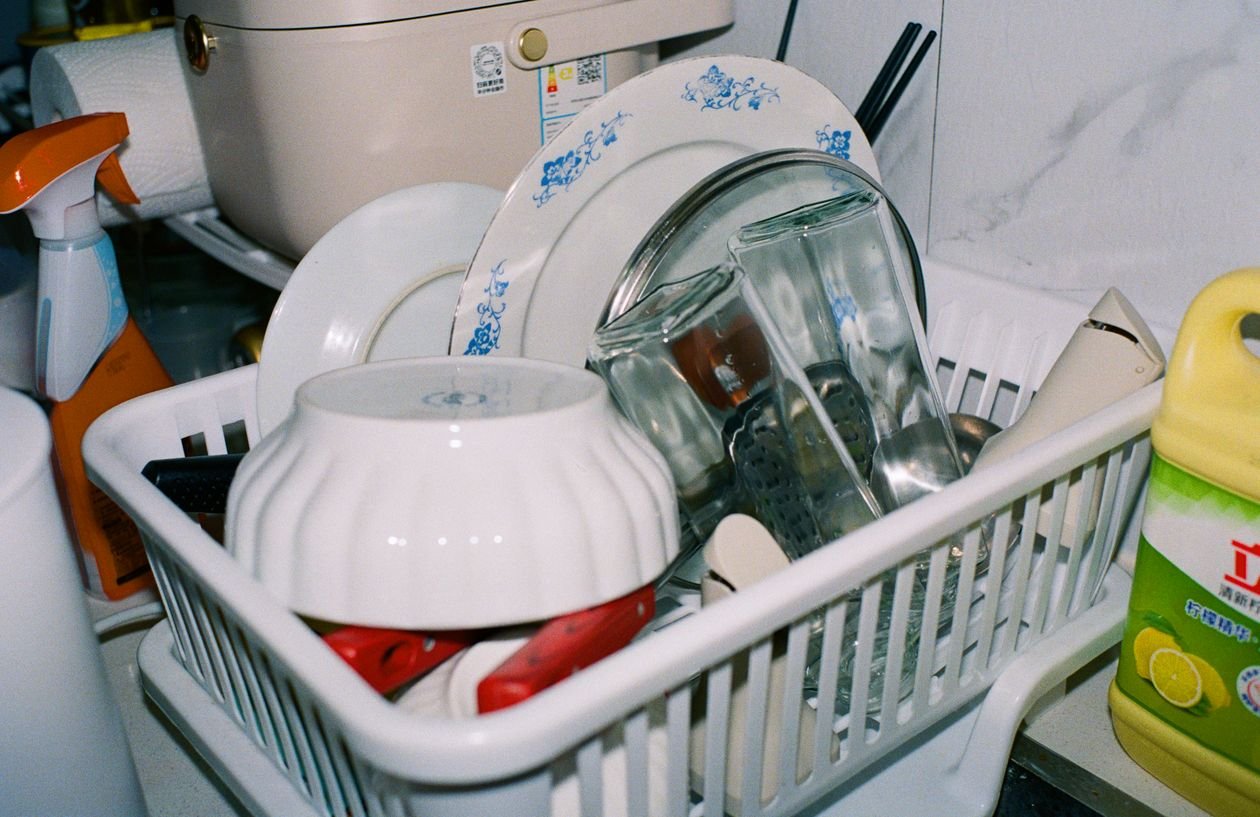

6. Condensation Drying Design
If you own a dishwasher that uses condensation drying, some moisture is normal, especially on plastics. This is not a fault. These models trade a bit of drying power for lower energy use and gentler treatment of plastics.
Fix: Use rinse aid and choose an extra dry option if available. Give dishes time to cool and dry before unloading. Some makers suggest cracking the door open after the cycle, while others recommend letting the full dry cycle finish. Follow your manual.
7. Cold Water Supply
Dishes dry better when the wash and rinse water are hot. If the water entering the dishwasher is lukewarm, the dishes start cooler and hold less heat for drying. HomeGuide notes that heating elements must bring water to 150°F to meet NSF sanitization standards.
Fix: Run the kitchen tap until the water is hot before starting a cycle. Check that your water heater is set properly. Our guide on getting hot water faster at the kitchen sink can help.
8. Faulty Heating Element, Thermostat, or Vent
If your dishwasher uses heated dry and dishes are suddenly soaking wet, a part may have failed. Whirlpool explains that the heating element warms both the wash water and the drying air. A broken element hurts both cleaning and drying.
Other parts can also fail. A thermostat may stop the element from heating, or a vent or fan may stop moving moist air out.
Fix: Look at the element for breaks, blisters, or burn marks. Make sure nothing is resting on it. If you suspect a failed part, call a technician. You can also keep a working element clean with our guide on cleaning a dishwasher heating element.
A Simple Drying Test
If you are not sure why your dishwasher not drying problem started, run this quick test. It helps separate normal behavior from a real fault.
- Fill the rinse aid dispenser to the full line.
- Run the kitchen tap until the water is hot.
- Load only glass and ceramic dishes, spaced well apart, with cups angled.
- Select a normal cycle with heated dry or extra dry turned on.
- When the cycle ends, feel the dishes right away. They should be warm.
- Check again after they cool. Glass and ceramic should be mostly dry.
If glass and ceramic come out dry, your machine works. The problem is likely plastics, loading, or settings. If everything is cool and wet with heated dry on, a part such as the heating element may have failed.
Quick Diagnosis Table
| What You See | Likely Cause | Quick Fix |
|---|---|---|
| Only plastics are wet | Normal for plastic | Add rinse aid, towel-dry |
| Water pooled on cup bottoms | Loading or unloading order | Angle cups, unload bottom rack first |
| Everything wet, dish spots | No rinse aid | Fill rinse aid dispenser |
| Everything wet on a new eco cycle | Heated dry off | Turn on heated or extra dry |
| Dishes cool and wet, poor cleaning | Heating element failure | Call a technician |
| Wet dishes on a Bosch-style model | Condensation drying | Use rinse aid, wait before unloading |
Does Hard Water Affect Drying?
Yes, indirectly. Hard water is a hidden cause of a dishwasher not drying well. It leaves mineral film on dishes, which holds water droplets. It also builds up on the heating element and interior parts over time. Using rinse aid and cleaning mineral buildup can help.
See our guide on cleaning hard water from a dishwasher for step-by-step help.
Heated Dry vs Air Dry: Which Should You Use?
Heated dry gives the driest results on models that have it. However, it uses extra energy. Air dry, or turning off heated dry, saves energy but leaves more moisture, especially on plastics.
A good middle ground is to use rinse aid with air dry. Then open the door slightly after the cycle ends, if your manual allows it. The warm, moist air escapes and dishes finish drying on their own.
Want to understand how long each part of the cycle takes? Read our guide on how long a dishwasher cycle takes.
How Much Does It Cost to Fix?
Most drying problems cost little or nothing to fix. Rinse aid, a setting change, or better loading solves many cases. If a part has failed, HomeGuide lists these averages:
- Heating element replacement: $200 to $350.
- Control board replacement: $200 to $600 installed.
- Average dishwasher repair: $100 to $300.
Repair or Replace?
Sometimes a dishwasher not drying needs a new heating element or control board. In that case, compare the repair cost to the value of the machine. A heating element replacement averages $200 to $350, and a control board runs $200 to $600 installed. For an older dishwasher with other problems, those costs can approach the price of a new basic model.
Before you decide, check whether your dishwasher is still under warranty. Also consider whether it has other issues, such as leaks or poor cleaning. If you do replace it, our guide on what to do with an old dishwasher covers recycling and disposal.
Tips for Drier Dishes Every Time
- Keep the rinse aid dispenser full.
- Use heated dry or extra dry when you need fully dry dishes.
- Run hot water at the sink before starting a cycle.
- Load cups and bowls at an angle and avoid nesting.
- Place plastics on the top rack.
- Wait before unloading, and unload the bottom rack first.
- Clean the filter and interior regularly to prevent buildup.
Frequently Asked Questions
Why is my dishwasher not drying plastic?
Plastic holds less heat than glass or ceramic, so water does not evaporate as well. This is normal. Rinse aid and top-rack placement help.
Is it normal for a Bosch dishwasher to leave dishes wet?
Some moisture is normal on many Bosch models because they use condensation drying. Bosch says its CrystalDry models deliver 60% better drying than its PureDry system, based on mixed loads with plastics.
Does rinse aid really help a dishwasher not drying?
Yes. Whirlpool says rinse aid can improve drying performance. It helps water sheet off dishes so they dry faster.
Should I open the dishwasher door after the cycle?
It depends on your model. Some makers recommend it, while others suggest letting the full dry cycle finish. Check your manual.
Is it safe to keep using a dishwasher not drying dishes?
Usually, yes. Wet dishes are still clean if the wash cycle works. Towel-dry them or let them air dry on a rack. If cleaning also gets worse, the heating element may be failing, so have it checked.
How do I know if my heating element is bad?
Signs include cool, wet dishes after heated dry and poor cleaning results. Visible breaks or burn marks on the element are clear signs. A technician can test it with a meter.
Final Thoughts
A dishwasher not drying is usually easy to fix. Start by turning on heated dry and filling the rinse aid. Then improve how you load and unload, and run hot water before each cycle. Remember that some moisture on plastics is normal, especially with condensation drying. If dishes stay cold and wet with heated dry on, call a technician to check the heating element. With a few small habit changes, most homes get dry, spot-free dishes again.


Hey, My name is MAMON. I am a SEO content creator and affiliate marketer with over 8 years of experience. I create honest product reviews, in-depth buying guides, and practical how-to articles to help readers make informed decisions. My mission is to provide trustworthy, research-backed content that delivers real value.